Warm minimalist interiors: colours, materials and how to get the look
Quick answer
Warm minimalism is a pared-back style that keeps minimalism's space and calm but replaces its cold white, glass and chrome with natural warmth: plastered or limewashed walls, stone, pale wood, built-in furniture with soft curves and almost nothing on show. Earthy neutrals, texture and daylight do the decorating instead of objects, so the room feels peaceful rather than empty.

By Eduardo, founder of Calm Decoration
The colours of Warm minimalist
#f4f0e8#e2d9cb#c9bba5#a99b86#7c6f5e
What gives it away
- Plaster and limewash
- Built-in, curved shapes
- Stone and pale wood
- Bare surfaces
- Daylight as decoration
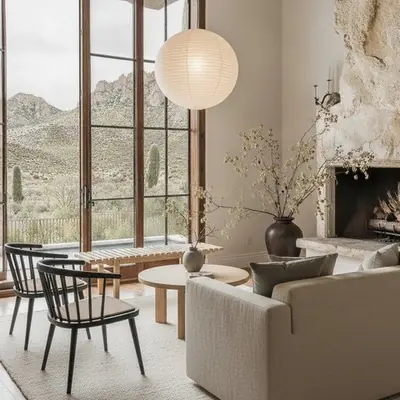
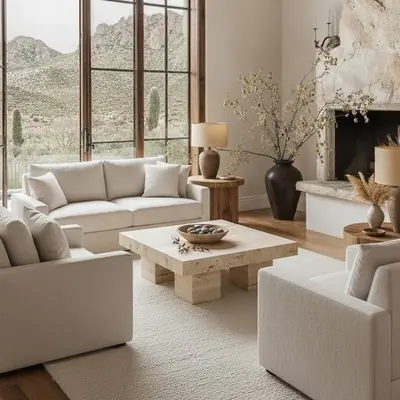
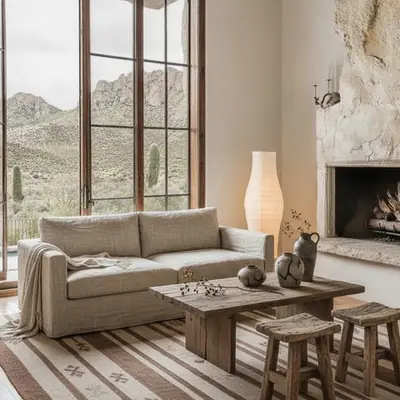
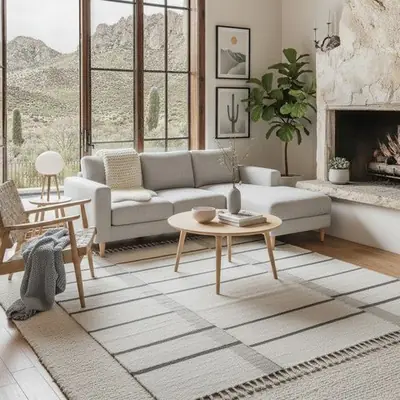
Warm minimalist rooms
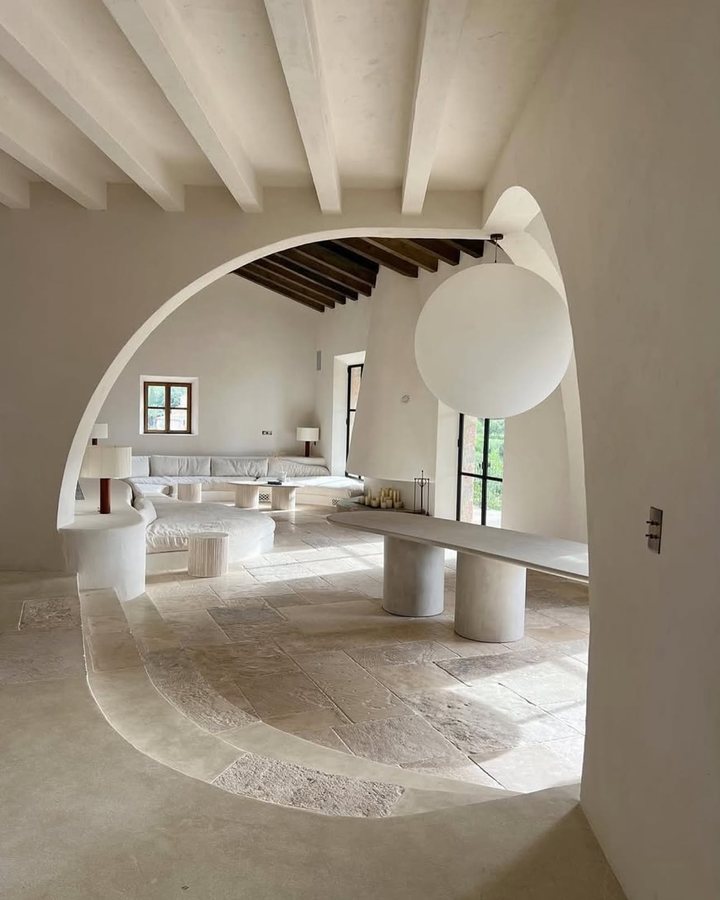
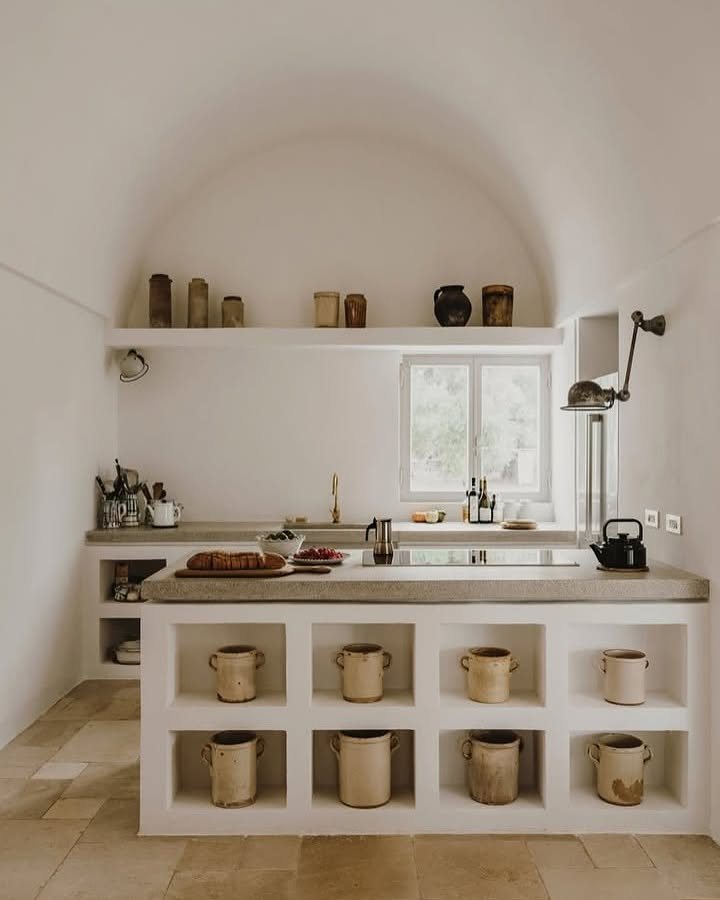
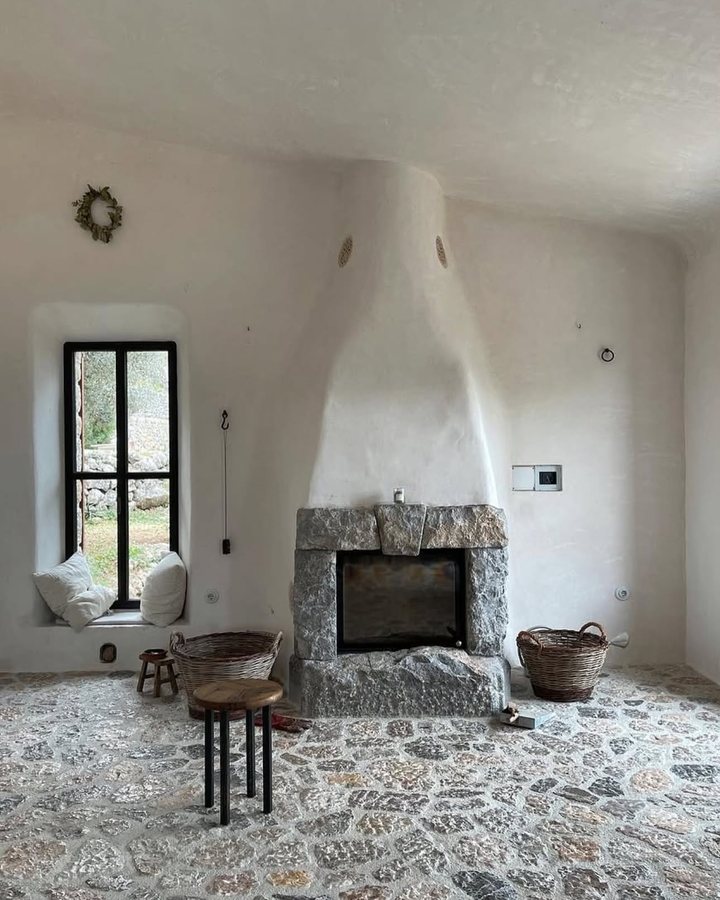
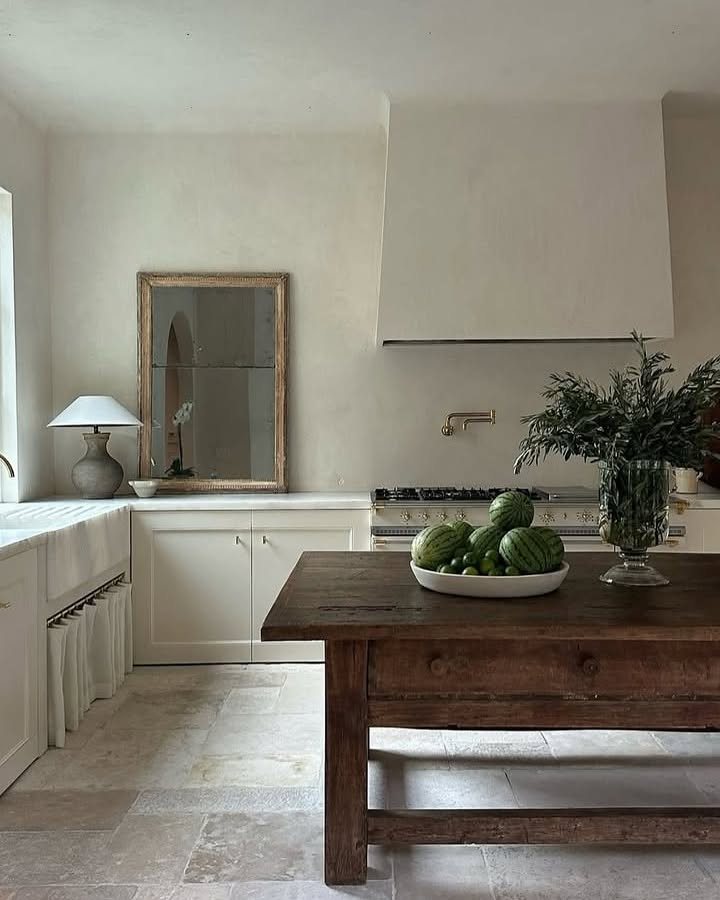
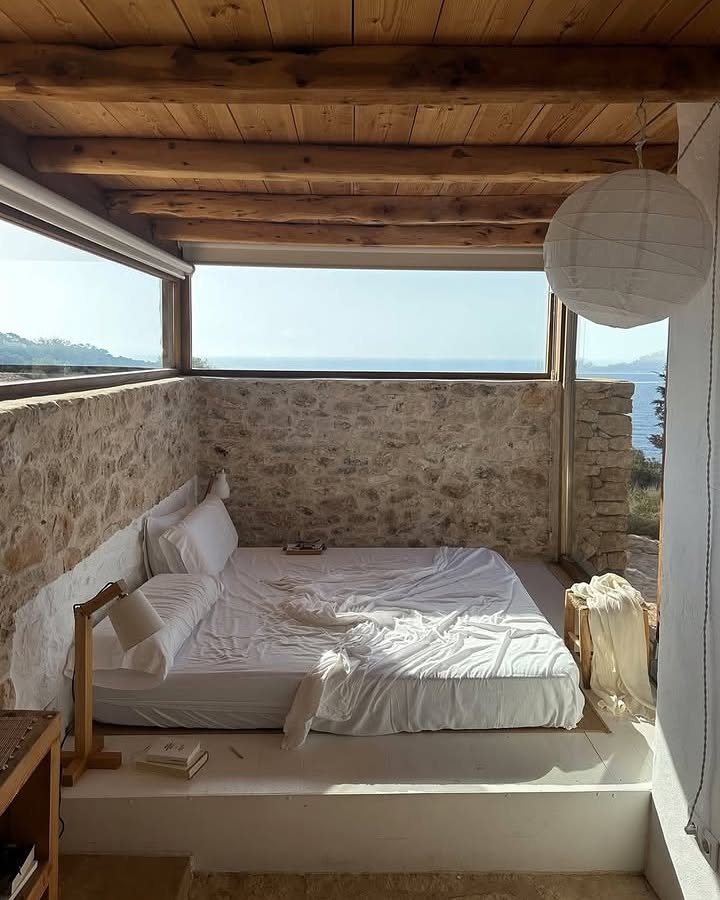
Interiors from Calm Decoration's Instagram.
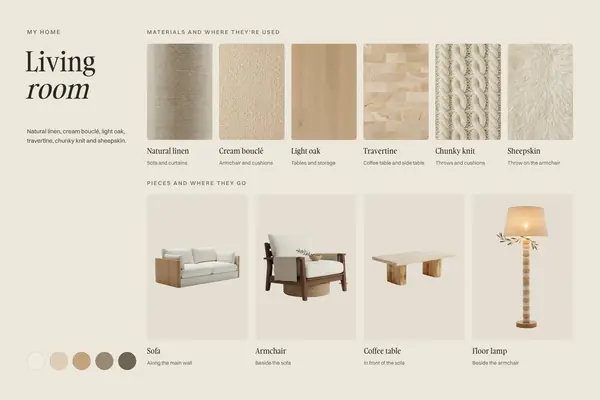
Pieces in the Warm minimalist style
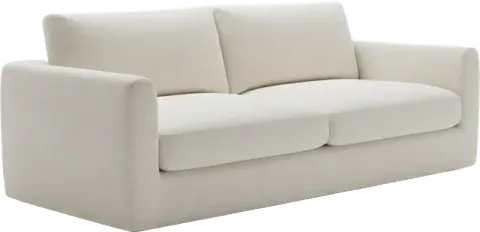 Sofa
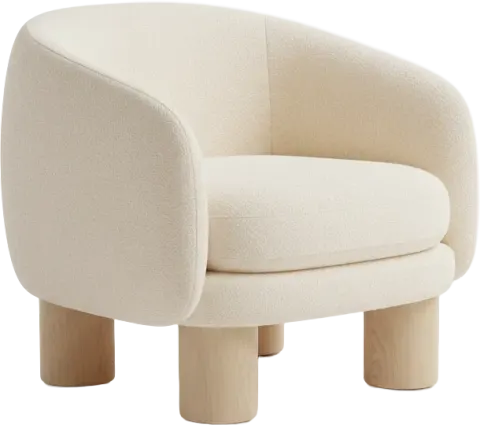 Armchair
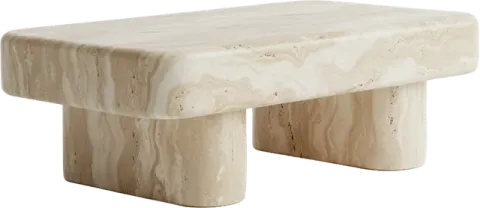 Coffee table
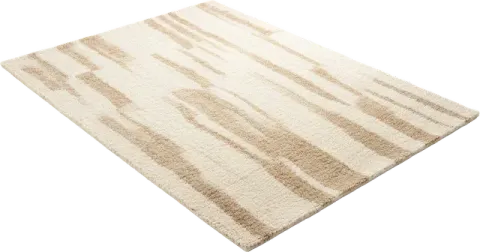 Rug
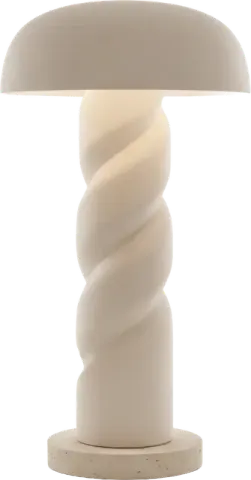 Lamp
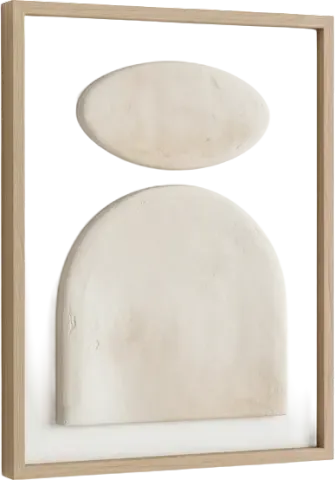 Wall art
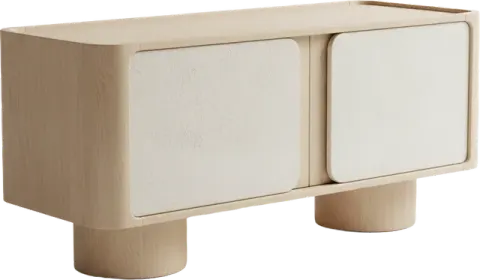 Storage
 Decor
Drawn for Calm Studio’s moodboards to show the look: they are not products from a shop.
If you love the idea of a clear, peaceful room but have never felt at home in a white box, warm minimalism is the answer. It keeps the empty surfaces and the sense of space, then adds what makes a room comfortable to live in: texture you want to touch, colours borrowed from stone and sand, and light that changes through the day.
What is warm minimalist style?
Minimalism in interiors grew out of twentieth-century modern architecture and its motto "less is more", a phrase linked to the architect Ludwig Mies van der Rohe. In its strict form (white walls, glass, steel and very little furniture) it can feel stark.
Warm minimalism, a name that has caught on in recent years, keeps the discipline but changes the materials: plaster instead of flat paint, oak instead of chrome, linen instead of leather, curves instead of sharp corners. Fewer things, better made, in a room where architecture and material carry the design.
The key elements
- Walls in plaster, limewash or a chalky mineral paint.
- Built-in storage, so everyday things disappear.
- Furniture with soft, rounded edges.
- Stone and pale wood, often in solid, block-like pieces.
- Bare surfaces with one object at most.
- No pattern, and very little contrast.
- Daylight treated as part of the decoration.
Colours
The palette is tonal: five shades of one warm family. A warm white goes on walls and ceilings, never a brilliant or blue white. Pale oat and limestone cover the sofa, curtains and rug. Sand and warm stone appear in wood, stone and ceramics. The deepest shade, a mushroom brown like aged oak, is used in only two or three places: a bench, a vase, a picture frame. Keeping contrast this low is what makes the room feel so restful.
Materials and textures
Without pattern or objects, texture is everything. Limewash and clay plaster give walls soft movement. Travertine and limestone are honed, never polished. Wood is pale oak or ash with a matte oil finish. Textiles are linen, wool and bouclé in undyed shades, and the rug is plain, thick wool. Mix several textures within the narrow palette so the eye has something to rest on.
Furniture and shapes
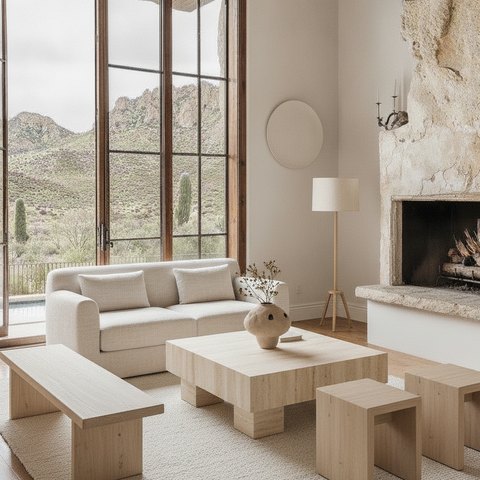
Furniture is low, solid and almost architectural. A deep sofa in off-white with rounded arms, a block coffee table in travertine or pale wood, a simple bench, a pair of cubic stools. Built-ins do the hard work: a plastered bench under a window, niches, a long low cabinet with push-to-open doors. Choose fewer pieces, each big enough to matter.
Lighting
Daylight comes first, through sheer linen or bare windows. In the evening, warm light from hidden sources: a slim floor lamp with a linen shade, a plaster wall light, a concealed strip washing light down a textured wall. Keep bulbs warm, around 2,700 K. Visible bulbs and busy chandeliers break the calm.
Decor and accessories
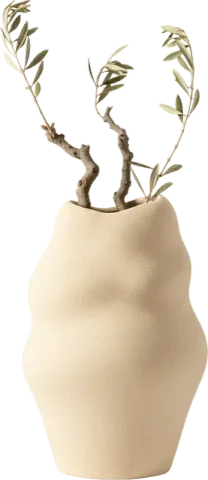
Every object must earn its place. One large sculptural ceramic, a dried branch, a round plaster disc on the wall, two books. Art, if any, is large and quiet. Hidden storage keeps the rest out of sight, and styling shelves and coffee tables helps with the few things you do show.
How to bring warm minimalism into your home
- Clear one surface at a time, and box what you are unsure about rather than deciding at once.
- Find closed storage for the things you use daily: baskets, a cabinet, a cupboard with doors.
- Replace patterned cushions and throws with plain linen and wool in oat and stone.
- Take out small side pieces and keep fewer, larger ones.
- Try limewash or a mineral paint on one wall to give it soft movement.
- Add one solid natural piece, such as a travertine side table or an oak bench.
- Light the room with lamps and warm bulbs instead of the ceiling light.
Mistakes to avoid
- Bare but flat. Without texture, a minimal room is cold; mix linen, wool, plaster and wood.
- Grey and brilliant white. They pull the style back to cold minimalism.
- Too little storage. Clutter returns within a week if things have nowhere to go.
- Forgetting comfort. A room of hard benches looks good in photos and empties fast.
Warm minimalism vs Japandi
| Warm minimalism | Japandi | |
|---|---|---|
| Roots | Modern architecture made softer | Japanese and Scandinavian homes |
| Walls | Plaster, limewash, built-in curves | Plain walls, slatted wood screens |
| Furniture | Solid, block-like, often built in | Low, light, with visible joinery |
| Contrast | Very low, one warm family | Light woods with black or charcoal accents |
| Signature piece | A travertine block table | A paper lantern and spindle chairs |
When the architecture itself should be the calm, warm minimalism wins; when you want crafted furniture and a few dark accents, Japandi does.
Frequently asked questions
Is warm minimalism good for a small room?
Very. Low contrast, bare surfaces and light colours make a room look larger; making a small room look bigger has more ideas.
How is warm minimalism different from wabi-sabi?
Wabi-sabi celebrates the worn and imperfect: rough timber, cracked ceramics, crumpled linen. Warm minimalism is smoother and more architectural.
Can a warm minimalist room have colour?
Only soft, earthy colour: olive from a plant, terracotta in a pot, the honey of oak. Strong colour or pattern breaks the tonal calm.