Scandinavian interiors: colours, materials and how to get the look
Quick answer
Scandinavian style is the light, simple and cosy look of Nordic homes: white and pale grey walls, pale oak, ash and birch, practical furniture on slim legs, wool, sheepskin and linen, paper and glass lamps and a few graphic prints. Shaped by long, dark winters, it makes the most of daylight and is uncluttered without ever feeling cold.

By Eduardo, founder of Calm Decoration
The colours of Scandinavian
#f7f7f4#e3e1dc#c9b79c#8fa3b3#3c3f42
What gives it away
- Pale oak and birch
- White and soft grey
- Wool and sheepskin
- Simple, functional shapes
- Paper and glass lamps
Scandinavian rooms
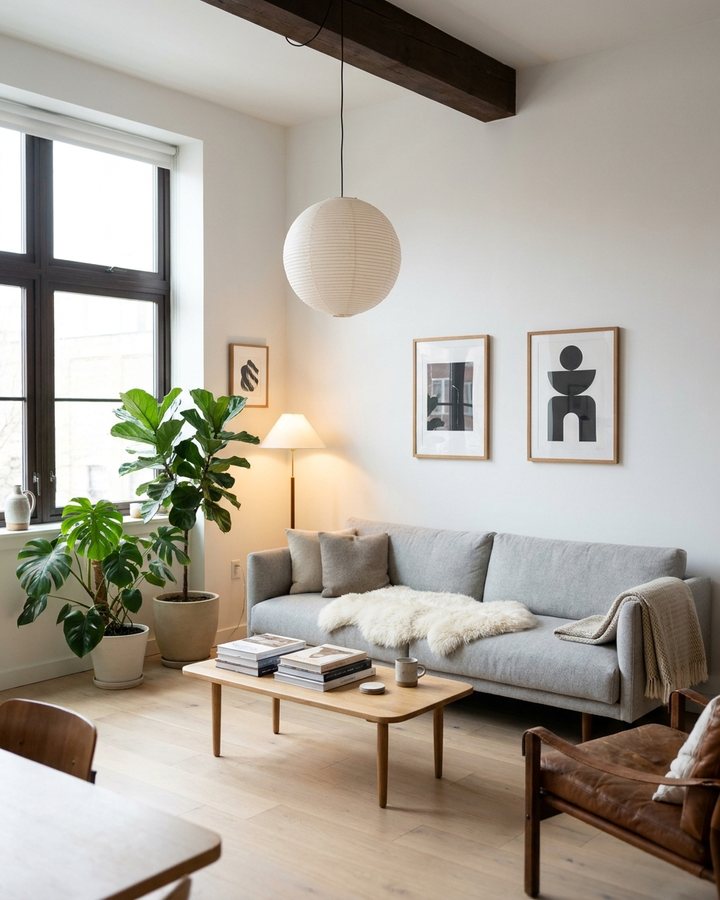
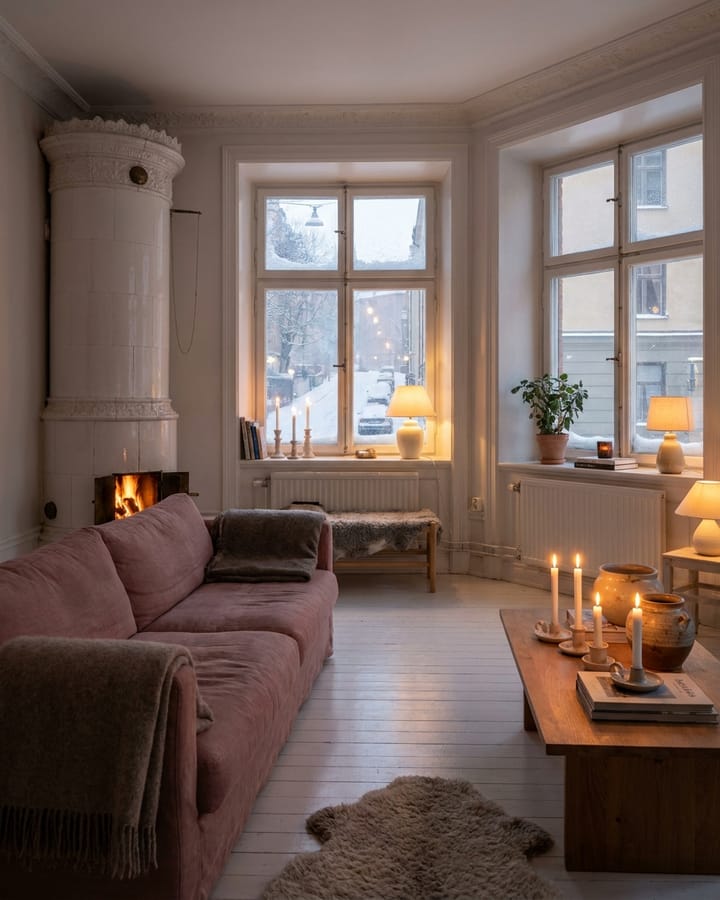
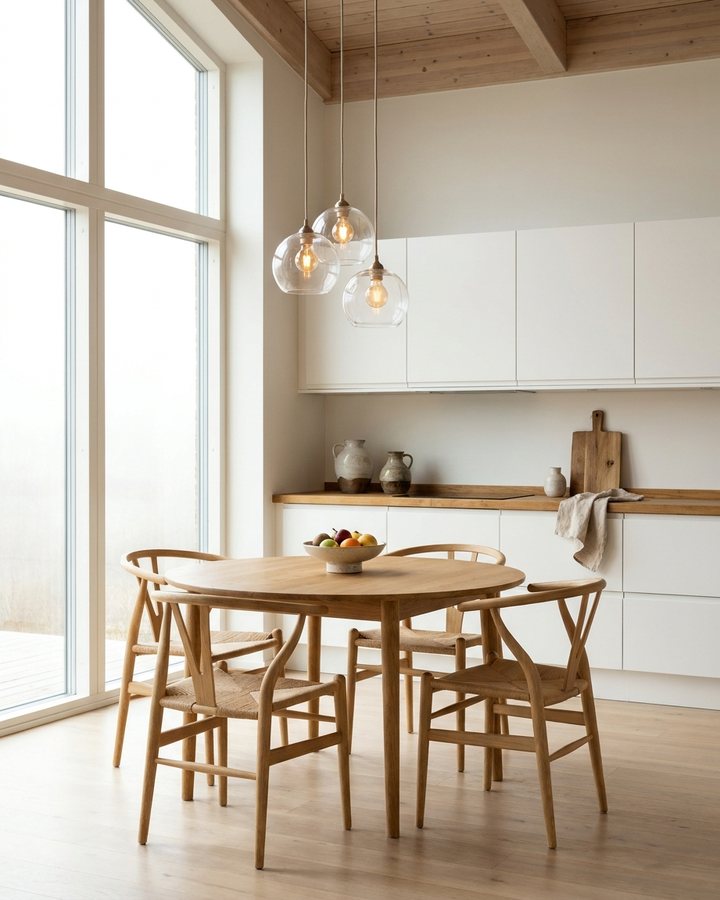
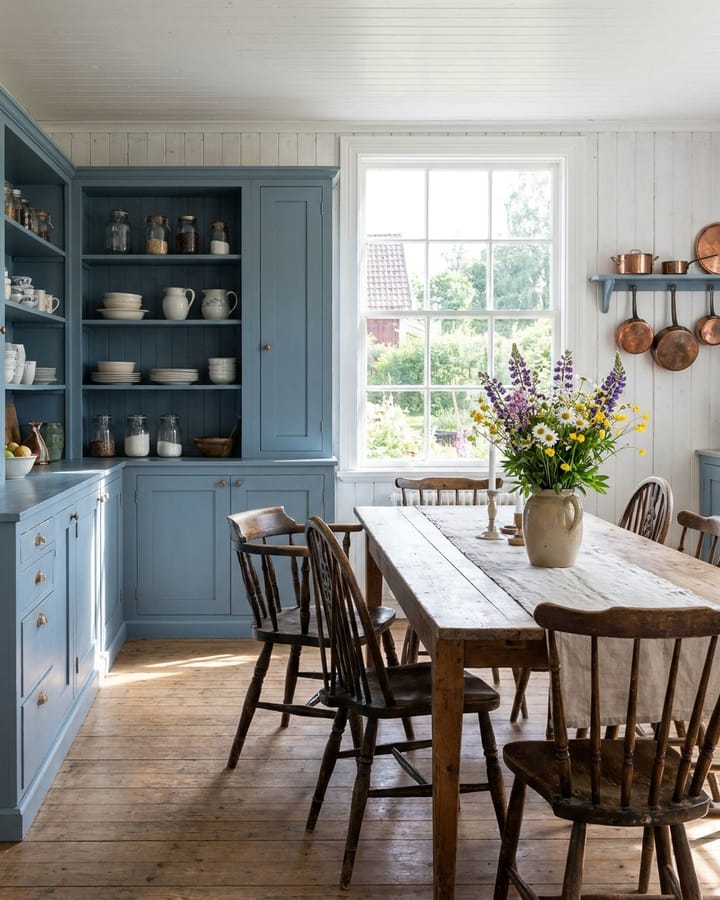
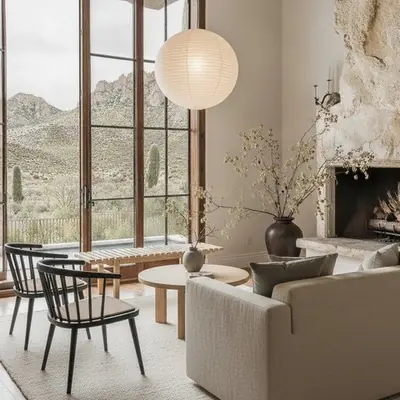
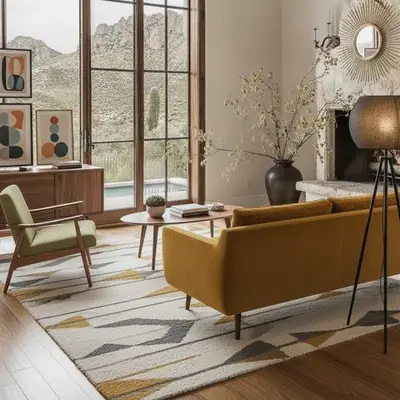
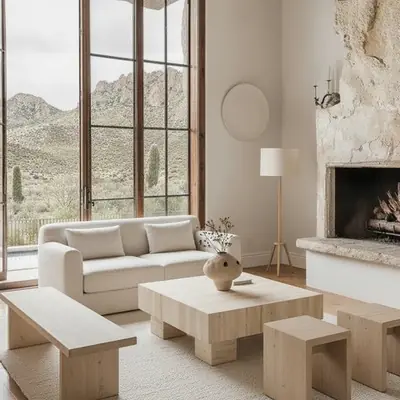
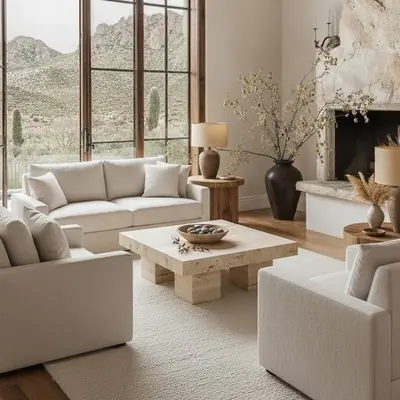
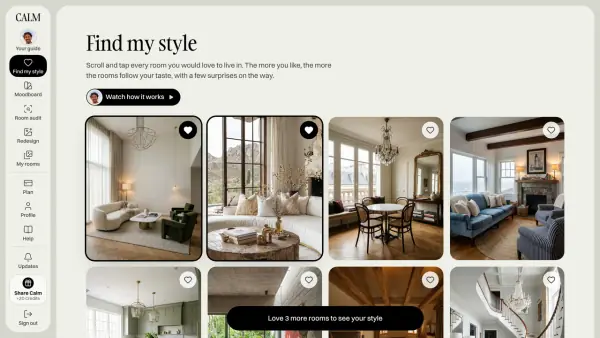
Pictures made for Find my style, our style quiz, to show the look. They are not photographs of real homes.
Pieces in the Scandinavian style
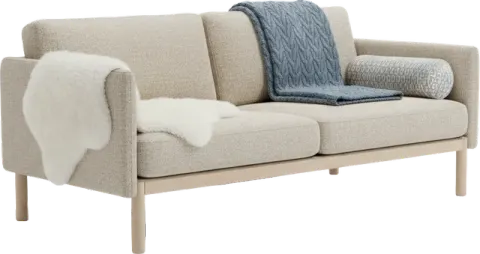 Sofa
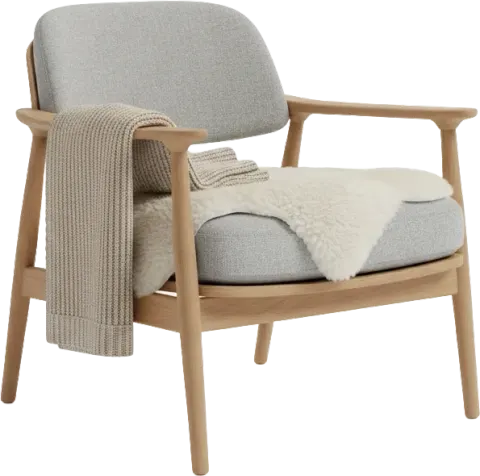 Armchair
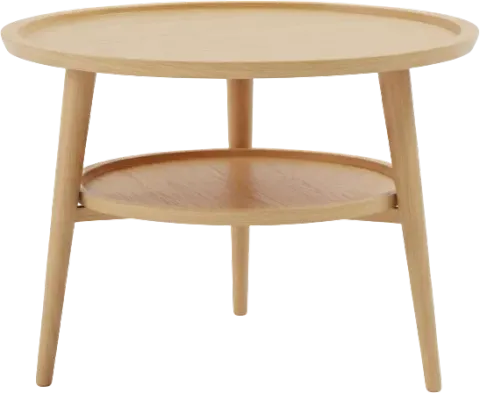 Coffee table
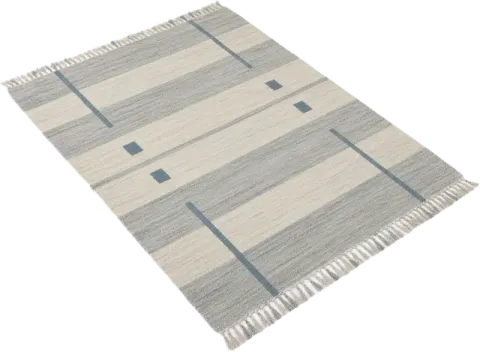 Rug
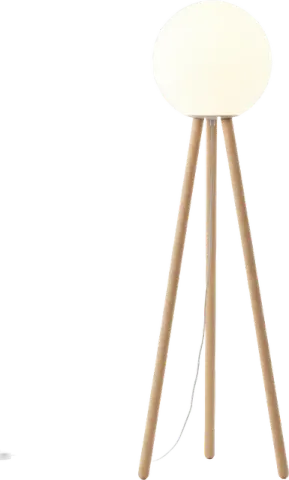 Lamp
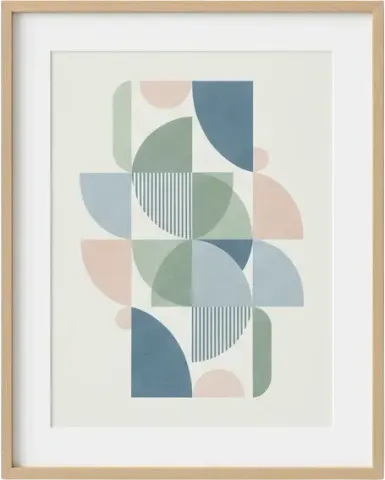 Wall art
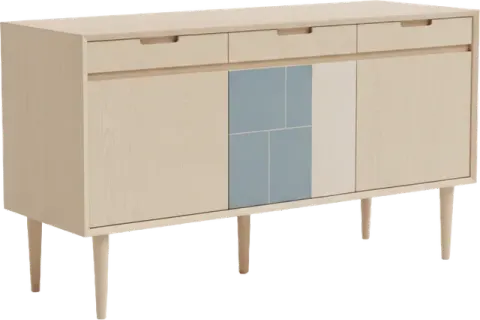 Storage
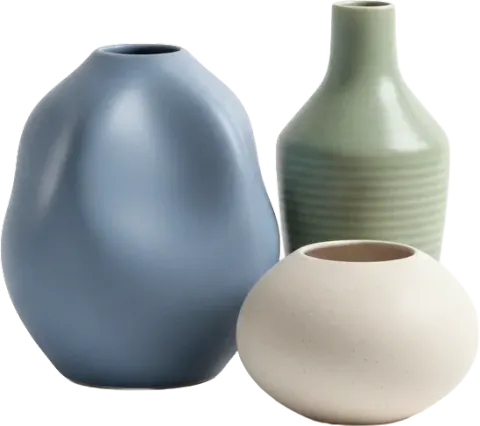 Decor
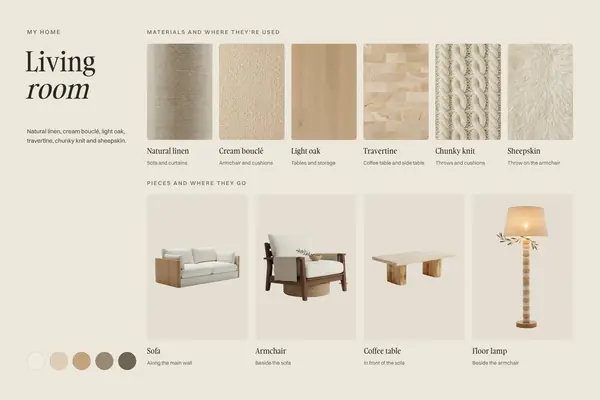
Drawn for Calm Studio’s moodboards to show the look: they are not products from a shop.
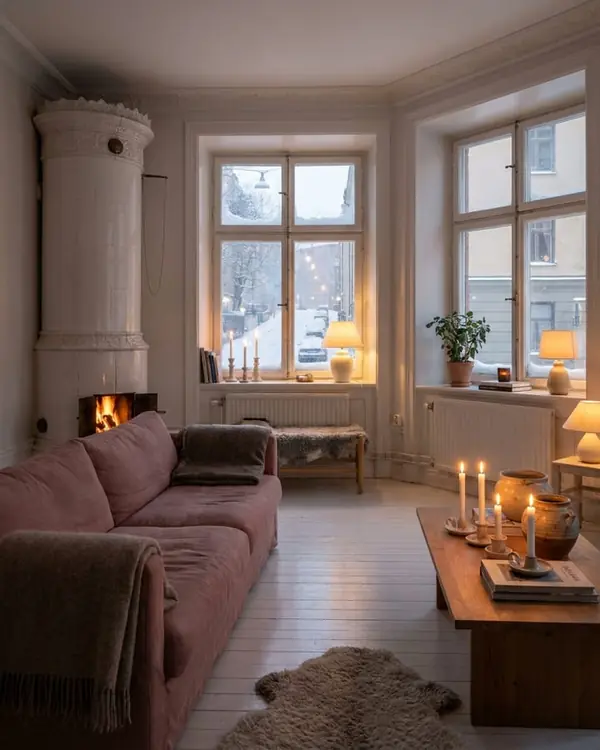
A good Scandinavian room feels as welcoming on a grey Tuesday in February as on a bright June morning. It is practical enough for family life and soft enough for a long weekend indoors. I think of it as the friendliest of the modern styles: simple, but never strict.
What is Scandinavian style?
It comes from the Nordic countries (Denmark, Sweden, Norway and Finland), where long, dark winters taught people to make the most of every hour of daylight and to make the indoors warm and welcoming. Its furniture became known around the world in the mid-twentieth century, admired for good craft, clean shapes and the belief that well-designed things should be part of everyday life, not a luxury.
Two words often come up. The Danish "hygge" means a feeling of cosy, relaxed togetherness. The Swedish "lagom" means "just the right amount". Between them, they sum up the style.
The key elements
- White or very pale walls to bounce the light.
- Pale wood floors and furniture: oak, ash, birch, pine.
- Simple, functional furniture on slim legs.
- Soft layers of wool, sheepskin and knits.
- Many small lamps and candles.
- Green plants in plain pots.
- A few graphic prints in thin frames.
Colours
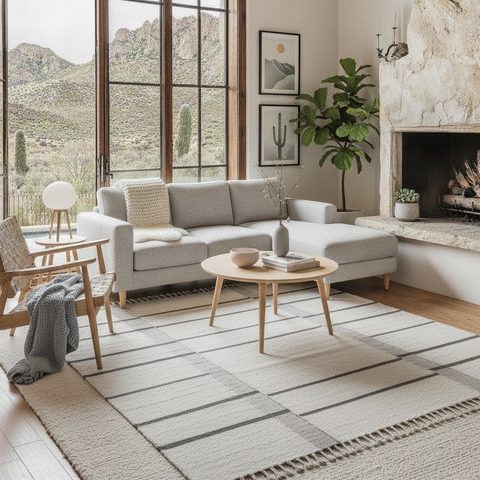
The base is white, warmed slightly so it does not feel clinical, with pale grey on the sofa or a wall. Pale oak and oatmeal add warmth through wood and textiles. One muted colour gives character, on cushions, a throw or a painted chair: here a dusty blue, though sage or blush work as well. Charcoal draws the lines: picture frames, a lamp, the stripes of a rug. The effect is light, but not cold.
Materials and textures
Wood is pale and matte, oiled or soaped rather than varnished. Wool appears everywhere: throws, rugs, a felted cushion. Sheepskin softens a chair, linen and cotton dress the windows and the bed. Opal glass and paper diffuse light. Leather and ceramics appear in small amounts. Texture is what stops a white room from feeling empty.
Furniture and shapes
Furniture is light in weight and look: slim tapered legs, rounded edges, nothing bulky. A light grey sofa, often with a chaise; a wooden armchair with a woven or papercord seat; a round coffee table on splayed legs; wall-mounted shelves. Pieces are useful first, and many are designed to last for decades.
Lighting
Nordic rooms are lit with many small sources rather than one strong one: a pendant over the table, a floor lamp by the chair, table lamps on the windowsill, candles everywhere in winter. Shades hide the bulb so the light is soft, without glare. Windows stay bare or lightly dressed, to let every bit of daylight in. If you are unsure where each lamp should go, the lighting guide walks through it.
Decor and accessories
Graphic prints in thin black or oak frames, a few ceramics in white or sand, a stack of books, plants in plain pots, candleholders in glass or brass. Knitted throws and sheepskins are part of the decor. Keep the number of objects small and the surfaces mostly clear.
How to bring Scandinavian style into your home
- Let the light in: take down heavy curtains and clear the windowsills.
- Repaint in a soft white or the palest grey, with a little warmth in it.
- Add a chunky knitted throw and a sheepskin on a chair.
- Place two or three lamps around the room and light candles in the evening.
- Hang a few graphic prints in thin frames, in a line or a tight grid.
- Bring in plants in simple white or terracotta pots.
- When you replace furniture, choose pale wood on slim legs.
Mistakes to avoid
- Cold white and grey only. Without wood, wool and warm light, the room feels clinical.
- Trend accessories. A dozen slogan prints and copper pots date fast.
- One ceiling light. Scandinavian rooms depend on several soft sources.
- Forgetting hygge. If the room is not cosy, it is just bare; making a room feel cosy helps.
Scandinavian vs warm minimalism
| Scandinavian | Warm minimalism | |
|---|---|---|
| Walls | White and pale grey | Plaster and limewash in warm neutrals |
| Wood | Pale oak, ash and birch on slim legs | Pale oak in solid, block-like pieces |
| Textiles | Wool, sheepskin, knits, simple patterns | Linen and bouclé, no pattern |
| Objects | Prints, candles, plants, ceramics | Almost none |
| Mood | Cosy and homely | Serene and architectural |
If you find warmth in layers, candles and a few favourite things, stay Scandinavian; if you would rather have almost nothing on show, try warm minimalism.
Frequently asked questions
What is hygge in interior design?
Hygge is the Danish idea of cosy contentment. In a room it means soft light, candles, wool and sheepskin, a comfortable chair and the people you love.
Can Scandinavian style work in a dark room?
Yes, but choose warmer whites, more lamps and more wood. A brilliant white in a north-facing room looks grey; a white with a touch of yellow or pink holds its warmth.
What is the difference between Scandinavian and Japandi?
Japandi mixes Scandinavian comfort with Japanese restraint: lower furniture, fewer objects and a few black accents. Scandinavian is brighter, with more textiles and pattern.