How to make a room feel cosy: light, texture and colour
Quick answer
A room feels cosy when it is lit low and warm, feels soft and is arranged for people. Switch off the ceiling light in the evening and use lamps and candles with bulbs of 2,700 K or warmer, layer textures such as wool, linen, velvet and sheepskin, add a rug and full-length curtains, pull the seats closer together, and bring in books, plants and things you love.

By Eduardo, founder of Calm Decoration
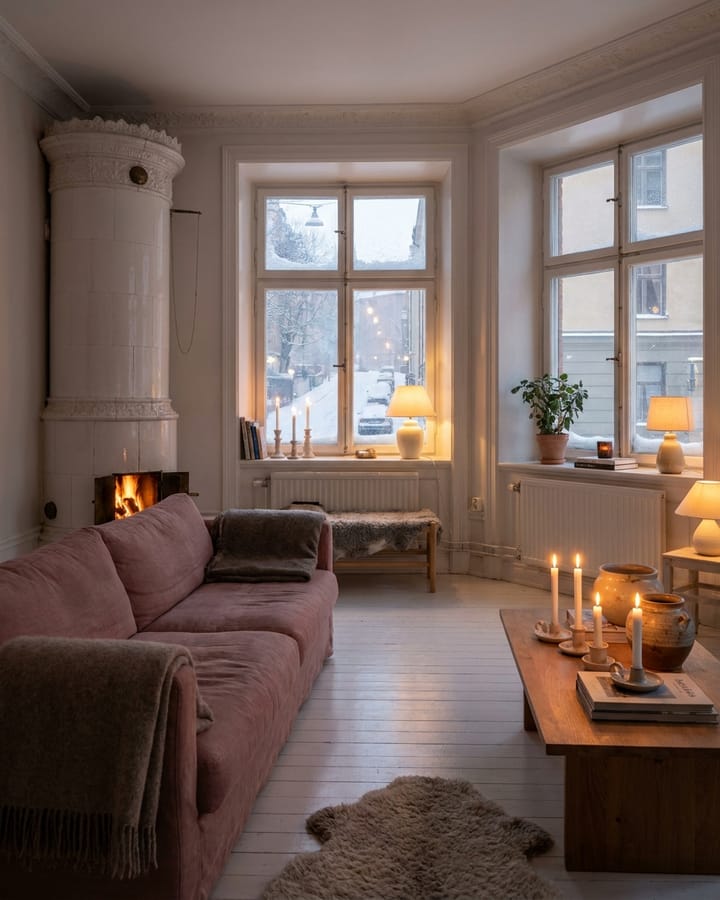
Cosy is the feeling of being sheltered and at ease: the room you go to at the end of the day without thinking. The Danes have a word for it, hygge, but you do not need a particular style to get there. This guide explains what makes a room feel cosy and gives you the changes, from the free ones to the bigger ones, that get you there.
What makes a room feel cosy?
A room feels cosy when it speaks to more than your eyes. Warm, low light, soft things to touch, a comfortable temperature, a hush instead of an echo, and a sense of being held by the space all add up. Miss one and the room can look lovely in a photo yet feel cold to sit in.
That is useful, because it means you can work through it like a list: light, touch, colour, layout, life and warmth.
Start with warm, low light
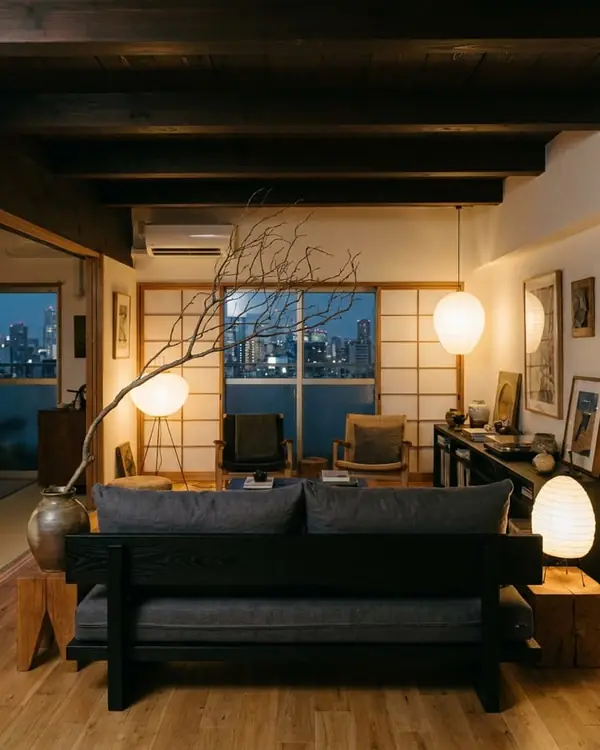
Light is the fastest way to make a room cosy. In the evening, switch off the ceiling light and let lamps do the work. Light that comes from low down and from several places at once feels intimate; light from one bright point overhead feels like an office.
- Use bulbs of 2,700 K, or 2,200 K for evening lamps, for a golden glow.
- Put lamps on dimmers or choose dimmable bulbs.
- Place lamps at different heights: one on a side table, one on the floor, one on a shelf.
- Choose shades in linen, paper or fabric, which soften the light.
- Add candles or a fire if you have one; a moving flame is hard to beat.
The lighting guide explains colour temperature, brightness and lamp heights in full.
Layer textures you want to touch
Texture is what makes a room feel soft. Mix at least three or four different textures in one room, and contrast them: something rough beside something smooth, something chunky beside something fine.
| Material | Where it brings cosiness |
|---|---|
| Wool and chunky knit | Throws, cushions, rugs |
| Linen | Curtains, bedding, loose sofa covers |
| Velvet and bouclé | Cushions, an armchair, a headboard |
| Sheepskin | Over a chair, at the side of a bed, on a bench |
| Wood | Furniture, a tray, bowls, frames |
| Stone, clay and ceramic | Lamps, vases, a side table |
Layering is the secret. A throw folded over the arm of a sofa, cushions in two or three fabrics, a sheepskin over a wooden chair: each layer adds a little depth.
Soften the hard surfaces
Bare floors, bare windows and hard furniture make a room echo, and an echoing room never feels cosy. Soft surfaces absorb sound, so the room becomes quieter as well as warmer to look at.
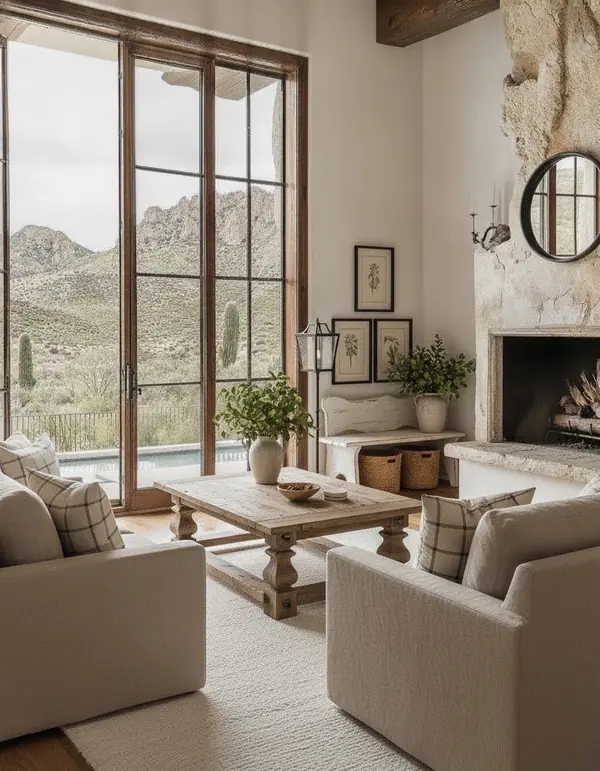
- A rug under the seating area, big enough for at least the front legs of the sofa and chairs to rest on.
- Full-length curtains, even where you also have blinds. They frame the window by day and close the room in at night.
- Upholstered pieces: an armchair or a padded headboard does more than another wooden chair.
- Cushions and throws in natural fibres.
Which colours make a room feel cosy?
Warm colours make a room feel cosier than cool ones. Think of cream instead of brilliant white, sand and clay instead of grey, olive and moss instead of mint, and the warm browns of wood and leather.
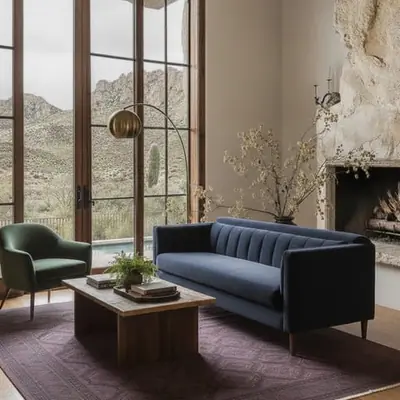
Deep colours can be the cosiest of all. Walls in charcoal green, inky blue or aubergine, with warm lamplight and brass, wrap around you, which is why the dark and moody style works so well in snugs, studies and dining rooms used at night. If you prefer light walls, bring the warmth in through wood, textiles and lamplight instead.
Arrange the seating for people, not the television
A cosy room is set up for talking, reading and resting. Place the main seats so they face each other or form a loose U, close enough to talk without raising your voice: as a rule of thumb, no more than about 3 m (10 ft) apart. Give every seat a surface within reach for a cup and a lamp nearby.
A room where every chair points at the screen feels like a waiting room. If the television must be there, angle a chair or two towards the sofa as well. How to arrange living room furniture covers layouts in detail.
Make a nook
Even in a large room, a small, sheltered corner is where cosiness lives. Take an armchair, a lamp, a small table and a throw, and put them in a corner or by a window. Add a footstool and a basket of books and it becomes the place everyone fights over.
Big rooms benefit most from this: break them into two or three zones with rugs and lamps, so each part feels like a room of its own.
Bring in life and story
A room feels cosy when it feels lived in. Books, plants, art you chose yourself, a bowl from a trip, photos of people you love: these are what make a room yours rather than a showroom.
Choose fewer things with meaning rather than many with none. Group small objects together on a tray or a shelf, so the room feels collected, not cluttered.
Make it warm you can feel
A room that looks cosy but has a draught will never feel it. Check under doors and around windows; draught excluders, lined curtains and a rug over a cold floor make a real difference. A throw within reach on every sofa and bed lets people warm up without turning up the heating.
A ten-minute cosy reset
- Switch off the ceiling light and switch on two or three lamps.
- Light a candle, safely away from curtains.
- Clear the coffee table and put back three things: a book, a tray, something living.
- Fold a throw over the arm of the sofa.
- Plump and rearrange the cushions in two or three fabrics.
- Close the curtains once it is dark outside.
- Put on some music, quietly.
If you are planning a room from scratch, start by deciding exactly how you want it to feel: the lesson start with how you want the room to feel helps you put that into words.
Cosy, room by room
| Room | The biggest difference |
|---|---|
| Living room | Lamps instead of the ceiling light, a large rug, a throw on the sofa |
| Bedroom | Bedside lamps on both sides, layered bedding, a padded headboard, a rug by the bed |
| Dining room | A low pendant or candles on the table, upholstered chairs, curtains |
| Kitchen | A warm lamp on the worktop, wooden boards and bowls on show, a rug by the sink |
| Hallway | A lamp on a console, a runner, a few hooks with coats and baskets |
For a whole style built around this feeling, look at Cabin: timber, stone, plaid and firelight.
Common mistakes
- Leaving the big light on. It cancels everything else.
- One texture everywhere, such as all-smooth cotton and polished surfaces.
- A rug too small for the seating, floating in the middle.
- Too much stuff. Cosy is not cluttered; leave clear surfaces for the eye to rest on.
- Cool white bulbs in a living room or bedroom.
Frequently asked questions
Can a minimalist room feel cosy?
Yes. A minimalist room feels cosy when the few things in it are warm and tactile: wood, linen, wool and plaster in warm colours, lit by low lamps. Warm minimalism is built on exactly that idea.
How do you make a big room feel cosy?
Divide it into zones with rugs, lamps and furniture groups, so each area feels like a smaller room. Deep colours, a large rug under each group and seating pulled away from the walls also help.
How do you keep a room cosy in summer?
Swap heavy throws for linen and cotton, lighten the cushions, and keep the warm, low light in the evening. Plants, flowers and open windows make a summer room feel just as welcoming.
Are candles enough to make a room cosy?
They help a lot, but they work best together with lamps. Candles alone leave a room too dark to read or move about safely.