Japandi interior design: colours, materials and how to get the look
Quick answer
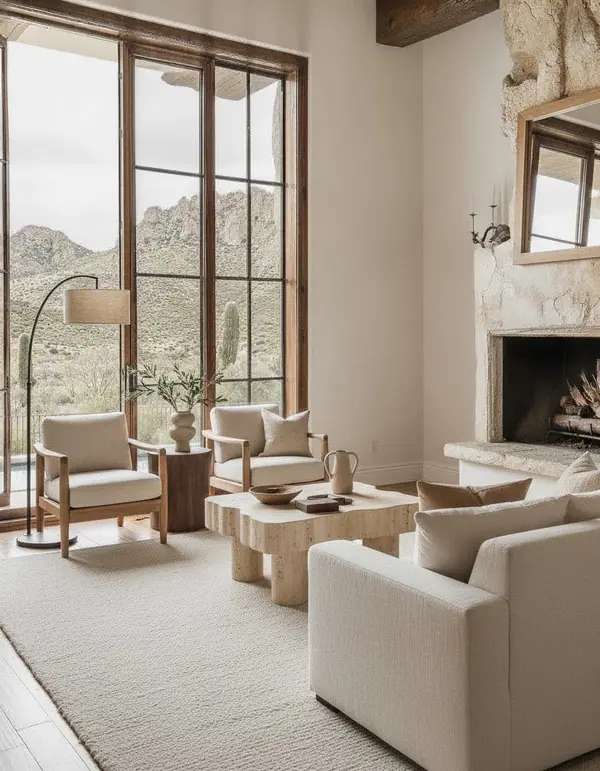
Japandi is a blend of Japanese and Scandinavian design: the restraint, craft and low furniture of a Japanese home with the comfort and light woods of a Nordic one. Expect light oak and ash, paper lanterns, slatted screens, linen, stoneware and a single branch in a vase, in sand and greige with charcoal and muted green for depth.

By Eduardo, founder of Calm Decoration
The colours of Japandi
#efebe3#d6cbb9#a89a85#7d8a6e#3a3836
What gives it away
- Light oak and ash
- Paper lanterns
- Low, simple furniture
- Stoneware and wabi-sabi pieces
- Sand, charcoal and green
Japandi rooms
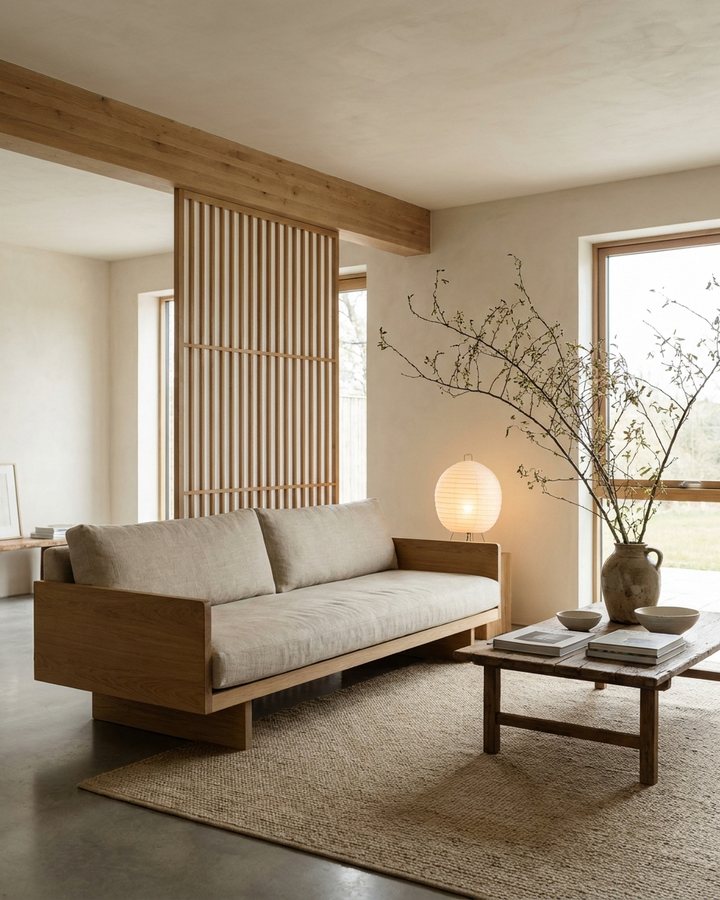
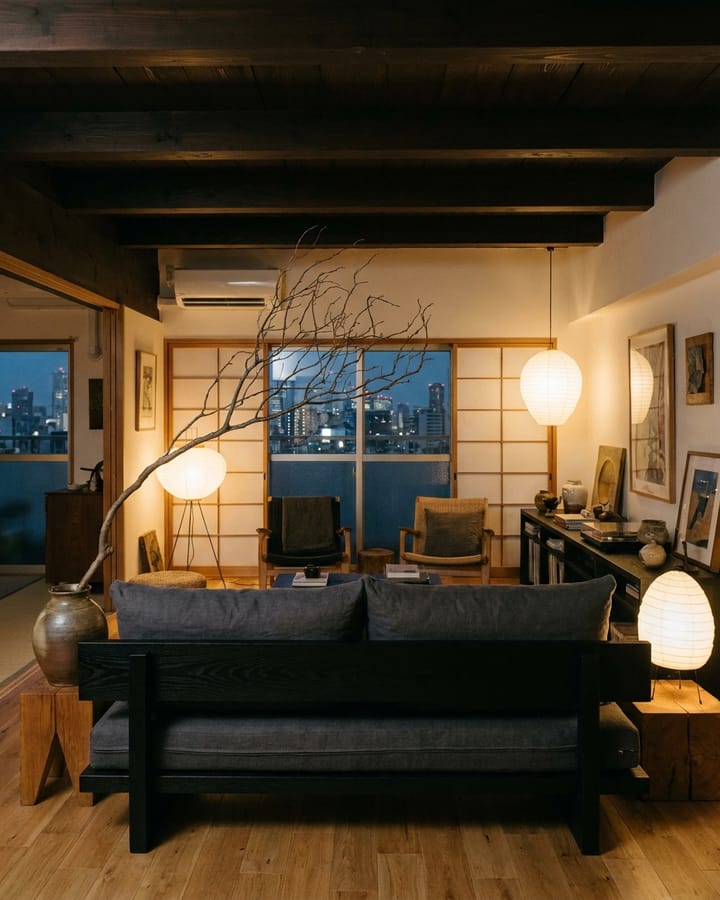
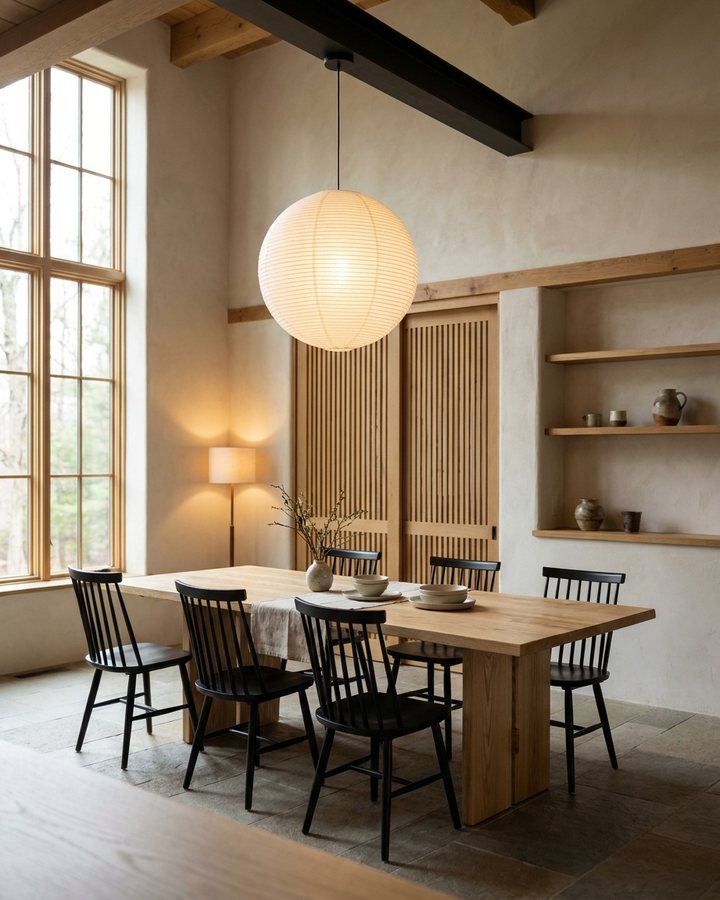
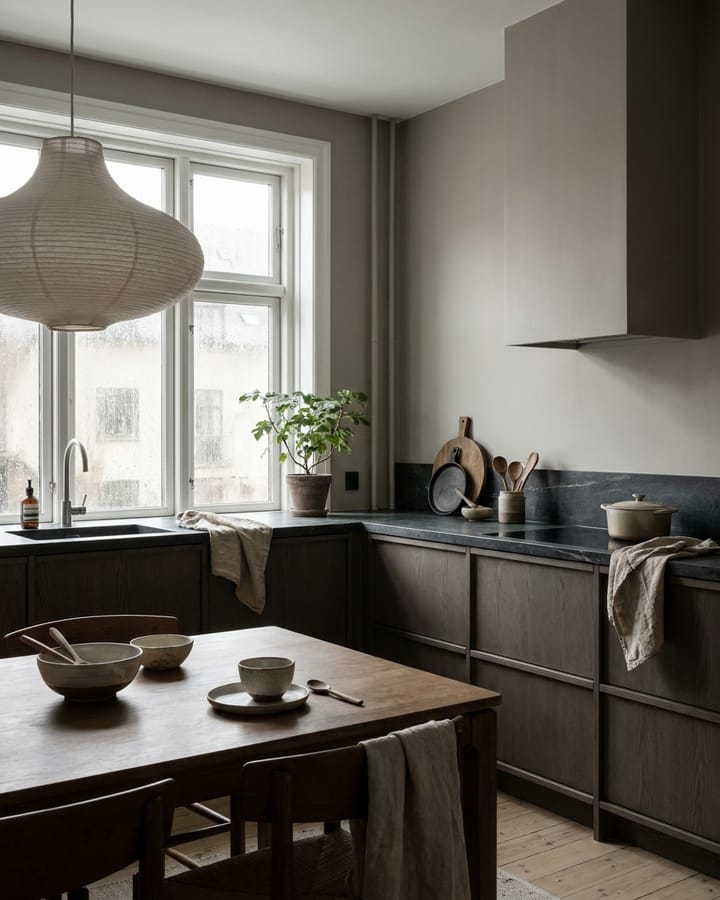
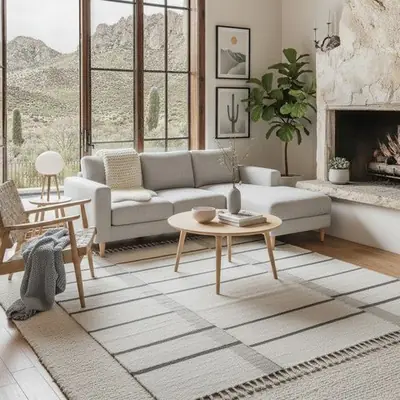
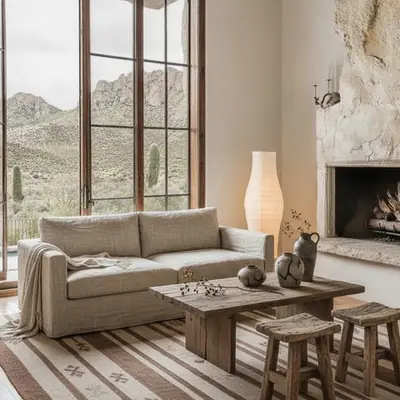
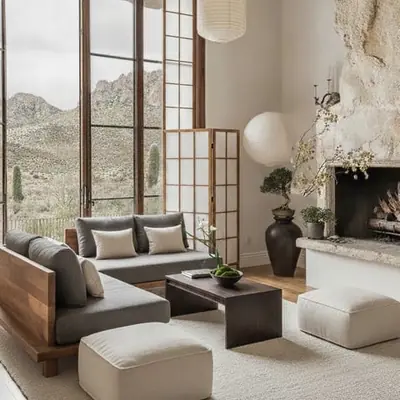
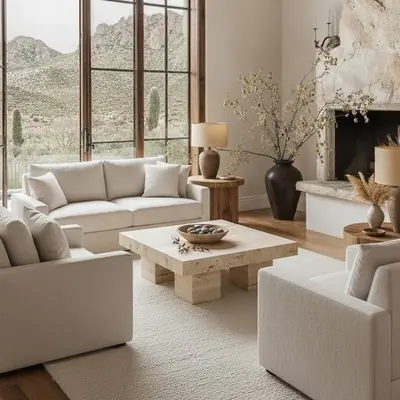
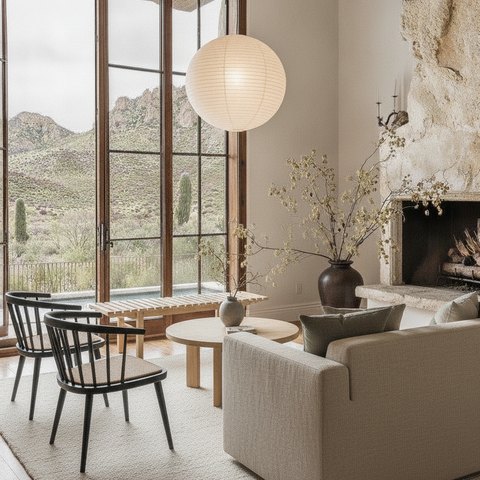
Pictures made for Find my style, our style quiz, to show the look. They are not photographs of real homes.
Pieces in the Japandi style
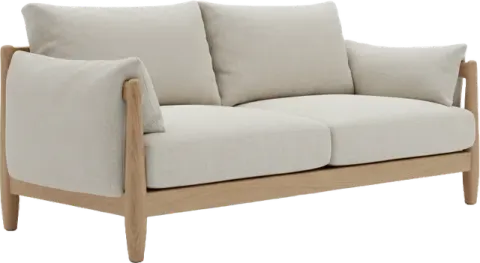 Sofa
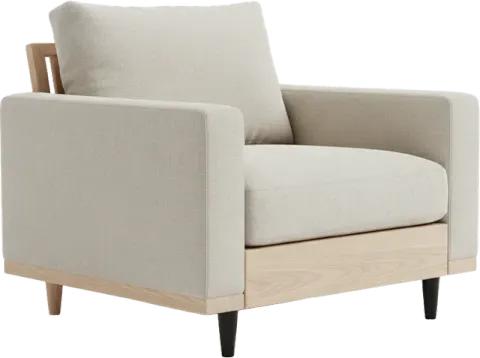 Armchair
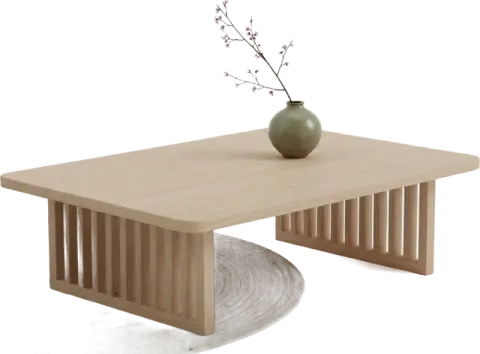 Coffee table
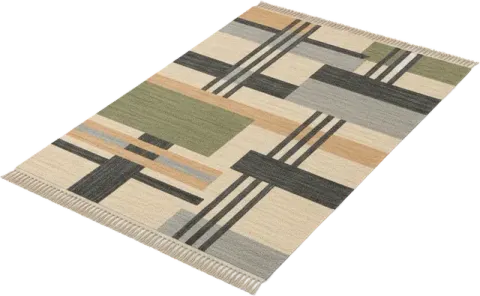 Rug
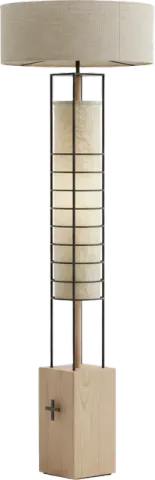 Lamp
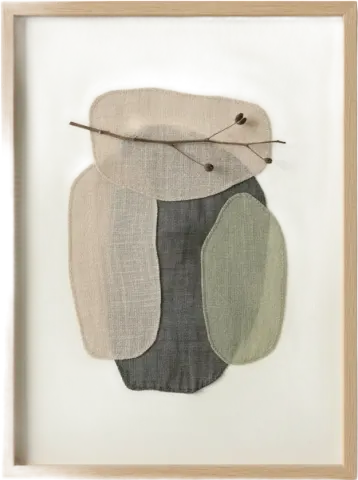 Wall art
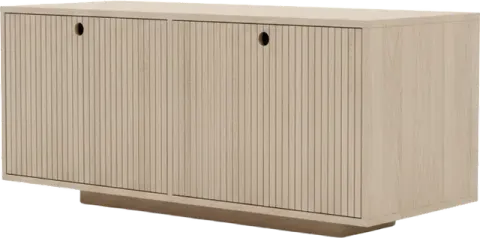 Storage
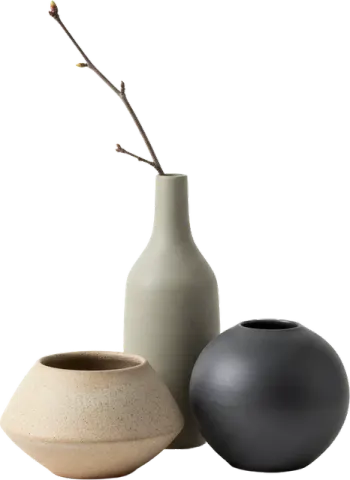 Decor
Drawn for Calm Studio’s moodboards to show the look: they are not products from a shop.
Japandi feels like a long, slow breath. It suits those who care how things are made, who would rather own one good chair than four cheap ones, and who find a bare table more relaxing than a styled one. Calm and uncluttered, yet soft and lived in, it is one of the easiest styles to live with every day.
What is Japandi style?
The name joins "Japan" and "Scandi", and it became widely used in the late 2010s. The idea behind it is older: Japanese and Scandinavian design share a respect for craft, natural materials, simple forms and a closeness to nature.
From Japan, Japandi takes low furniture, restraint, deeper tones and the appreciation of imperfect, handmade things. From Scandinavia it takes light woods, soft textiles and a practical, cosy comfort. The result is warmer than strict Japanese minimalism and quieter than a typical Scandinavian room.
The key elements
- Low furniture with clean lines and rounded edges.
- Light oak and ash, with visible joinery.
- A few black or charcoal pieces for contrast.
- Paper lanterns and soft, diffused light.
- Slatted wood: screens, benches, headboards.
- Stoneware and handmade ceramics.
- Clear surfaces and a single branch in a vase.
Colours
Japandi lives in a narrow, natural range. Walls are rice-paper white. Sand and greige cover the sofa, curtains and rug. A stone-clay taupe comes through ceramics and cushions. Muted sage or moss green arrives from plants and perhaps one textile, and charcoal is the deliberate dark: dining chairs, a picture frame, a vase, a lamp base. Most of the room is light, with three or four darks placed with care.
Materials and textures
Wood leads: light oak, ash, sometimes bamboo, oiled to a matte finish. Paper softens the light, in lanterns and screens. Textiles are linen, cotton and wool, often with a slub or a weave you can see. Ceramics are stoneware with matte or speckled glazes. Black-stained wood or blackened steel provide the contrast. Avoid gloss, chrome and synthetic sheen.
Furniture and shapes
Furniture sits low and keeps its lines simple. A low sofa in oatmeal linen, a round or rectangular coffee table in oak, black spindle-back dining chairs, a slatted bench under the window, a low platform bed in the bedroom. Details are honest: exposed joints, solid timber, rounded corners. Each piece has space around it.
Lighting
Light should be soft and spread out. A large paper lantern overhead, a paper or linen floor lamp in a corner, a small ceramic table lamp. Bulbs are warm and hidden behind shades, never bare. By day, sheer linen curtains or none at all.
Decor and accessories
Decoration is mostly absence. A stoneware vase with one branch, a stack of two books, a hand-thrown bowl, a linen throw folded on the sofa. A large leafy plant in a plain pot brings in the green. Art is minimal: an ink drawing, a textured abstract in earth tones, or nothing.
How to bring Japandi into your home
- Clear every surface, then return only a few things, grouped on a tray or one shelf.
- Replace the ceiling shade with a paper lantern; it is cheap and changes the whole light.
- Swap cushions and throws for linen and wool in sand, greige and one muted green.
- Bring in two or three black accents: a chair, a frame, a vase.
- Lay a plain or flat-woven rug that is big enough; the rug size guide shows how big.
- Put a single branch in a stoneware vase.
- When replacing furniture, choose lower pieces in light oak or ash.
Mistakes to avoid
- All beige, no contrast. Without a few darks, Japandi turns bland.
- Souvenir decor. Fans, figurines and random "Asian" objects are not Japandi.
- Too many plants. One or two large ones, not a jungle.
- Gloss and chrome. Shiny lacquer and polished metal break the natural, matte calm.
Japandi vs Scandinavian
| Japandi | Scandinavian | |
|---|---|---|
| Height | Low, close to the floor | Standard height on slim legs |
| Colour | Sand, greige, charcoal, muted green | White, pale grey, a soft colour accent |
| Contrast | A few deliberate black pieces | Light overall, graphic prints |
| Textiles | Linen, minimal pattern | Wool, sheepskin, knits, simple geometric patterns |
| Objects | Very few, handmade | A little more: candles, prints, plants |
Stillness and a few dark notes say Japandi; brightness and cosy layers say Scandinavian.
Frequently asked questions
What colours go with Japandi?
Warm whites, sand, greige and taupe as the base, muted sage or olive green, and charcoal or black as accents. Avoid bright, saturated colour.
Is Japandi the same as Zen style?
No. Asian Zen draws more directly on the traditional Japanese house, with tatami, shoji screens and dark timber, while Japandi mixes Japanese restraint with Scandinavian comfort and lighter wood.
How does wabi-sabi fit into Japandi?
Wabi-sabi, the Japanese appreciation of the imperfect, is part of Japandi's spirit: a hand-thrown bowl or a creased linen throw. A fully wabi-sabi room is rougher, darker and more worn.