Wabi-sabi interior design: colours, materials and how to get the look
Quick answer
Wabi-sabi is a Japanese way of seeing beauty in what is imperfect, impermanent and incomplete. In a home it means clay and lime plaster that shows the marks of the trowel, rough and aged timber, undyed crumpled linen, handmade ceramics with uneven glazes and a single dried branch, in mud, ash and moss tones. It is quiet, earthy and deeply calm.

By Eduardo, founder of Calm Decoration
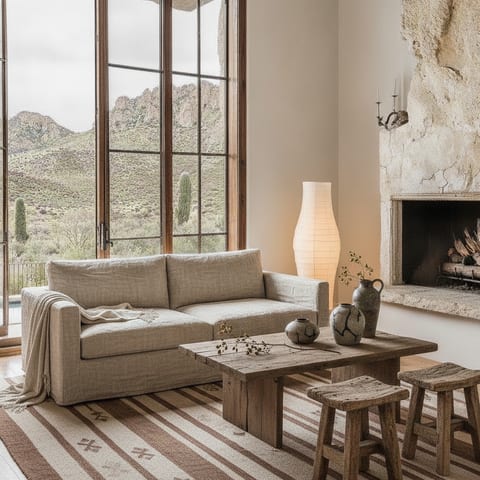
The colours of Wabi-sabi
#e7e0d3#c2b49d#8f8172#6f6a52#4b3f33
What gives it away
- Clay and lime plaster
- Rough, aged timber
- Undyed, crumpled linen
- Handmade, imperfect ceramics
- Mud, ash and moss tones
Wabi-sabi rooms
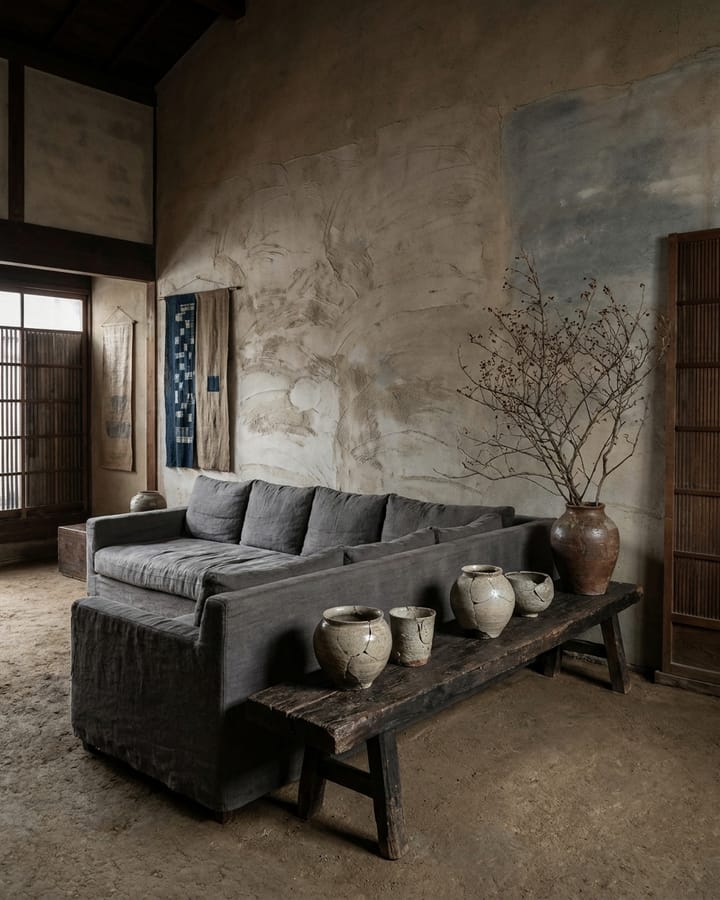
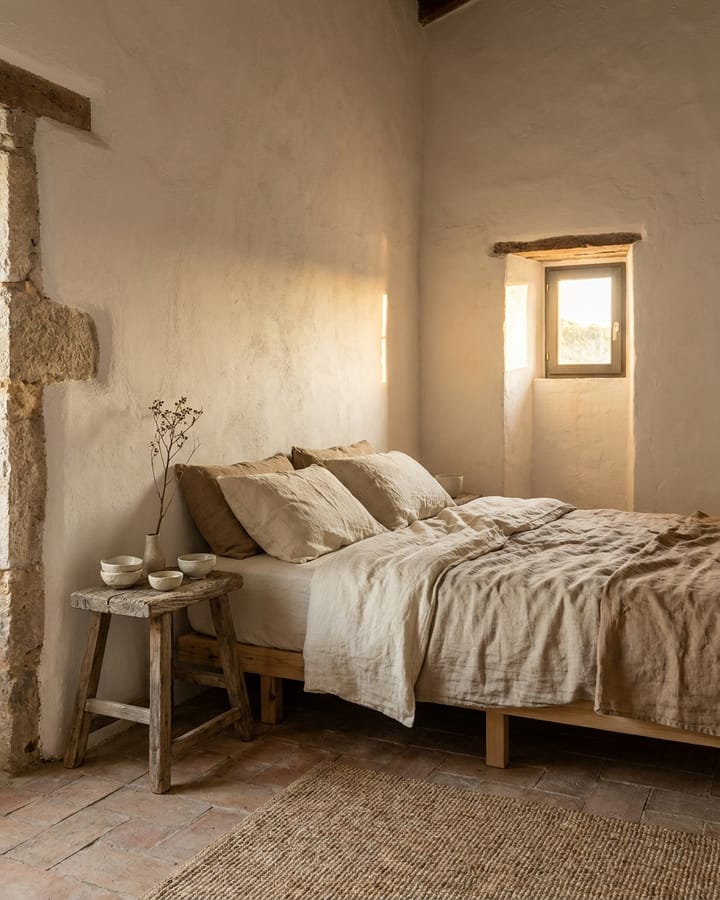
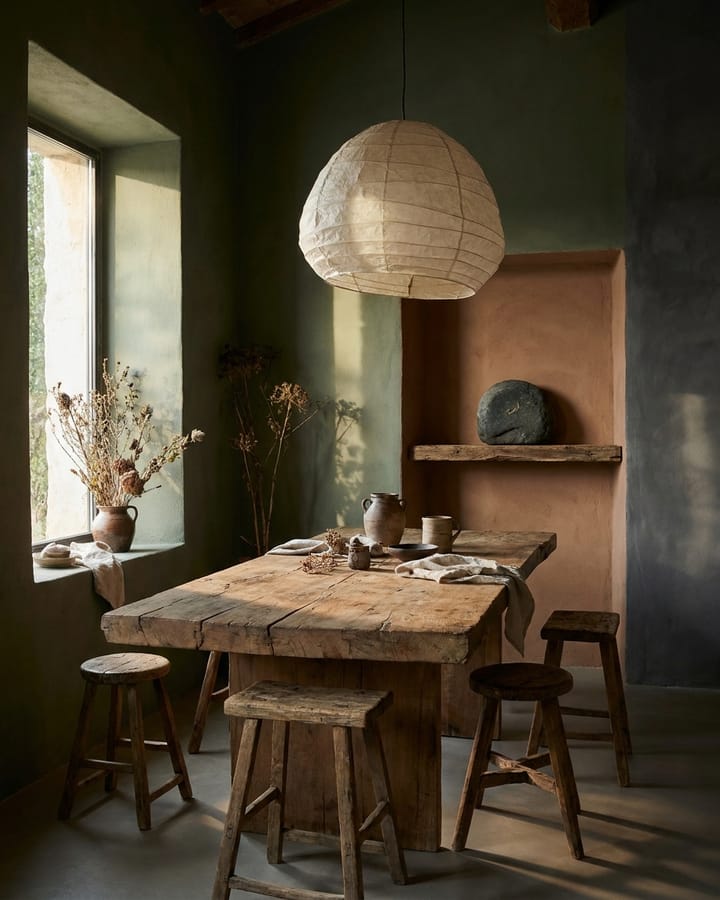
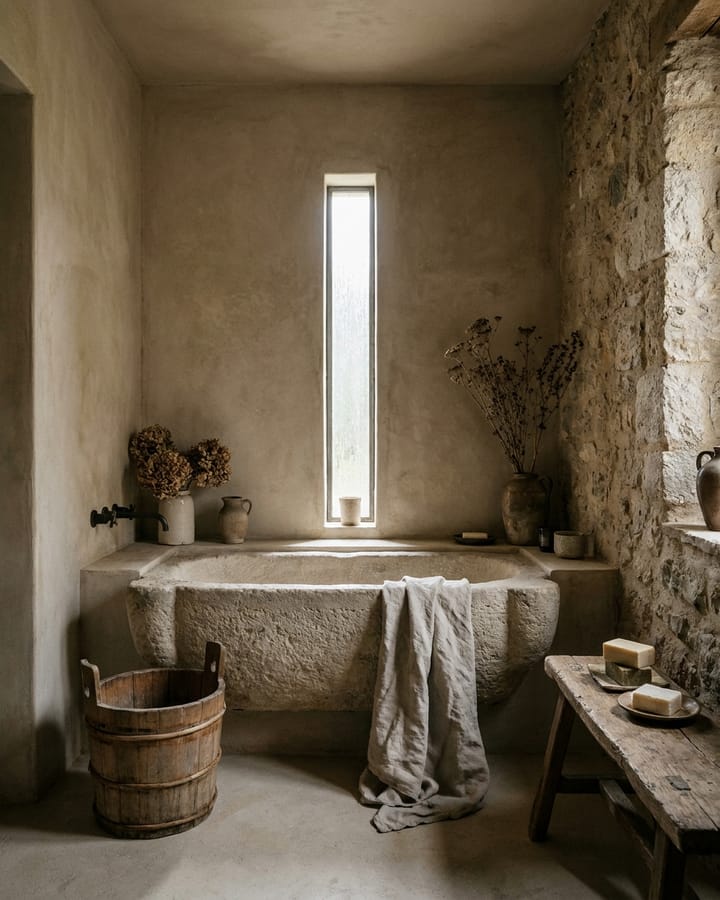
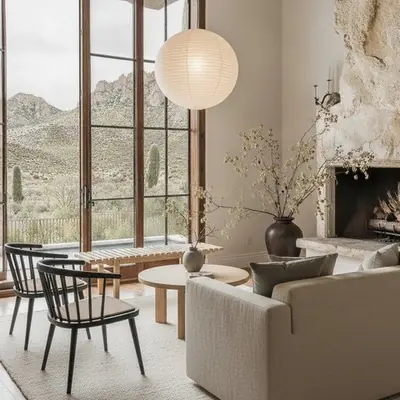
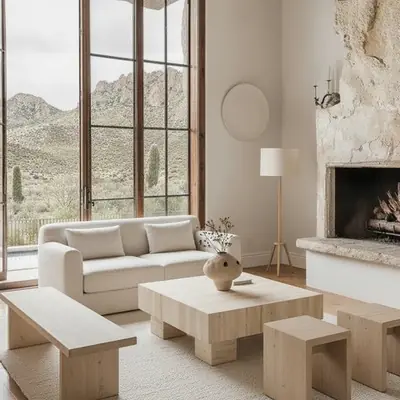
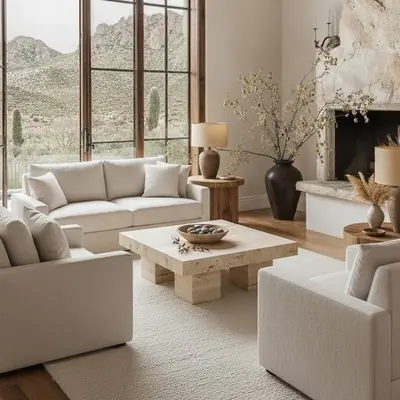
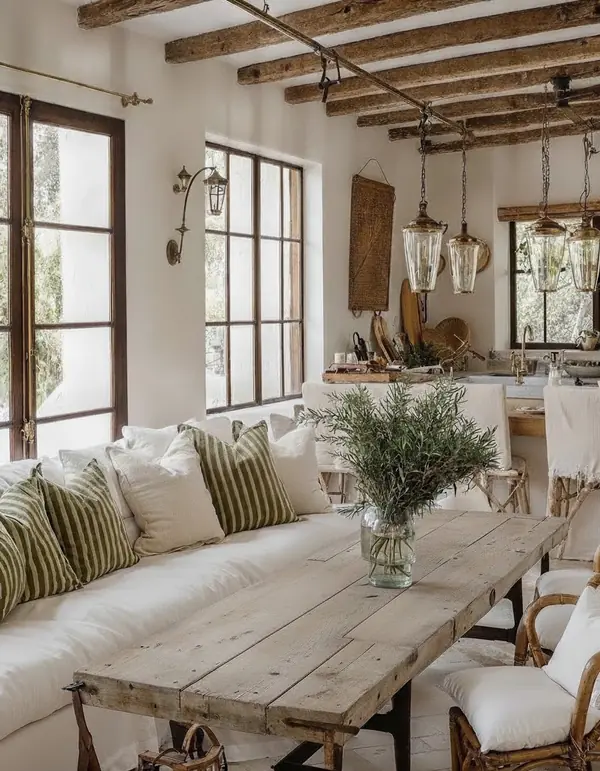
Pictures made for Find my style, our style quiz, to show the look. They are not photographs of real homes.
Pieces in the Wabi-sabi style
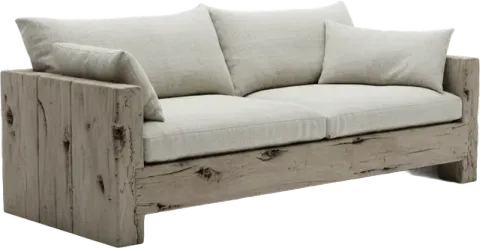 Sofa
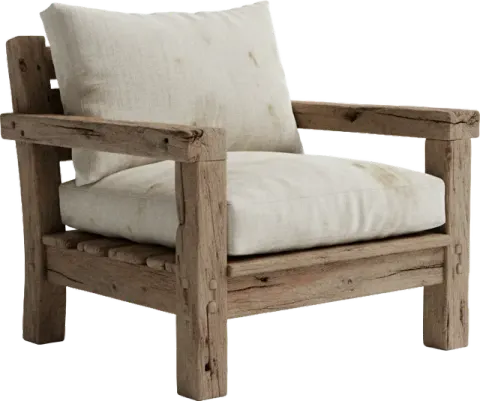 Armchair
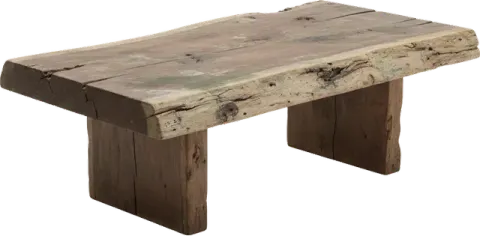 Coffee table
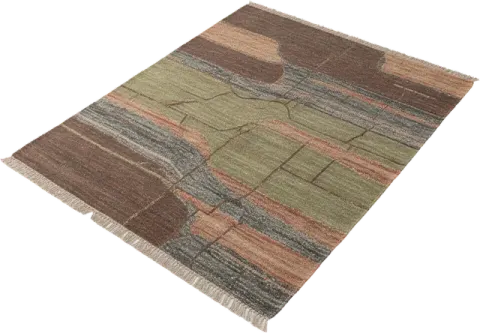 Rug
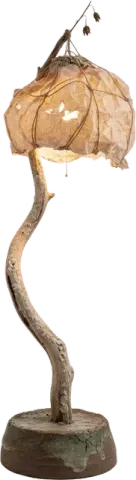 Lamp
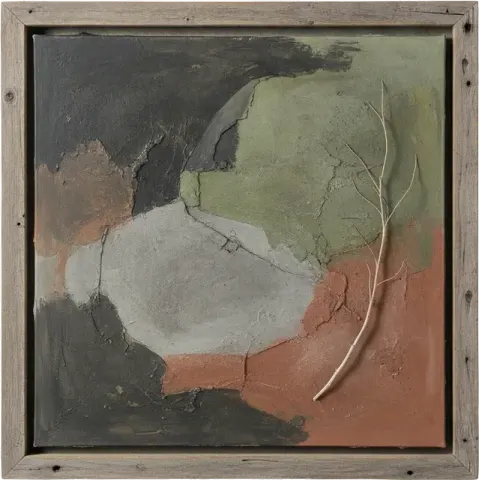 Wall art
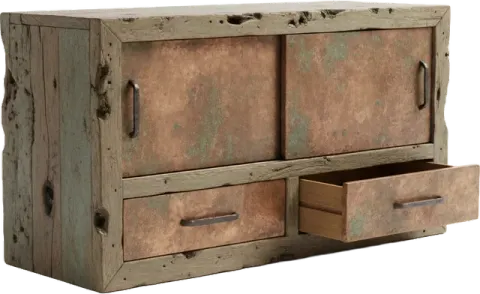 Storage
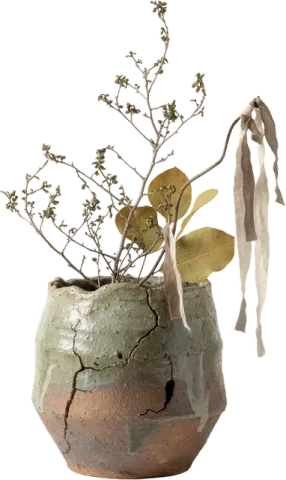 Decor
Drawn for Calm Studio’s moodboards to show the look: they are not products from a shop.
Do you keep the chipped bowl because you love it, and find a perfect, brand-new room slightly tiring? Then wabi-sabi may already be your style. It asks you to slow down and notice: the grain of old wood, the crease in linen, the way afternoon light moves across a rough wall.
What is wabi-sabi style?
Wabi-sabi began as an outlook, not a decorating style. It comes from Japanese culture and is closely linked to Zen Buddhism and the tea ceremony. "Wabi" is usually explained as quiet, rustic simplicity, and "sabi" as the beauty that comes with age and wear. Japanese tea masters of the sixteenth century, Sen no Rikyū the best known among them, favoured plain, rough, locally made tea bowls over perfect imported ones.
In interiors, the idea became a look: natural materials, handmade objects, muted earth colours and plenty of empty space. What defines it is acceptance. Nothing is new, polished or perfectly matched, and that is the point.
The key elements
- Walls in clay or lime plaster with visible texture.
- Rough, aged or reclaimed timber.
- Undyed, crumpled linen.
- Handmade ceramics with cracks, drips and uneven glazes.
- A single branch or dried stem, changed with the seasons.
- Low, simple furniture with a worn surface.
- Empty space, valued as much as objects.
Colours
The palette is the colour of unprocessed materials. Raw plaster and undyed linen give the lightest tone, for walls and the sofa. Clay and oat cover cushions, rugs and ceramics. Ash, a soft brown-grey, comes from old wood and stoneware, and moss, an olive-grey green, from plants, dried leaves or a glaze. Mud brown, the darkest, anchors the room in a table or a stool. Everything is low in saturation, as if faded by time.
Materials and textures
Clay and lime plaster, rough timber, reclaimed beams, stone and pebbles. Unglazed or wood-fired ceramics, stoneware, bark and dried plants. Linen, hemp and raw cotton, washed and left to crease. Paper for lamps. Patinated iron and aged brass in small amounts. The surfaces should all tell a story of use.
Furniture and shapes
Furniture is low, simple and worn: a linen-covered sofa that looks lived in, a slab table of rough timber, aged wooden stools, a bench with the marks of years. Shapes are organic and slightly irregular. Second-hand and vintage pieces suit the style better than new ones made to look old.
Lighting
Light is soft, low and warm. Paper floor lamps, a lantern on the floor, candles, and daylight through linen. Shadow is part of the look: do not light every corner. Bulbs should be warm and dim, and always hidden.
Decor and accessories
Very little: a hand-thrown vase with one branch, a few river stones, a wooden bowl, a stack of old books. A mended ceramic suits the mood; kintsugi, the Japanese craft of repairing broken pottery with lacquer and gold, is often linked to wabi-sabi. Change the branch or stem with the seasons.
How to bring wabi-sabi into your home
- Keep the worn things: a faded rug, a chipped jug, a scratched table.
- Remove plastic, high gloss and anything mass-produced you do not need.
- Stop ironing the linen: wash it and let it crease.
- Bring in found things: a branch from a walk, a few stones.
- Look for second-hand wood and handmade ceramics; redesigning a room on a budget has more ideas.
- Paint walls with limewash or a clay paint in an earthy white.
- Replace a bright lamp with a paper one.
Mistakes to avoid
- Fake ageing. Factory-distressed furniture is the opposite of wabi-sabi.
- Mess. Imperfect objects, yes; clutter and dust, no.
- Too dark. Earth tones need daylight and lamps, or the room becomes gloomy.
- Treating it as a trend. Buying a whole "wabi-sabi look" at once misses the idea.
Wabi-sabi vs Japandi
| Wabi-sabi | Japandi | |
|---|---|---|
| Idea | A Japanese outlook on imperfection | A design blend, Japanese and Scandinavian |
| Surfaces | Rough, worn, handmade | Smooth, crafted, clean |
| Wood | Dark, aged, reclaimed | Light oak and ash |
| Colour | Mud, ash, moss, clay | Sand, greige, charcoal, muted green |
| Feel | Earthy and contemplative | Calm and fresh |
Patina and the handmade lead to wabi-sabi; a cleaner, lighter calm leads to Japandi.
Frequently asked questions
What does wabi-sabi mean?
It is a Japanese idea of beauty that finds value in the imperfect, the impermanent and the incomplete. In a home, that means natural, worn and handmade things.
Is wabi-sabi just messy?
No. A wabi-sabi room is very edited: few objects, each with meaning, and lots of empty space. Imperfection belongs to the things, not to the order of the room.
How is wabi-sabi different from Zen style?
Asian Zen recreates the order of a traditional Japanese house, with its matted floors, paper screens and dark wood. Wabi-sabi is a looser sensibility that can live in any home.