Redesign a room in 7 days
Bring it together: moodboard, shopping order and a preview
In short
Bring a room plan together in three steps. Make a moodboard of your colours, five or six materials and the main pieces, each with where it goes. Turn it into a shopping order: anything that changes the room itself first, then the large pieces, then rugs, curtains and lighting, and accessories last. Then check the plan on a photo of your room before spending.

By Eduardo, founder of Calm Decoration
This is the last day. Over six lessons you decided how the room should feel, named your style, planned the layout, chose your colours, worked out the sizes and planned the lighting. Today you put it all on one page, decide the order in which to buy things, and check the whole plan on a photo of your own room before you spend money. This is the step that turns a pile of good decisions into a room.
Make a moodboard
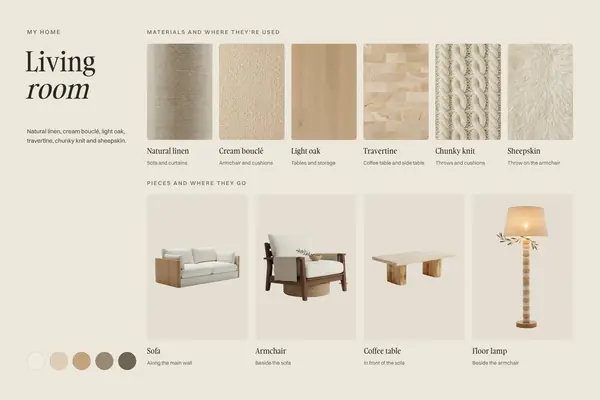
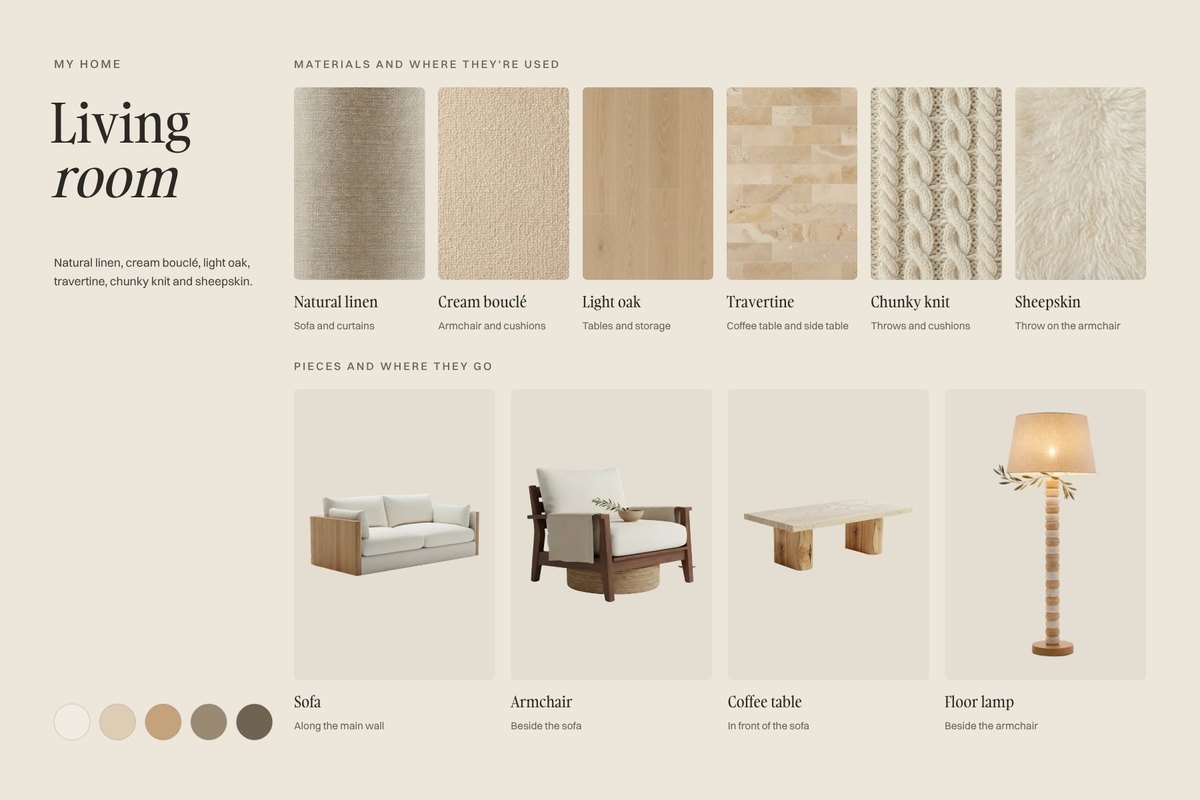
A moodboard is one page that shows how everything in the room goes together. It is not a collage of pretty pictures: it is a plan you can check every purchase against. Mine always have the same parts:
- The palette: your three to five colours from lesson four, as swatches.
- The materials: five or six, such as the wood, the main fabric, the stone or metal, the rug's fibre. Next to each, write where it is used: "oak: coffee table and shelves", "linen: sofa and curtains".
- The main pieces: the four to six things that define the room, usually the sofa or bed, a chair, the rug, a table and a lamp. Next to each, write where it goes and its size from lesson five.
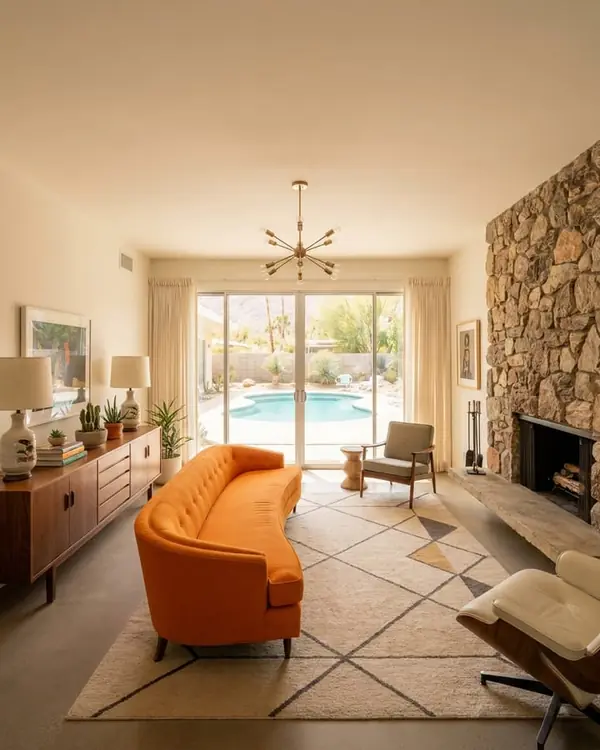
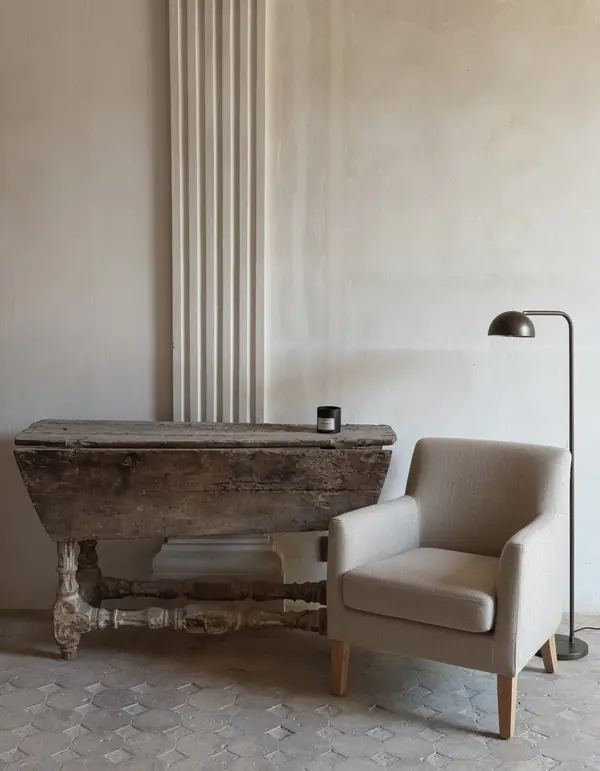
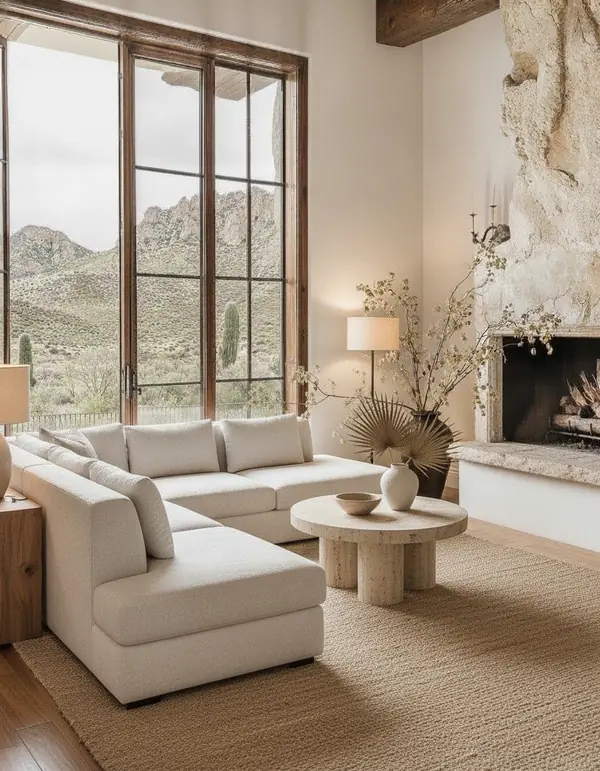
- One or two rooms that capture the feeling of your three words from lesson one.
You can make one on paper with samples and cut-outs, in any app that lets you place pictures on a page, or in Calm Studio, whose Moodboard has places for five colours, six materials and four pieces, each with a line for what it is and where it goes. Whichever you use, look at it as a whole: if one thing jumps out as belonging to another room, it probably does. The guide to making a moodboard for a room shows each part in more detail.
Write the shopping order
The order you buy things in matters as much as what you buy. A rule of thumb that works for most rooms:
| Order | What | Why |
|---|---|---|
| 1 | Anything that changes the room itself: repairs, wiring, paint, flooring | It is messy, and everything else has to fit around it |
| 2 | The large pieces: sofa, bed, dining table, storage | They set the scale and the main colours |
| 3 | The rug | It is sized from the furniture and holds it together |
| 4 | Curtains and lighting | They finish the room and change how it feels at night |
| 5 | Smaller furniture: side tables, a chair, shelves | They fill the gaps the plan leaves |
| 6 | Art, cushions, plants and objects | They are easiest to change, so they come last |
Check delivery times for the big pieces early, since made-to-order furniture can take several weeks to arrive.
If the budget will not stretch to everything at once, follow the same order and spend most on what you use every day and is hard to replace, such as the sofa, the mattress and the main rug. Cushions and accessories can wait, and often look better chosen once the room is nearly finished. There is more in what to buy first when decorating.
See the plan before you buy
Even with a careful plan, it is hard to picture a new sofa in your own room. Before you spend, check the plan on a photo of the room, one of those you took in lesson one, from a corner, in daylight.
Without any tools, print the photo, cut out pictures of the pieces you are considering at roughly the right size, and lay them on top. It is rough, but it quickly shows when something is too big, too dark or simply wrong. The masking tape outlines from lessons three and five do the same in the room itself.
With Calm Studio, the studio we make at Calm Decoration, you upload that photo and see the room itself redesigned:
- Restyle with your moodboard furnishes the room with your board's pieces, or restyles it in your style by name.
- Furnish furnishes an empty room, or adds a piece you are considering from its product photo, so you can see that sofa or armchair in your room.
- Remove furniture shows the room without a piece you are unsure about, or empty.
- Room audit reads the photo and gives a designer's advice, point by point, on what to change.
Your windows, doors and the shape of the room stay as they are in your photo, so what you see fits your real room; with a moodboard, the walls and floor stay as they are too. Be clear about what a preview is: a picture of how the room could look, not a measured plan. The pieces it draws are drawn, not products from a particular shop, and it does not give you a quote or a shopping list. Use it to judge the look, the colours and the balance, and your plan and tape measure for the sizes.
Decide your first purchase
With the moodboard, the order and the preview, you know what to buy first and why. Buy that one thing. Then live with it for a little while before the next, checking each new piece against the board. A room built this way comes together steadily, and it looks like yours.
Day 7 · 60 minutes
Your task for today
Set aside about an hour.
- Make your moodboard: palette, materials with where each is used, the main pieces with where each goes, and one or two rooms for the feeling.
- Write your shopping order using the table above, with the size of every item.
- Check the plan on a photo of your room, with paper cut-outs or with Calm Studio.
- Change anything that looks wrong, then choose your first purchase.
You have finished the course. Keep your notes, your plan and your board together: they are the brief for your room.
Frequently asked questions
Do I need software to make a moodboard?
No. A sheet of card with paint samples, fabric scraps and printed pictures works very well. Software makes it easier to change things and to keep the board on your phone when you shop.
What should I buy first when decorating a room?
Anything that changes the room itself, such as paint, flooring or wiring, then the large pieces like the sofa or bed, then the rug, curtains and lighting. Accessories come last because they are the easiest to change.
How accurate is an AI preview of my room?
It shows the look, the colours and the balance of the room well, and keeps your windows and doors where they are. It is not a measured drawing, and the furniture in it is drawn rather than a specific product, so check sizes against your own measurements before you order.
What if I cannot afford everything at once?
Follow the shopping order and spread it out. Spend first on what you use every day, and fill gaps with what you already own or with temporary pieces until you find the right one.