Redesign a room in 7 days
Layer the lighting
In short
Light a room in three layers: ambient light for the whole room, task light where you read, cook or work, and accent light on art, shelves or plants. Use at least three light sources at different heights. For living rooms and bedrooms, choose warm white bulbs of 2,700 to 3,000 K; an LED of about 800 lumens gives the light of an old 60 W bulb.

By Eduardo, founder of Calm Decoration
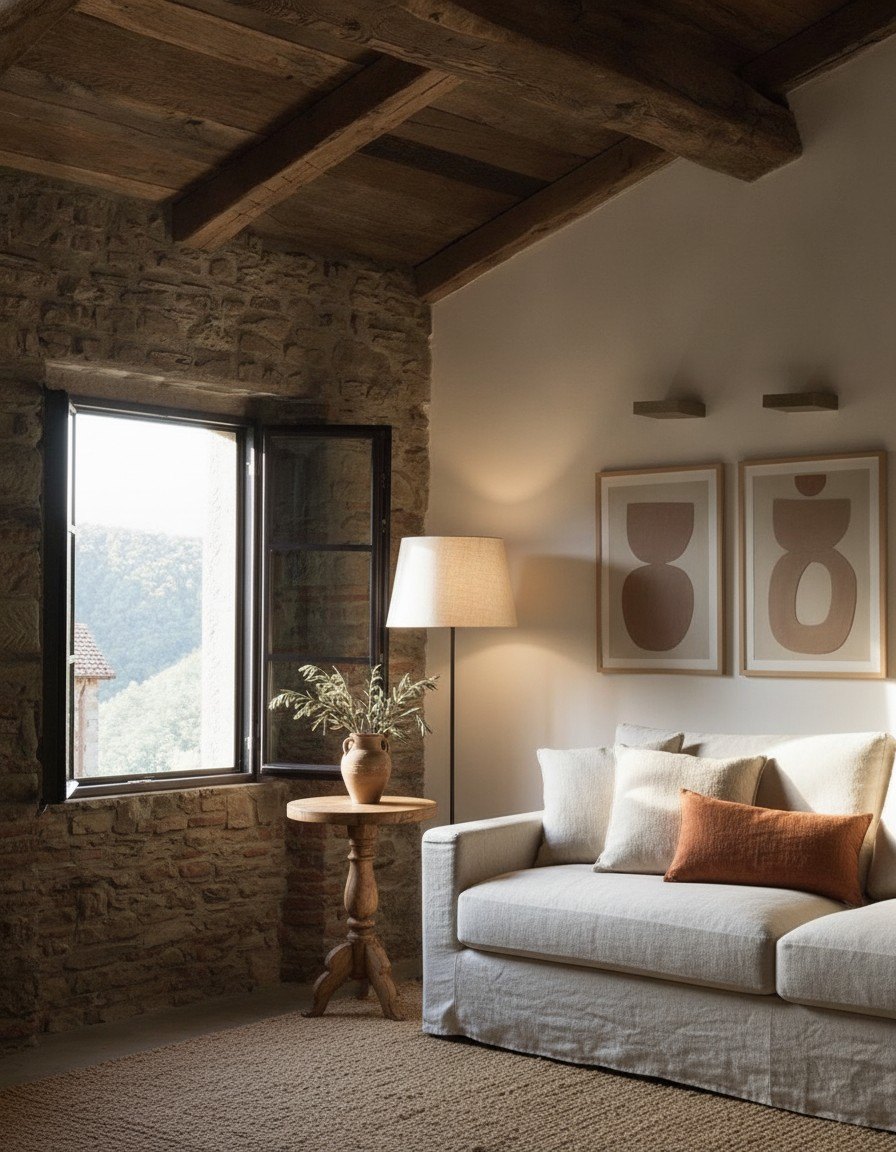
You can do everything else right, the layout, the colours, the sizes, and still end up with a room that feels flat in the evening. The reason is almost always the lighting: one bright light in the middle of the ceiling, doing everything badly. Today you will plan light the way designers do, in layers, and choose the bulbs that make a room feel warm rather than clinical. It is one of the cheapest changes in this course and one of the most noticeable.
Why one ceiling light is not enough
A single ceiling light lights the room from one point, straight down. It flattens everything: faces look tired, corners stay dark, and the room loses depth. Rooms that feel inviting in the evening are lit from several places at different heights, so there are pools of light and soft shadows between them. Your eye reads that as cosy.
The ceiling light still has its uses, for cleaning or finding a lost earring. It just should not be the only light, or the one you live by.
The three layers
| Layer | What it does | Examples |
|---|---|---|
| Ambient | Lights the whole room softly, so you can move around | Ceiling lights on a dimmer, wall lights, a large floor lamp that throws light up |
| Task | Bright, focused light where you do something | A reading lamp by the armchair, a desk lamp, lights under kitchen cabinets, bedside lamps |
| Accent | Draws the eye to something and adds depth | A picture light, a lamp on a shelf, an uplight behind a plant, a candle |
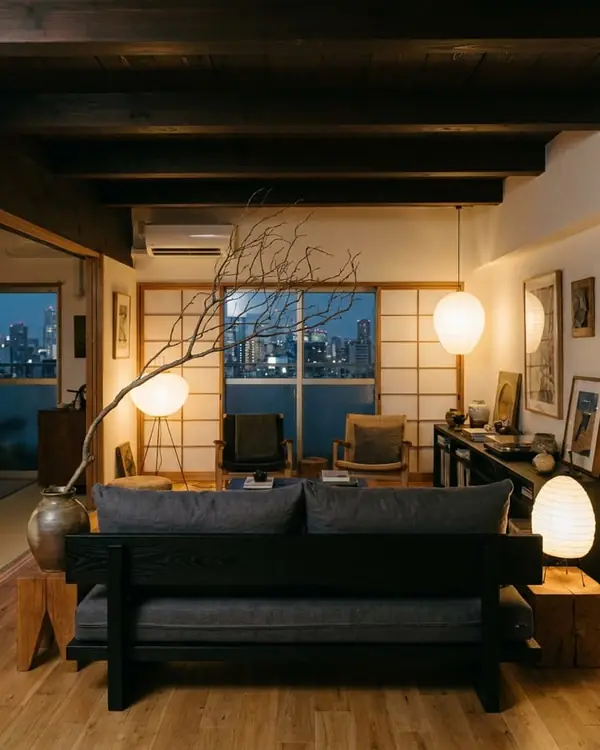
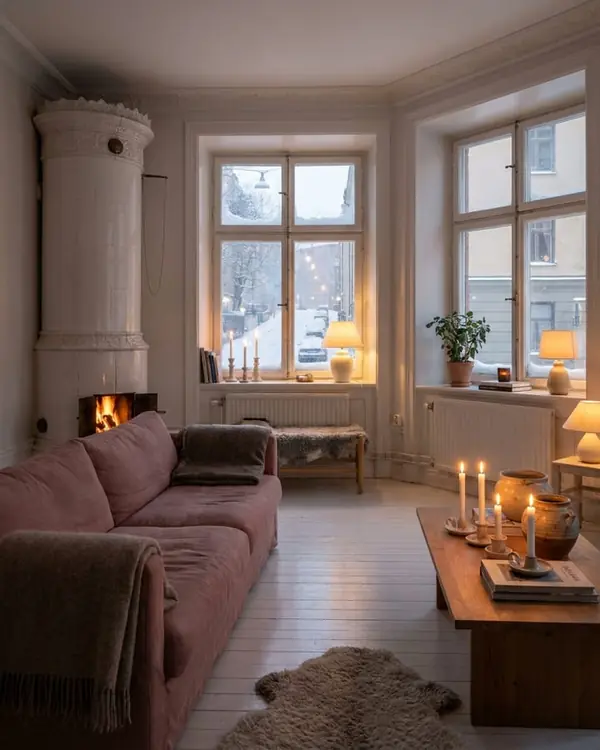
A well-lit room uses all three. In a living room that might mean wall lights or a floor lamp for ambient light, a reading lamp beside the sofa for task light, and a small lamp on a bookcase or a picture light for accent. The guide to lighting a room in layers goes through each room of the home.
How many lights does a room need?
A useful rule of thumb is at least three light sources in a living room, at different heights, and more in a larger room. Place them so they form a rough triangle around the room, which spreads light evenly and leaves no dark corner. A mix of heights matters as much as the number: one floor lamp, one table lamp and one low accent light feels far better than three lamps all at the same level.
Choose the right bulbs
Bulbs make more difference than lamps. Three things are printed on the box:
- Colour temperature, in kelvin (K). Lower numbers are warmer and more yellow, higher numbers cooler and bluer. For living rooms and bedrooms, 2,700 to 3,000 K (often sold as "warm white") gives a soft, flattering light close to that of the old filament bulbs. 3,000 to 4,000 K is crisper and suits kitchen worktops and a bathroom mirror; above 4,000 K feels cool and is best kept for workspaces and garages. Keep to one temperature within a room, because mixed whites look patchy.
- Brightness, in lumens (lm). Watts no longer tell you how bright a bulb is. As a guide, an LED of about 800 lumens gives the light of an old 60 W bulb, about 450 lumens that of a 40 W, and about 1,600 lumens that of a 100 W.
- Colour rendering (CRI or Ra). This says how true colours look under the bulb, out of 100. A CRI of 90 or more makes wood, fabric, paint and skin look as they should; cheaper bulbs are often around 80, which can make colours look dull.
Dimmers change everything. A room that is bright enough for a busy afternoon can be soft and calm in the evening. Check that the bulbs you buy say they are dimmable, and that they suit the dimmer switch or lamp you will use them with.
Place lamps where they count
- Reading lamps go beside or just behind the seat, with the light falling over your shoulder onto the page.
- Table lamps look best when the bottom of the shade is at about eye level when you are seated, so light spreads out without glare.
- Bedside lamps should let you read sitting up in bed, with the shade low enough that the bulb is not in your eyes.
- Dark corners are the best places for a floor lamp or an uplight: lighting a corner makes the whole room look larger.
- Art and shelves come alive with a small lamp or a picture light. Lighting what you love is the accent layer.
Check where your sockets are on the plan from lesson three. If a lamp has to stand far from one, choose a lamp that is rechargeable, or plan where a cable can run safely along a wall or under a rug, never across a walkway. Anything wired into the walls or ceiling is a job for a qualified electrician.
Day 6 · 30 minutes
Your task for today
This takes about 30 minutes, with your plan from lesson three.
- Mark the existing lights and sockets on your plan.
- Mark where things happen: reading, working, eating, watching television.
- Plan one light for each layer: ambient, task near each activity, and at least one accent.
- Check the triangle: are there at least three light sources, at different heights, spread around the room?
- Write down the bulbs to buy: warm white, 2,700 to 3,000 K for living rooms and bedrooms, the lumens you need, dimmable where you will dim, and CRI 90 or more where you can.
Tomorrow you will bring everything together into a moodboard, a shopping order, and a way to see the plan before you buy.
Frequently asked questions
How many lamps does a living room need?
As a rule of thumb, at least three light sources besides the ceiling light, at different heights, and more in a larger room or an open-plan space. Spreading them around the room matters more than the exact number.
Should I choose warm white or daylight bulbs?
For living rooms and bedrooms, warm white of 2,700 to 3,000 K. Daylight bulbs, usually 5,000 K or more, are useful for close work and workshops but make most homes feel cold in the evening.
Are smart bulbs worth it?
They can be, especially in a rented home where you cannot add switches or dimmers. Many let you dim the light and change its warmth from your phone. Check their brightness in lumens and their colour rendering as you would for any bulb.
What if my room has very few sockets?
Use rechargeable lamps for accent light, a multi-way extension lead hidden behind furniture where it is safe, and plug-in wall lights. For more sockets or new wall lights, ask a qualified electrician.