Decorating a rented home without losing your deposit
Quick answer
Read your tenancy agreement first and ask your landlord in writing before painting, drilling or changing fixtures. Then put your effort into what moves with you: rugs over floors you dislike, lamps and plug-in wall lights, curtains on existing rails or tension rods, art leaning on shelves, furniture, textiles and plants. Keep every original part you swap, and photograph the home when you move in.

By Eduardo, founder of Calm Decoration
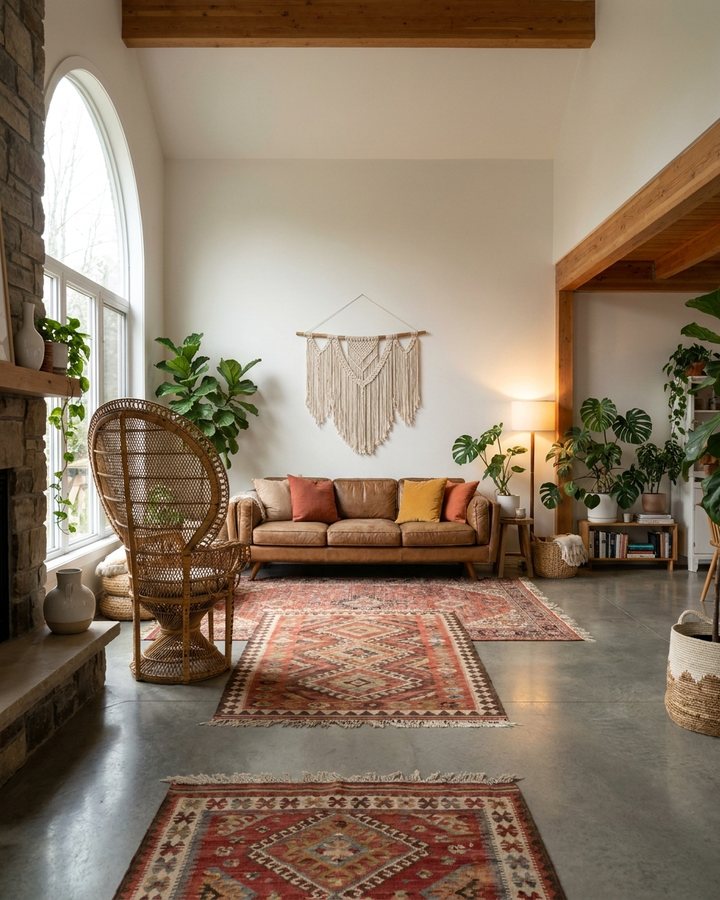
Renting does not mean living with beige walls and a ceiling light you hate. Most of what makes a home feel like yours can be brought in, and taken away again, without a single hole. This guide shows you what to check before you start, the changes that carry little risk, and how to leave the place as you found it.
Rules differ from country to country and from one agreement to the next, so treat everything here as general advice and always check your own tenancy agreement.
What can you change in a rented home?
What you can change is set by your tenancy agreement and your landlord, so the honest answer is: read the agreement, then ask. As a general pattern, anything freestanding is yours to choose, while anything that changes the building usually needs permission.
| Change | Usually |
|---|---|
| Furniture, rugs, cushions, throws, plants, lamps | Yours to choose |
| Swapping curtains on the existing rail, or lampshades on existing fittings | Usually fine if you keep and refit the originals |
| Adhesive hooks and strips | Check the agreement; they can mark the walls |
| Picture hooks, screws, shelves | Ask first |
| Painting, wallpaper (even removable), new light fittings | Ask first, in writing |
| Anything electrical or plumbed in | Ask first; use a qualified tradesperson |
Many landlords say yes to sensible requests, sometimes on condition that walls go back to the original colour when you leave. Get any agreement in writing, even a short email.
Before you change anything
- Read the tenancy agreement for anything about decorating, nails, adhesive, smoking, pets and "returning the property to its original condition".
- Photograph every room when you move in, close up on any existing marks, holes and wear, and keep the photos with their dates. Check them against the inventory if you were given one.
- Ask in writing for anything beyond moving your own things in, and say exactly what you want to do.
- Keep the originals. Put every lampshade, handle, curtain and blind you take down in a labelled box.
- Plan the exit. Before you put something up, know how it comes down.
How do you hang art without nails?
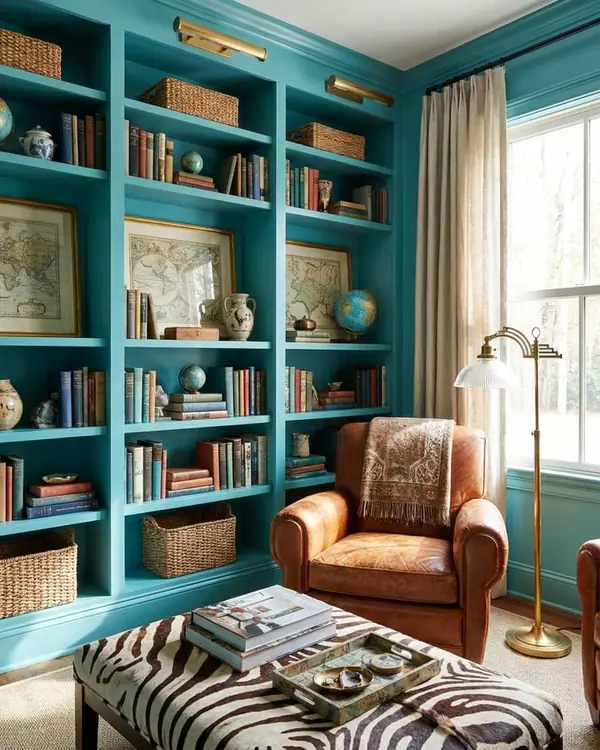
The simplest way is not to hang it at all. Lean art on a mantelpiece, a sideboard, a shelf or a deep windowsill, overlapping two or three frames of different sizes. A large canvas leaning against the wall on the floor looks relaxed and deliberate.
Other options:
- Adhesive picture strips and hooks. Respect the weight limit on the packet, apply them to clean, dry, sound paint, and remove them exactly as the instructions say. They can still pull off paint, especially on fresh paint or wallpaper, so test one somewhere hidden first.
- Existing holes. Reuse the hooks or holes already there, and plan your art around them.
- A picture ledge or a few hooks with permission. One fixing for a ledge lets you change the art as often as you like.
- A floor easel or a leaning shelf for a statement piece.
When you do hang art, how high to hang art gives the heights that look right.
Cover the floors and walls you do not like
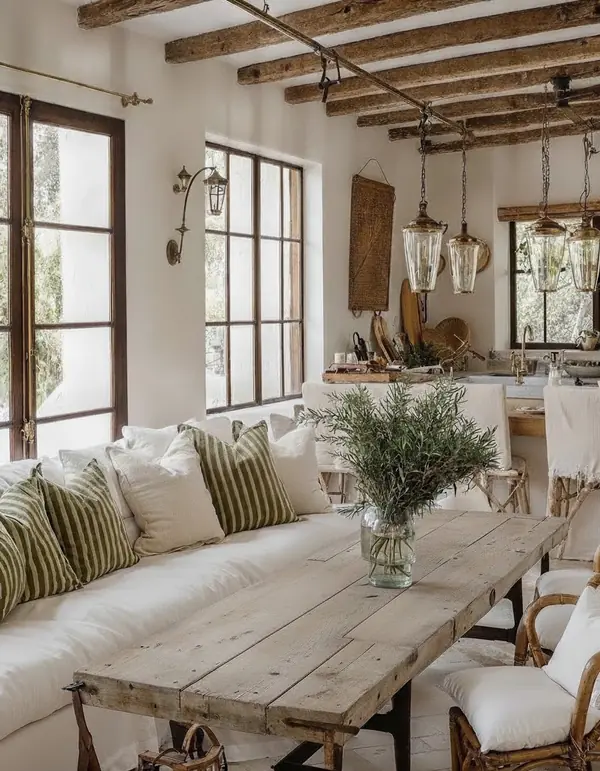
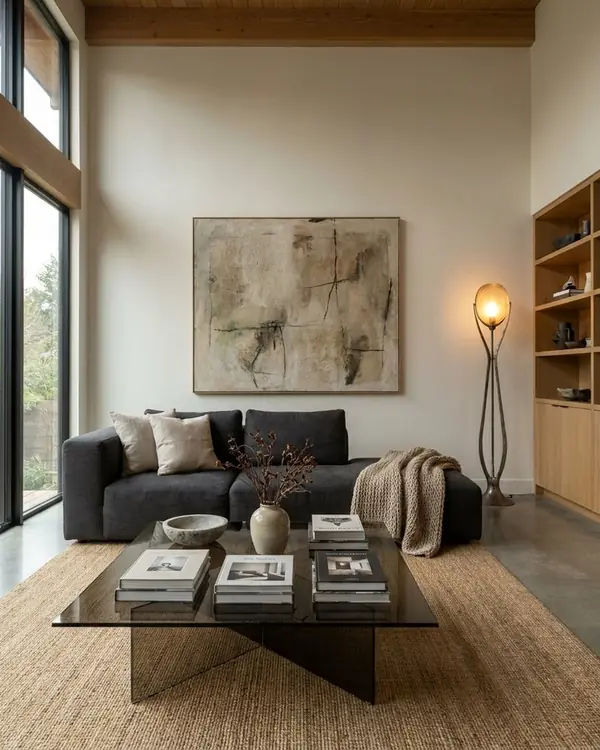
Rugs are a renter's best friend. A large rug hides a tired carpet or a cold tiled floor, softens the sound and brings in colour and pattern. Layer a smaller patterned rug over a large plain one, or put two or three rugs down, as in the room at the top of this page.
Use a rug pad underneath to stop it slipping and to protect the floor, and check that it suits your floor type, as some rubber backings can mark certain finishes.
For walls, think big and movable: a tall bookcase, a folding screen, a large piece of art or a textile hanging can all cover a wall you do not like. Removable wallpaper exists, but it can still lift paint, so test a patch and ask before using it on a whole wall.
Lighting without an electrician
Bad lighting is the most common problem in rented homes, and one of the easiest to fix. You do not need to touch the wiring.
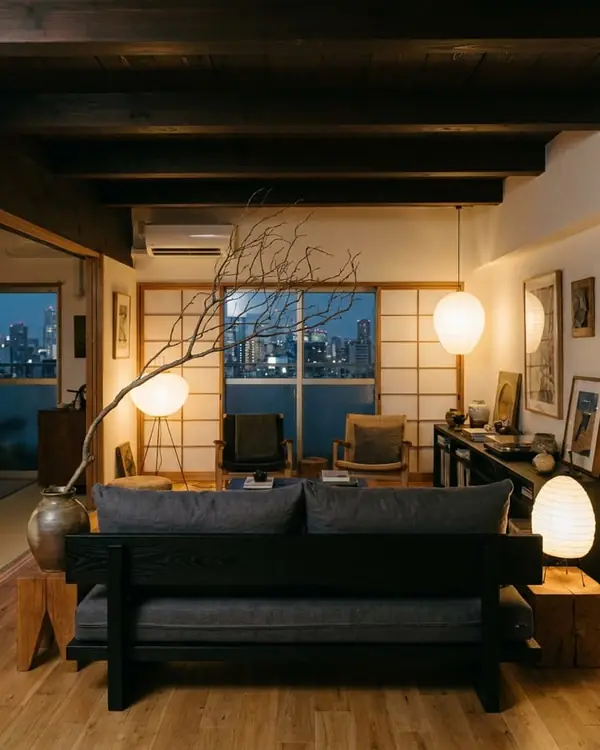
- Lamps: a floor lamp and two table lamps change a living room more than any cushion.
- Plug-in wall lights with a neat fabric cable, fixed with the minimum of holes, or clipped to a shelf.
- A new lampshade on the existing ceiling pendant. Keep the old one in the box.
- Warm bulbs of 2,700 K in place of cold ones.
- Battery picture lights and small rechargeable lamps for shelves and corners.
The lighting guide explains how to layer them.
Curtains and blinds
Curtains are one of the quickest ways to make a room look finished. If there is already a rail, swap the landlord's curtains for your own and store theirs. In a window recess, a tension rod holds light curtains or a café curtain with no fixings at all.
Full-length curtains, even inexpensive linen ones, make a room feel taller and softer than short ones or bare blinds.
Add colour without paint
If painting is not allowed, bring colour in with things you own:
- Textiles: cushions, throws, a bedspread, curtains and rugs in your palette.
- Large art: one big piece in strong colours can do the job of a painted wall.
- Painted or coloured furniture: a bright cabinet, a dining table with coloured chairs.
- Lampshades in coloured fabric or pleated paper.
- Plants, which bring green to any palette.
If your landlord allows painting, choose colours you will be happy to paint over, and agree beforehand whether you must return the walls to their original colour.
Kitchens and bathrooms
These rooms are harder to change, but small things make a real difference. Swap cupboard handles and keep the originals. Bring in wooden boards, a good lamp on the worktop and a runner on the floor. In the bathroom, new towels, a bath mat, a shower curtain and a freestanding shelf or trolley change the feel completely.
Removable tile stickers can work over plain tiles, but they can leave residue; test one first and ask if you are unsure.
Buy furniture that moves with you
Every piece you buy for a rented home should work in the next one too. Freestanding shelving, a modular sofa, a good rug, lamps and a few pieces of solid furniture will move with you; anything cut to fit an alcove will not.
Measure your future-proof pieces generously rather than exactly, and choose a palette you love rather than one that only suits this flat. Redesigning a room on a budget helps you decide where your money goes furthest.
Before you move out
- Put back every original: shades, handles, curtains, blinds.
- Remove adhesive hooks slowly, following the maker's instructions.
- Fill or repaint only if your agreement says you may, and match the colour exactly.
- Clean thoroughly, including inside cupboards and appliances.
- Photograph every room again and compare it with your move-in photos.
Common mistakes
- Decorating first and asking later. A short email before you start costs nothing.
- Trusting adhesive without testing it on the actual wall.
- Throwing away the landlord's fittings.
- Buying pieces that only fit this home.
- Too many small things on every surface. A few chosen pieces on a tray look better and pack faster; how to style shelves and coffee tables shows how.
Layered rugs, lamps, textiles and plants are the heart of the Boho style, which makes it one of the easiest looks to create in a rented home.
Frequently asked questions
Can I paint the walls of a rented home?
Only with your landlord's permission, ideally in writing. Many agree, sometimes on condition that you repaint in the original colour before you leave.
Do adhesive hooks damage walls?
They can. They work best on sound, fully dry paint and should be removed exactly as the packet says; even then, they may lift paint, so test one somewhere hidden first.
What should I do if my landlord says no to changes?
Focus on what you own and can take with you: rugs, lamps, textiles, art leaned rather than hung, and furniture. Together they change a room far more than paint alone.
Is it worth buying good furniture when renting?
Yes, for pieces you use every day and that fit most homes, such as a sofa, a bed and a rug. Avoid spending much on pieces made to fit one particular space.