Moroccan interior design: colours, materials and how to get the look
Quick answer
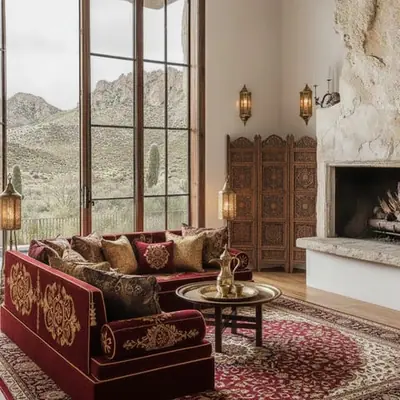
Moroccan interior design draws on the riads and homes of Morocco: walls of polished tadelakt plaster, zellige tiles in emerald and cobalt, carved cedar and plaster, low cushioned banquettes, Amazigh (Berber) rugs such as Beni Ourain and kilims, leather poufs and pierced brass lanterns that scatter patterns of light. Rose-sand walls meet brass, emerald and cobalt, and the result feels warm, crafted and welcoming.

By Eduardo, founder of Calm Decoration
The colours of Moroccan
#f2e2d2#c9a24a#1f6e5a#2b4fa0#b5523a
What gives it away
- Zellige tiles
- Pierced brass lanterns
- Carved cedar
- Low banquettes
- Kilims and Beni Ourain rugs
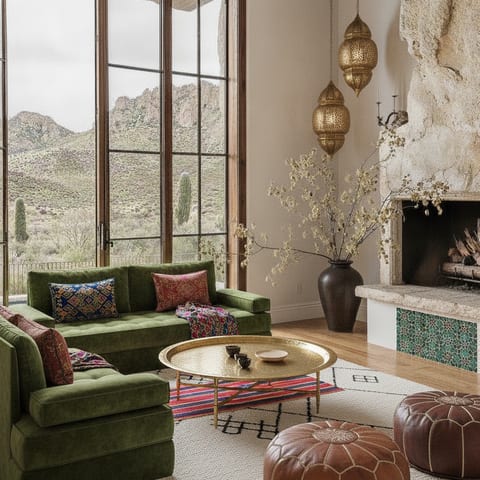
Moroccan rooms
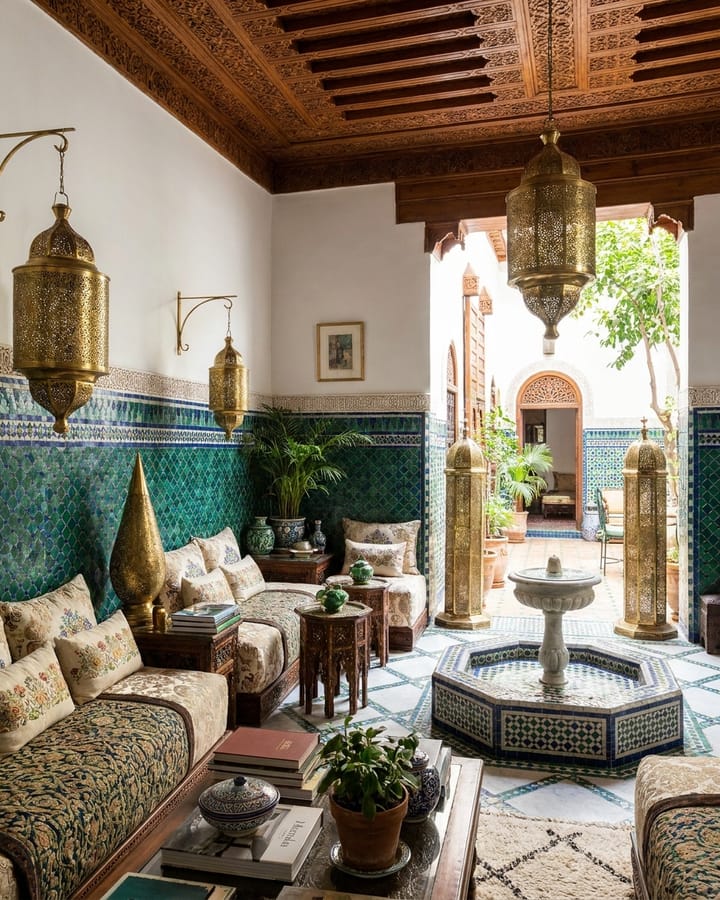
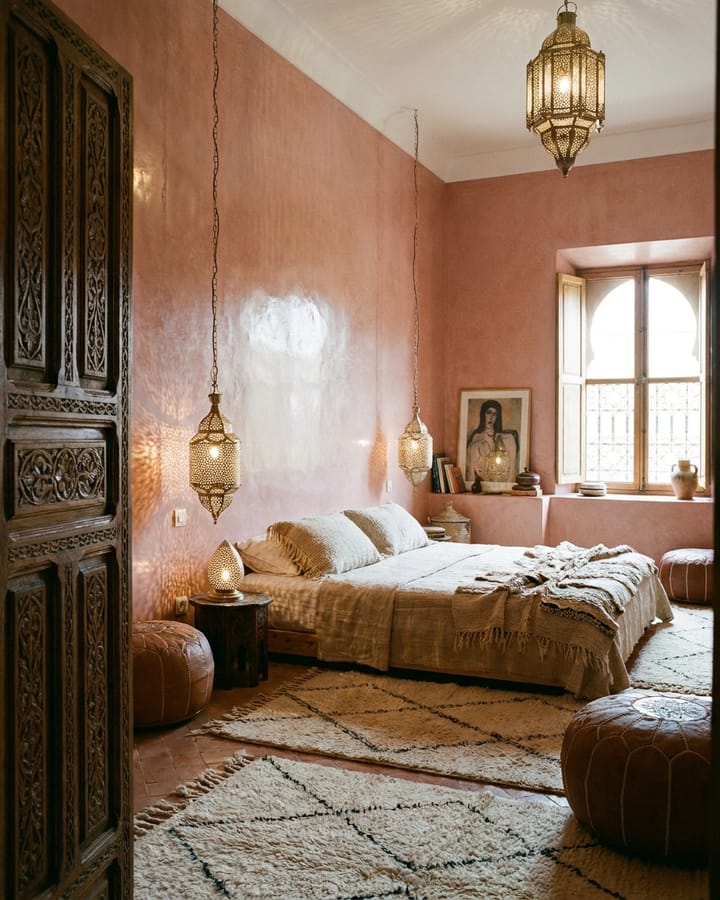
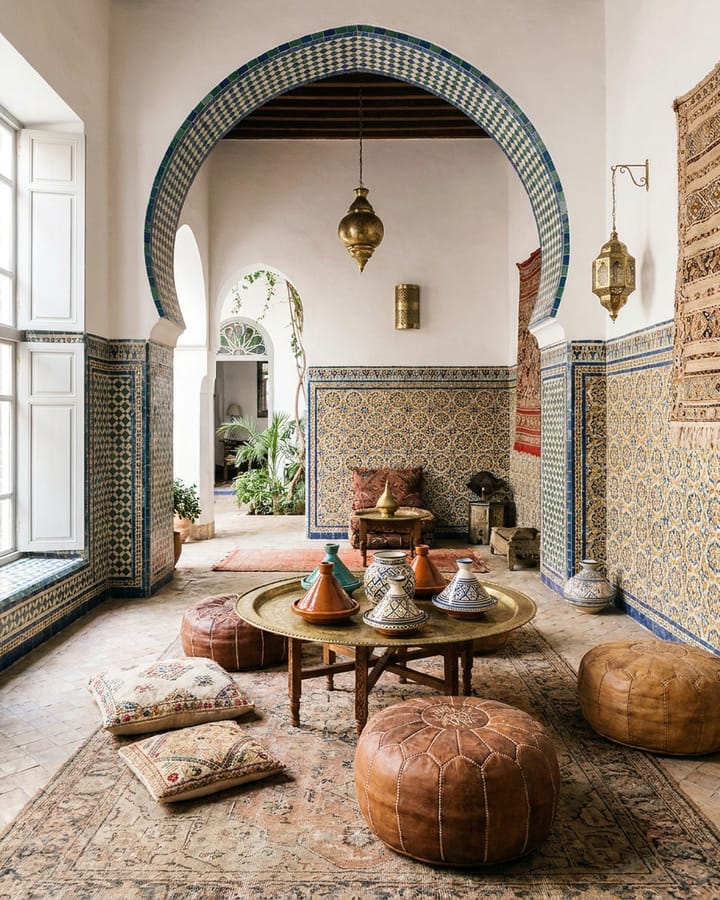
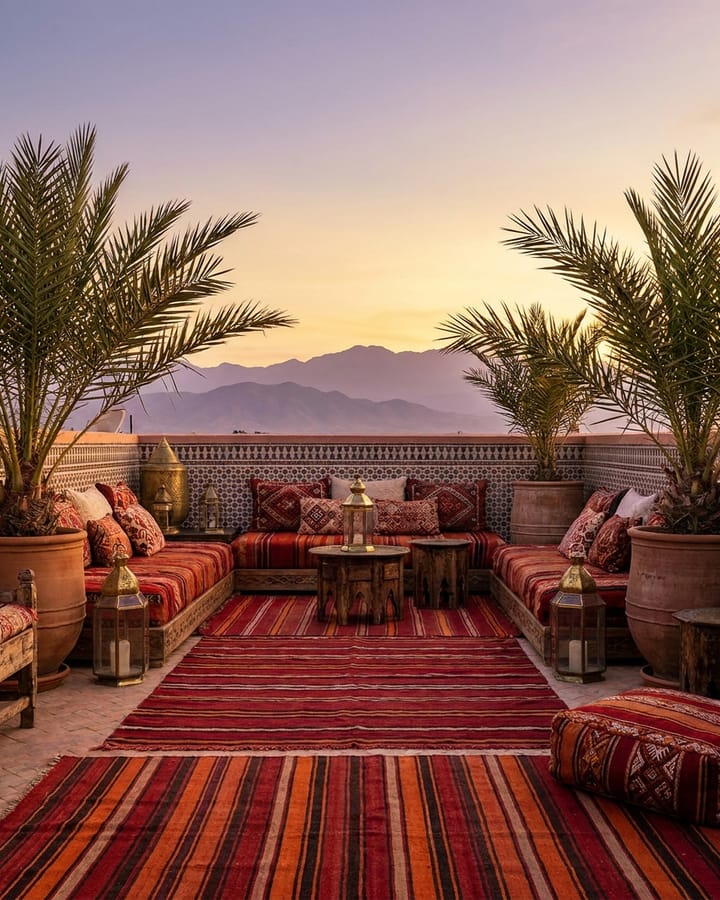
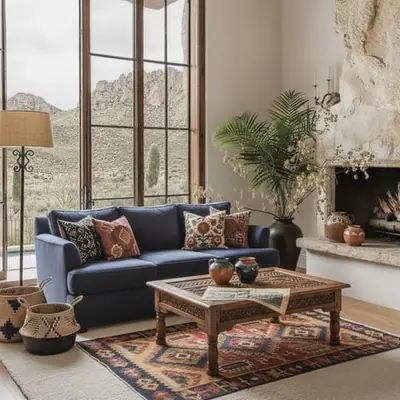
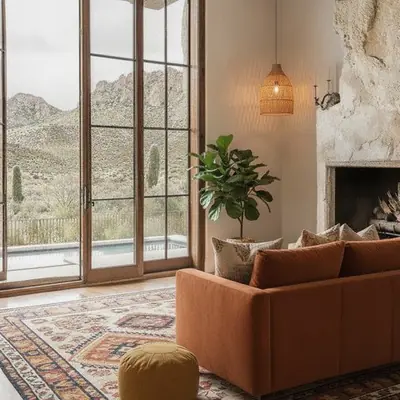
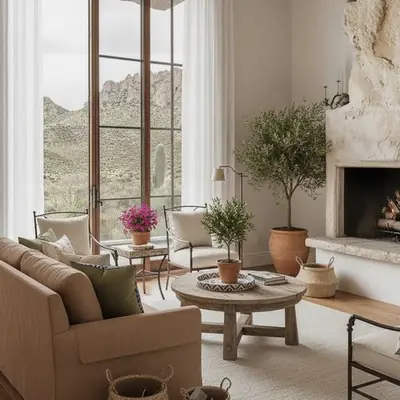
Pictures made for Find my style, our style quiz, to show the look. They are not photographs of real homes.
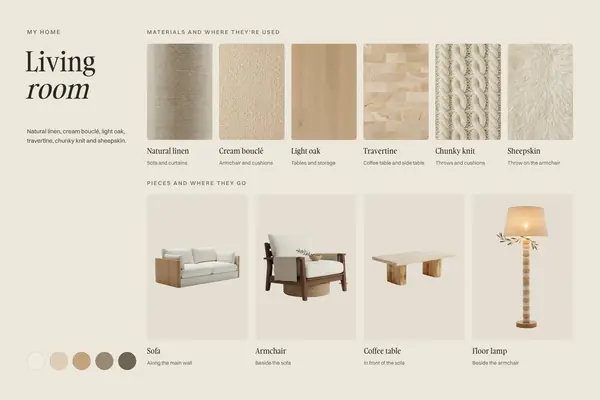
Pieces in the Moroccan style
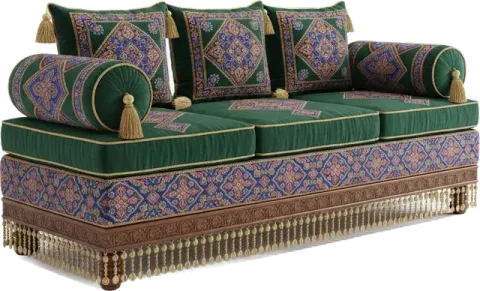 Sofa
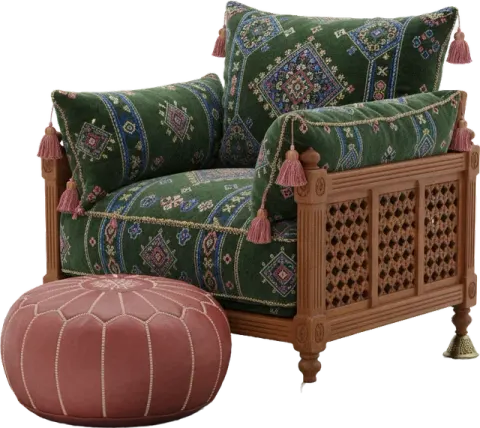 Armchair
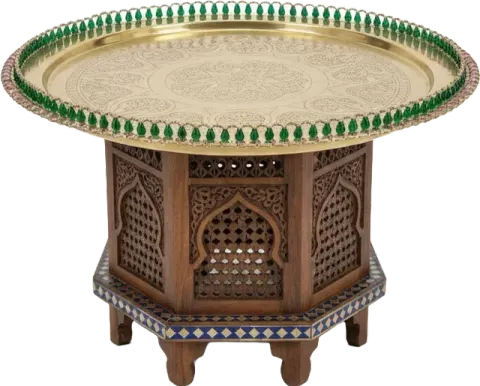 Coffee table
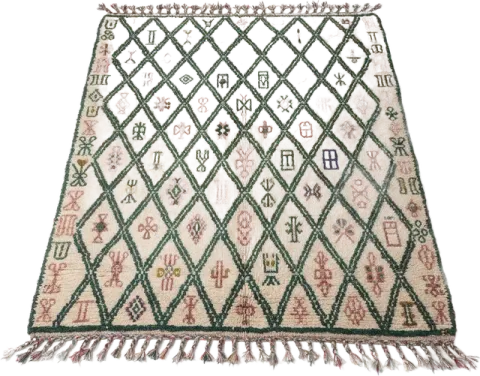 Rug
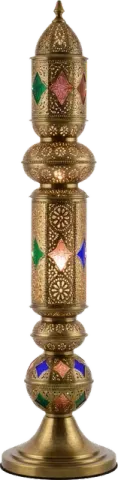 Lamp
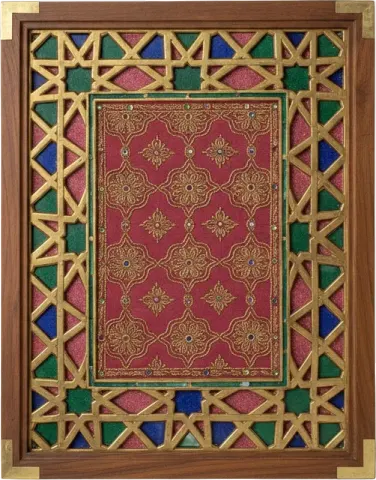 Wall art
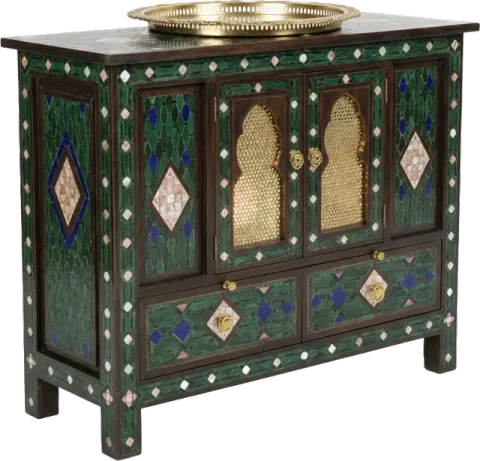 Storage
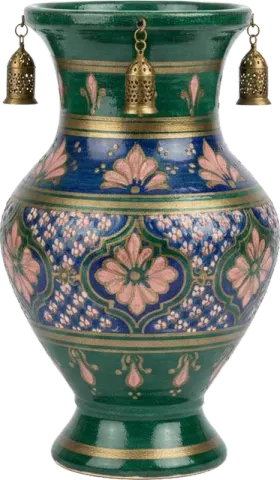 Decor
Drawn for Calm Studio’s moodboards to show the look: they are not products from a shop.
What I love most in Moroccan rooms is that every surface shows the work of a maker's hands: the tiles, the plaster, the carved ceiling, the rug. The style suits people who care about craft, colour and hospitality, and who like the idea of friends sinking into cushions over mint tea. It is rich without being heavy.
What is Moroccan style?
It comes from the homes of Morocco, and above all from the riad: a traditional house built around an inner courtyard or garden, often with a fountain, so that rooms open inwards to shade, water and quiet. Its interiors bring together Arab-Andalusian craftsmanship, seen in zellige, carved plaster and carved cedar ceilings, and the weaving traditions of the Amazigh (Berber) peoples of the Atlas mountains and beyond.
Craft is the heart of it. Each element is a skill passed down through generations: zellige is cut by hand from glazed tiles, tadelakt is polished with stones, and rugs are knotted or woven on looms.
The key elements
- Zellige tiles in geometric patterns
- Tadelakt, a smooth, waterproof lime plaster
- Carved cedar ceilings and doors, and carved plaster
- Low banquettes and floor cushions along the walls
- Amazigh rugs: Beni Ourain, Azilal, kilims and rag rugs
- Pierced brass and metal lanterns
- Leather poufs and brass tray tables
- Arches and keyhole-shaped openings
Colours
The walls are warm and soft: a rose-sand or pale clay that recalls tadelakt and the city walls of Marrakech. Against it come emerald green and cobalt blue (think of the intense blue of Marrakech's Majorelle garden) in tiles, glass and textiles, terracotta in pots and rugs, and brass everywhere for glow. Pick one jewel colour to lead, and keep the others for accents.
Materials and textures
Zellige and encaustic cement tiles; tadelakt and lime plaster; carved cedar and painted wood; hammered brass and copper; tooled leather; wool rugs, from the deep, cream pile of Beni Ourain with its dark lines to colourful flat-woven kilims and recycled rag rugs called boucherouite; embroidered and woven cotton; and handira, the sequinned wedding blankets woven by Amazigh women.
Furniture and shapes
Low and sociable, much like the majlis of Arabic homes: banquettes or a corner sofa along the walls, piled with cushions and bolsters; leather poufs to sit on or rest feet; a round brass tray on a folding wooden stand as a table; carved or painted cabinets; and arched mirrors. Seating is arranged for conversation around a central table.
Lighting
Pierced brass, copper or iron lanterns, hung in groups at different heights or set on the floor, throw patterns across the walls. Coloured glass lanterns, candles in tea glasses and table lamps with brass or parchment shades complete it. Keep the light warm and low.
Decor and accessories
A brass teapot and tea glasses on a tray, hand-painted ceramics, woven baskets, embroidered cushions, a handira over a bed or sofa, arched mirrors framed in bone, brass or wood, and plants in terracotta pots. Choose a few handmade pieces from makers who are paid fairly rather than many mass-produced copies.
How to bring Moroccan style into your home
- Start with one good rug: a Beni Ourain-style or kilim rug grounds the look. The rug size guide helps you choose one big enough.
- Hang two or three pierced lanterns, or use one as a table lamp.
- Add leather poufs and a brass tray table.
- Pile low seating with embroidered and woven cushions.
- Tile a splashback, a fireplace surround or a small bathroom wall in zellige.
- Paint the walls in a warm clay or rose-sand, or use a lime plaster finish.
- Bring in an arched mirror and plants in terracotta.
Mistakes to avoid
- Turning the room into a souk stage set: a few strong pieces say more.
- Machine-made "Moroccan-style" rugs with no wool or no maker behind them.
- Too many jewel colours at once; let one lead.
- Using objects without knowing what they are; it is worth learning a piece's name and origin.
- Cold white light, which flattens brass and tiles.
Moroccan vs Boho
| Aspect | Moroccan | Boho |
|---|---|---|
| Roots | A specific culture and its crafts | A free mix from many places |
| Tiles and plaster | Zellige and tadelakt | Rarely used |
| Rugs | Amazigh rugs and kilims | Layered vintage rugs of any origin |
| Light | Pierced brass lanterns | Rattan and macramé shades |
| Colours | Rose-sand, emerald, cobalt, brass | Terracotta, mustard, rust, green |
If you want a room built around real craft traditions, Moroccan is the one; if you would rather have a looser mix with a few Moroccan pieces among many others, choose boho.
Frequently asked questions
What is a Beni Ourain rug?
A thick wool rug woven by Amazigh (Berber) tribes of the Beni Ourain group in Morocco's Middle Atlas mountains, usually cream with dark lines or diamonds.
What is the difference between zellige and other tiles?
Zellige is made of small pieces cut by hand from glazed terracotta tiles and set together in geometric patterns, so each surface is slightly uneven and catches the light.
What is tadelakt?
A Moroccan lime plaster, polished with stones and treated with black soap, that becomes smooth and water-resistant; it is used for walls, baths and hammams.