Arabic interior design: colours, materials and how to get the look
Quick answer
Arabic interior design draws on traditional Arab homes in Egypt, the Levant and the Arabian Peninsula and centres on hospitality: a majlis of low seating along the walls, mashrabiya screens of turned or carved wooden lattice, geometric carving, hand-knotted carpets and brass lanterns, in sand, crimson, indigo and gold. To get the look, keep walls light, turn seating inward round a low table and add brass and pattern.

By Eduardo, founder of Calm Decoration
The colours of Arabic
#ecdcc0#c9a24a#8c1f2b#1f3b5a#4a2c1d
What gives it away
- Low majlis seating
- Mashrabiya screens
- Geometric carving
- Persian carpets
- Brass, red and gold
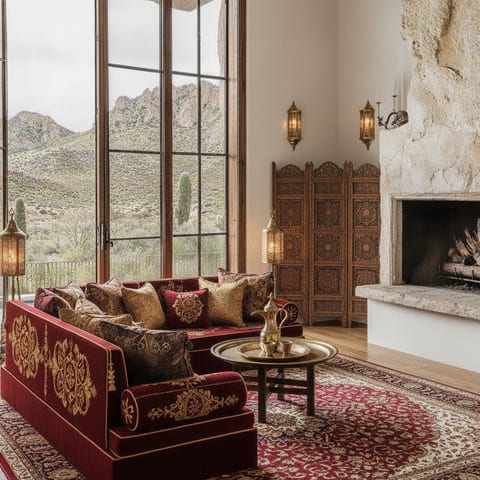
Arabic rooms
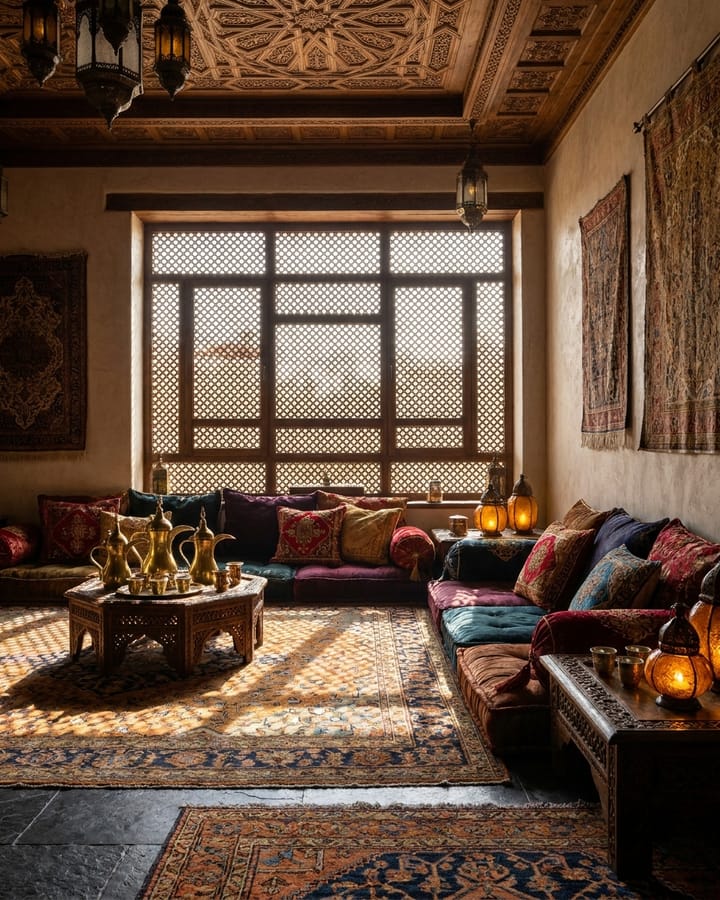
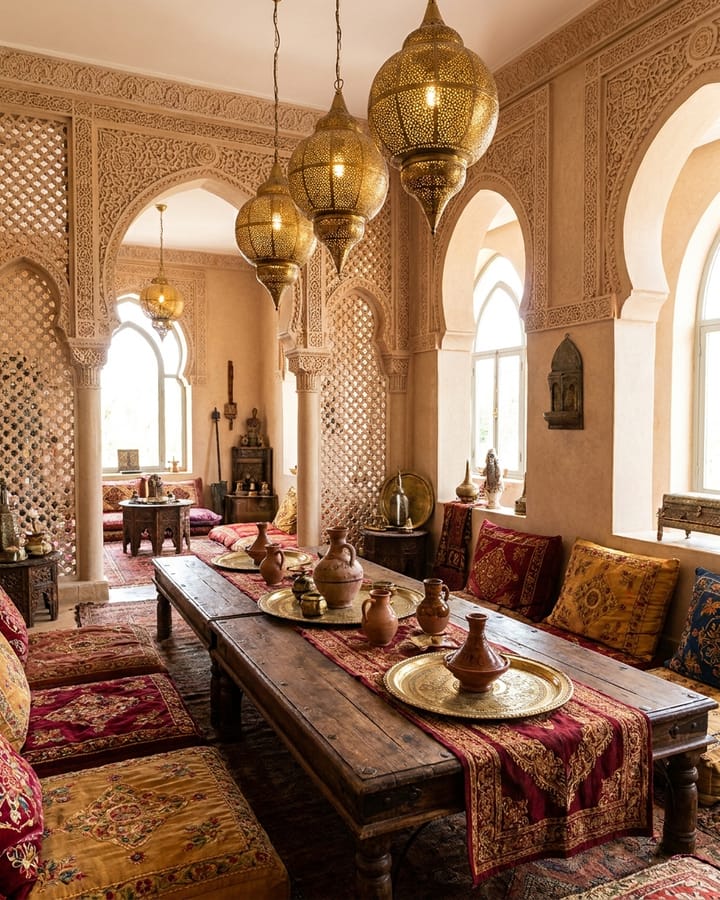
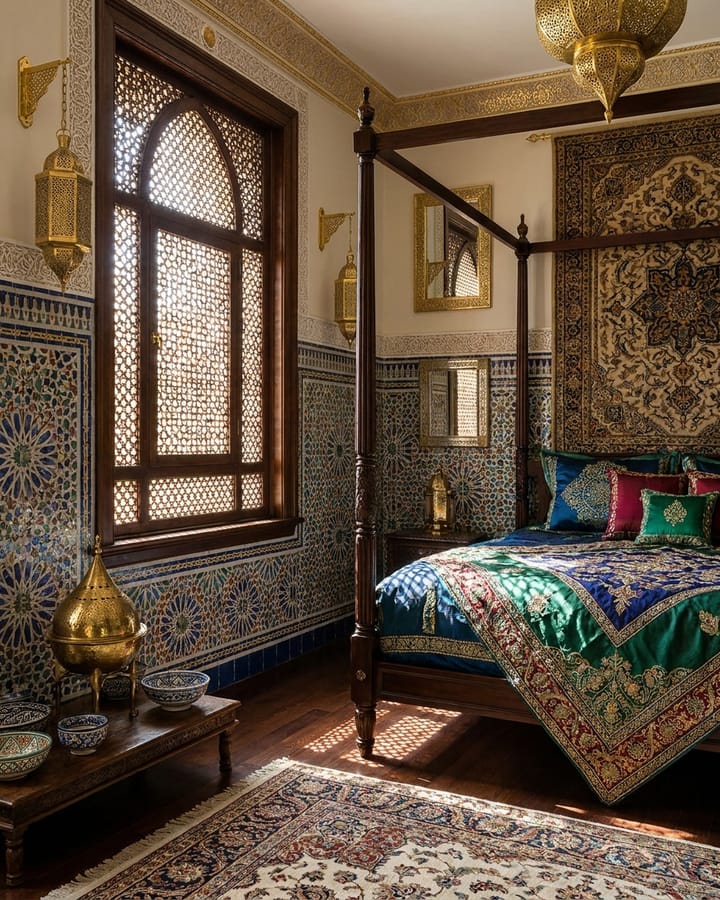
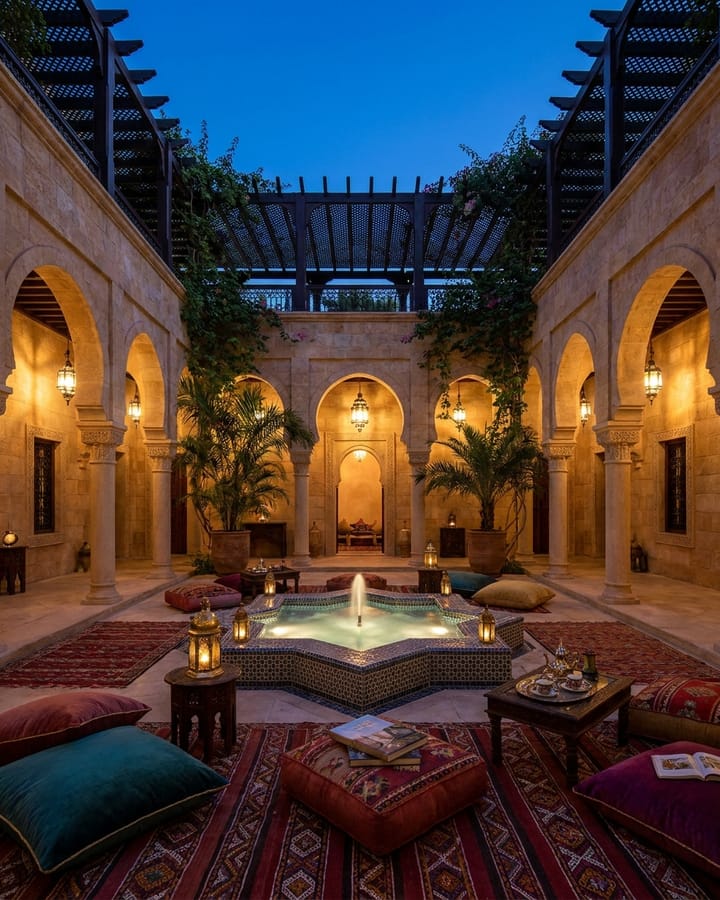
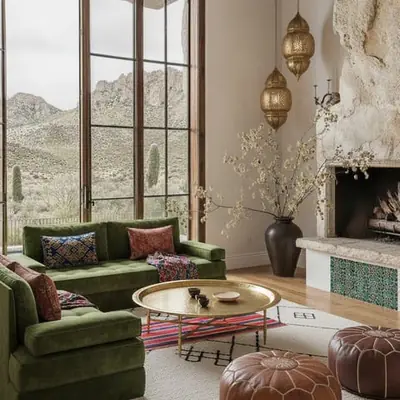
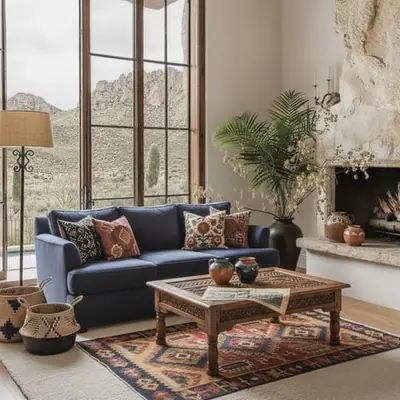
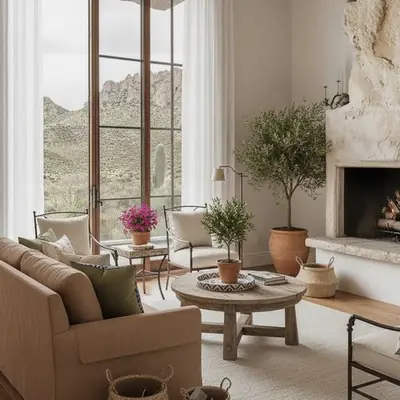
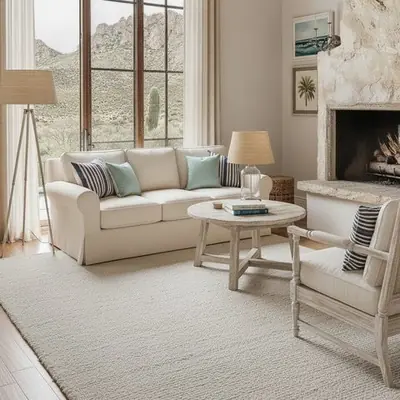
Pictures made for Find my style, our style quiz, to show the look. They are not photographs of real homes.
Pieces in the Arabic style
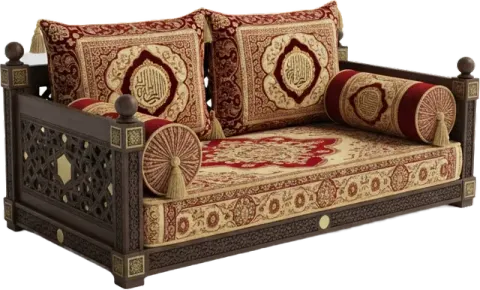 Sofa
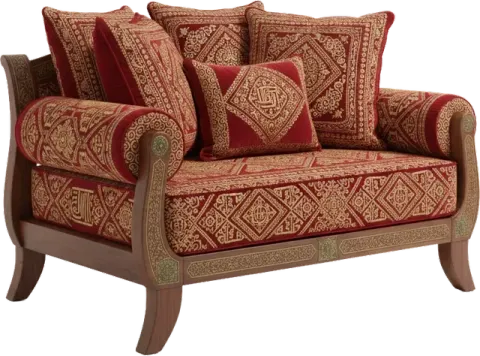 Armchair
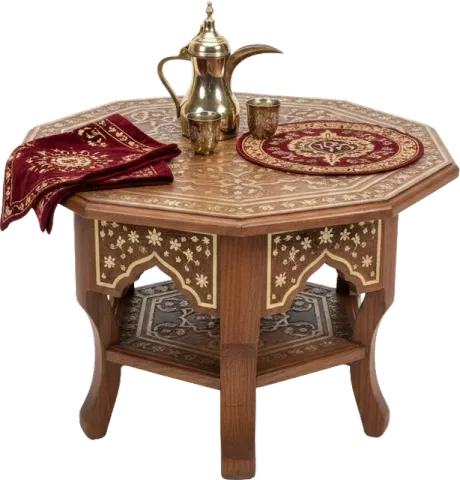 Coffee table
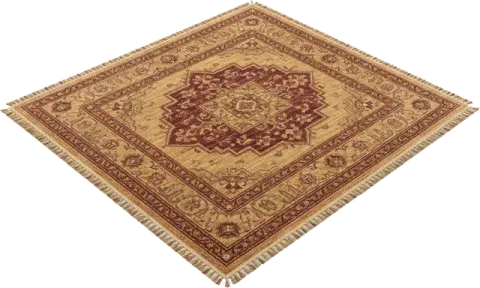 Rug
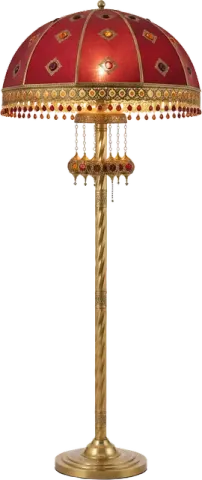 Lamp
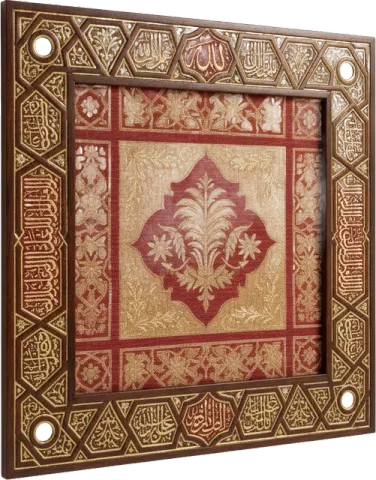 Wall art
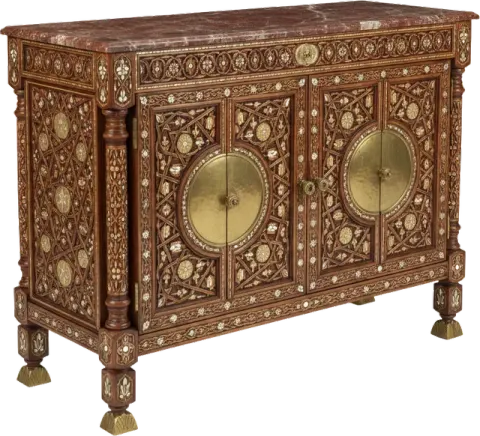 Storage
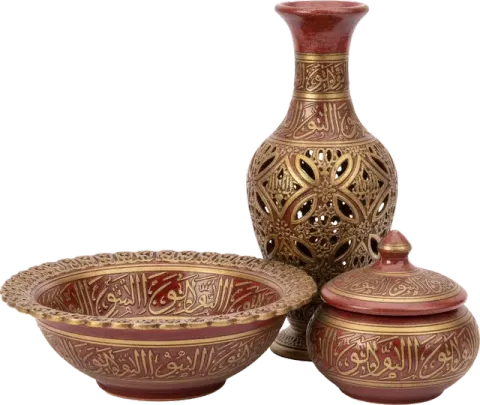 Decor
Drawn for Calm Studio’s moodboards to show the look: they are not products from a shop.
In the traditional Arab home, hospitality comes first, and rooms are shaped around it: guests sit close, coffee is poured from a brass pot and the light falls softly through a carved screen. This is a style for anyone who sees their home as a place to welcome others. It is rich and warm, yet ordered and calm. Below are its key elements, colours and materials, and seven steps to bring it into your home.
What is Arabic style?
Arabic style is the look of the traditional Arab home, above all in Egypt, the Levant and the Arabian Peninsula. The Arab world stretches from North Africa to the Gulf, and each region has its own crafts (Moroccan style has a page of its own), but they share a tradition of hospitality and a family of forms: the courtyard house turned inward for privacy and shade, and the majlis, Arabic for "a place of sitting", the room where guests are received.
Pattern is central. Islamic art has a long tradition of geometric patterns, arabesques (endlessly scrolling plant forms) and calligraphy, which decorate wood, plaster, metal and textiles and give rooms their rhythm.
The key elements
- A majlis: low seating along the walls with cushions and bolsters
- Mashrabiya: carved or turned wooden lattice screens and windows
- Geometric carving in wood and plaster
- Hand-knotted carpets
- Brass and copper lanterns, trays and coffee pots
- Rich embroidered textiles
- Inlaid wood, including mother-of-pearl
- Arches and niches
Colours
Arabic rooms keep the walls calm and light, in sand and warm stone, the colour of desert light, and put the rich colours on the floor and the seating: deep crimson in carpets, upholstery and cushions; a dark indigo or midnight blue in textiles and tiles; gold and brass in embroidery, lanterns and trays; and the deep brown of carved wood.
Materials and textures
Carved and turned wood for screens, doors and furniture; carved plaster; brass and copper, often engraved or pierced; inlaid wood with mother-of-pearl, a craft long associated with Damascus; wool and silk carpets; embroidered velvet and brocade; and Sadu, the geometric weaving of the Bedouin, in deep reds and black. Stone and tile keep floors cool.
Furniture and shapes
Low and continuous: majlis cushions or a long, low sofa running around two or three walls, with firm back cushions and bolsters for the arms; poufs and floor cushions; low round tables or brass trays on stands; carved chests; inlaid side tables; and a carved folding screen to divide a space or hide a corner. The layout faces inward for conversation. As a rule of thumb, keep seats facing each other within about 2.5 to 3 m (8 to 10 ft), close enough to talk without raising your voice; in a large room, close the circle with poufs and floor cushions. To plan seating that faces a centre, follow the steps for arranging living room furniture.
Lighting
Arabic rooms are lit by pierced brass and copper lanterns, hanging or standing, by wall sconces with patterned metal shades and, during the day, by light filtered through a mashrabiya screen. Keep it warm and soft, with warm white bulbs of 2,700 to 3,000 K and lanterns at different heights rather than one bright ceiling light; how to light a room explains the layers. The play of patterned light and shadow on the walls is part of the decoration.
Decor and accessories
A dallah, the Arabic coffee pot with its curved beak, and small cups on a tray; an incense burner (mabkhara); brass bowls; embroidered cushions; carved boxes; framed geometric patterns; and dates in a bowl for guests. Calligraphy often carries verses from the Quran, so treat it with respect: hang it where it is honoured, never in a bathroom or at floor level.
How to bring Arabic style into your home
- Rearrange your seating so it faces inward around a central table, like a majlis.
- Add floor cushions or bolsters for extra low seating.
- Lay a hand-knotted carpet, or a good wool one in deep red and indigo, large enough for at least the front legs of every seat to rest on it (the rug size guide has the sizes).
- Hang a pierced brass lantern or use one as a lamp.
- Use a carved or lattice screen as a room divider or in front of a window.
- Put a brass tray on a folding stand as a coffee table.
- Keep coffee and dates ready for guests; hospitality is the real heart of the style.
Mistakes to avoid
- "Arabian Nights" fantasy decor, which turns many real cultures into one cliché.
- Using calligraphy or religious objects carelessly as decoration.
- Mixing in pieces from every culture at once: that is global style, which follows other rules.
- Too much gold and shine; brass and wood should look warm, not brash.
- Cluttering the floor so guests cannot move or sit.
- Bright cold light, which loses the softness of lantern light.
Arabic vs Moroccan
Both share Islamic pattern, brass lanterns and low seating for guests. Arabic style, as described here, centres on the majlis, mashrabiya and inlaid wood of Egypt, the Levant and the Arabian Peninsula; Moroccan style on zellige tiles, tadelakt plaster and Amazigh (Berber) rugs.
| Aspect | Arabic | Moroccan |
|---|---|---|
| Region | The Levant, Egypt, the Arabian Peninsula and the Gulf | Morocco in North Africa |
| Seating | Majlis cushions and low sofas | Banquettes and leather poufs |
| Signature craft | Mashrabiya, inlay, Sadu weaving | Zellige, tadelakt, Amazigh rugs |
| Colours | Sand, crimson, indigo, gold | Rose-sand, emerald, cobalt, brass |
| Feeling | Formal, warm hospitality | Colourful and crafted |
Frequently asked questions
What is a majlis?
Majlis is Arabic for "a place of sitting": the room where guests are received, traditionally with low seating and cushions along the walls.
Can I make a majlis in a small living room?
Yes. Run a low sofa or floor cushions along one or two walls instead of three, use a brass tray on a stand as the table, and keep the main walkway about 90 cm (36 in) wide.
What is a mashrabiya?
A screen or projecting window of carved or turned wooden lattice that lets in air and filtered light while giving privacy, found in traditional houses from Cairo to the Arabian Peninsula.
Are Persian carpets Arabic?
No. Persian carpets come from Iran, which is not an Arab country, but hand-knotted Persian and other carpets are widely used in Arab homes.
Is Arabic style the same as Middle Eastern style?
Not quite. Middle Eastern is a wider, looser term that also covers Persian and Turkish interiors, each with its own carpets, tiles and lamps. Arabic style is the part rooted in Arab homes; they share pattern, brass and low seating, which is why the names are often used together.