Global interior design: colours, materials and how to get the look
Quick answer
Global style is a home furnished with textiles, furniture and crafts from many cultures: suzani embroideries, mudcloth, ikat, kantha quilts, kilims and Persian rugs, carved Indian wood, woven baskets and handmade pottery, in indigo, rust and earth tones. It feels warm, layered and well travelled, and works best when each piece is chosen with care and its origin and maker are known and respected.

By Eduardo, founder of Calm Decoration
The colours of Global
#efe3cf#a3824b#c6763f#2c3e66#3b2a20
What gives it away
- Textiles from many places
- Carved wood
- Indigo and rust
- Handmade baskets
- Pottery and prints
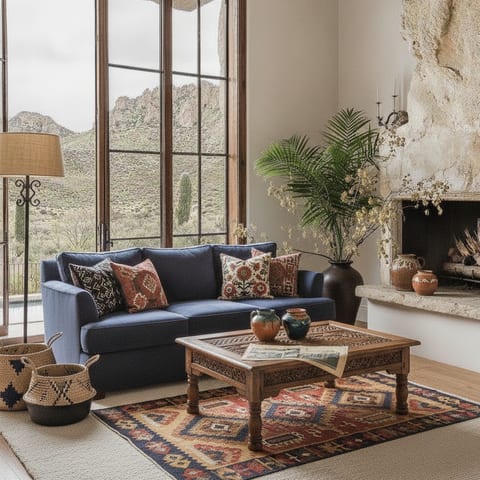
Global rooms
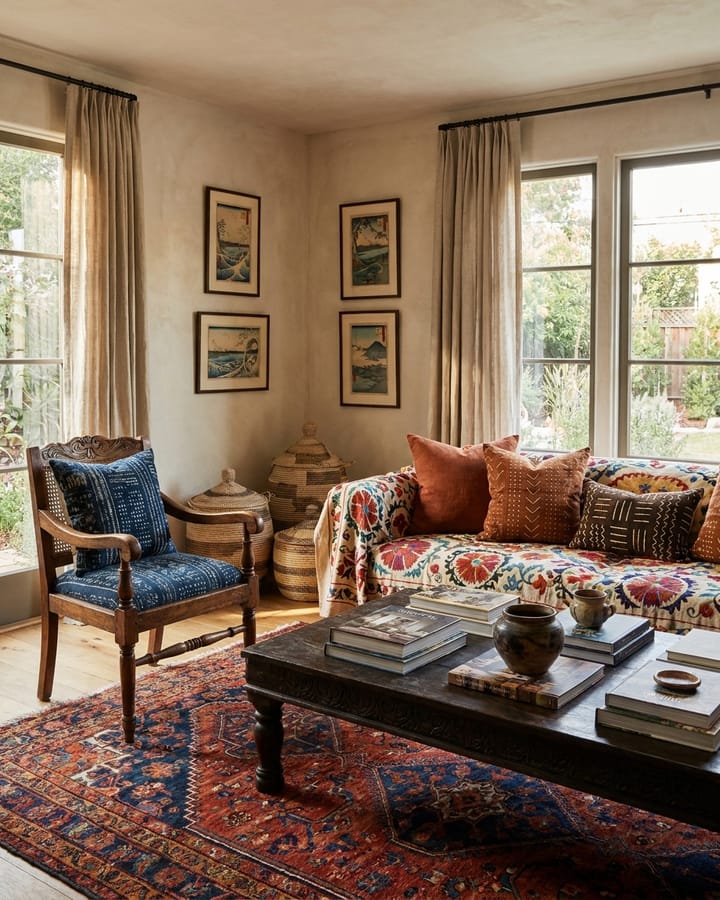
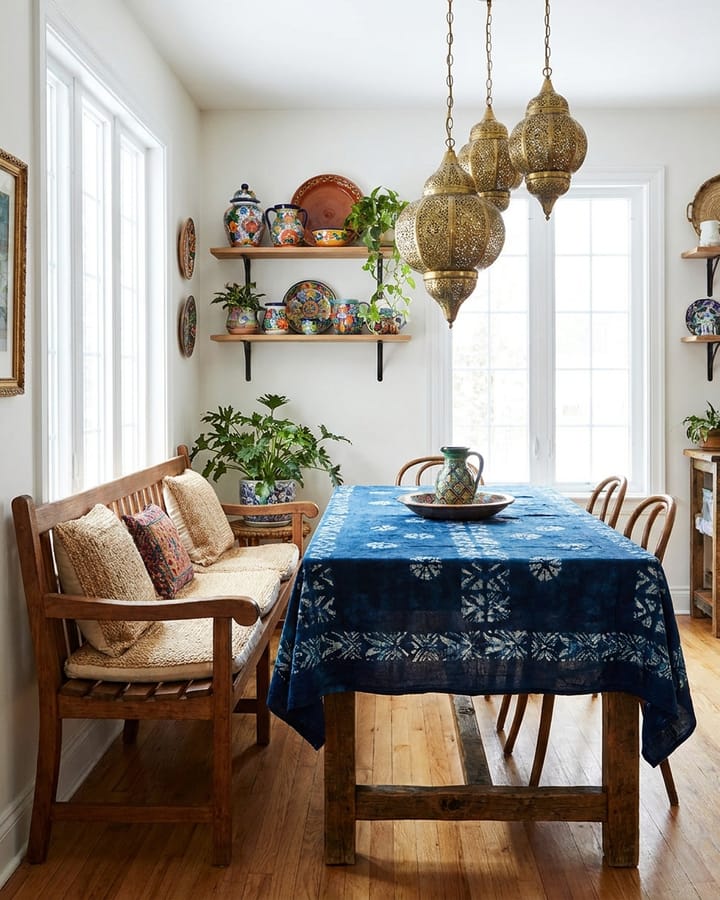
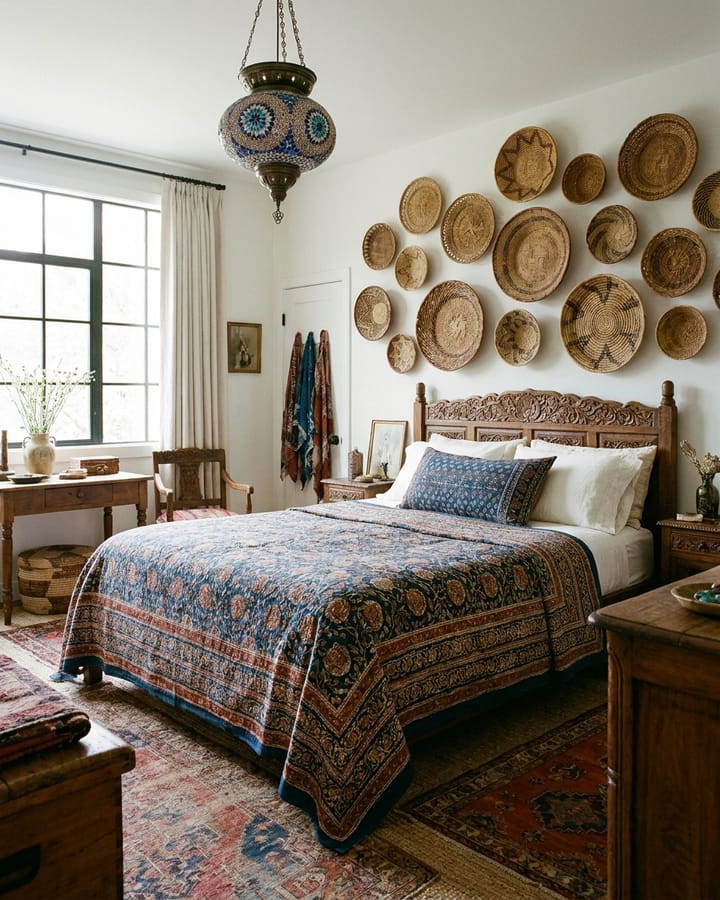
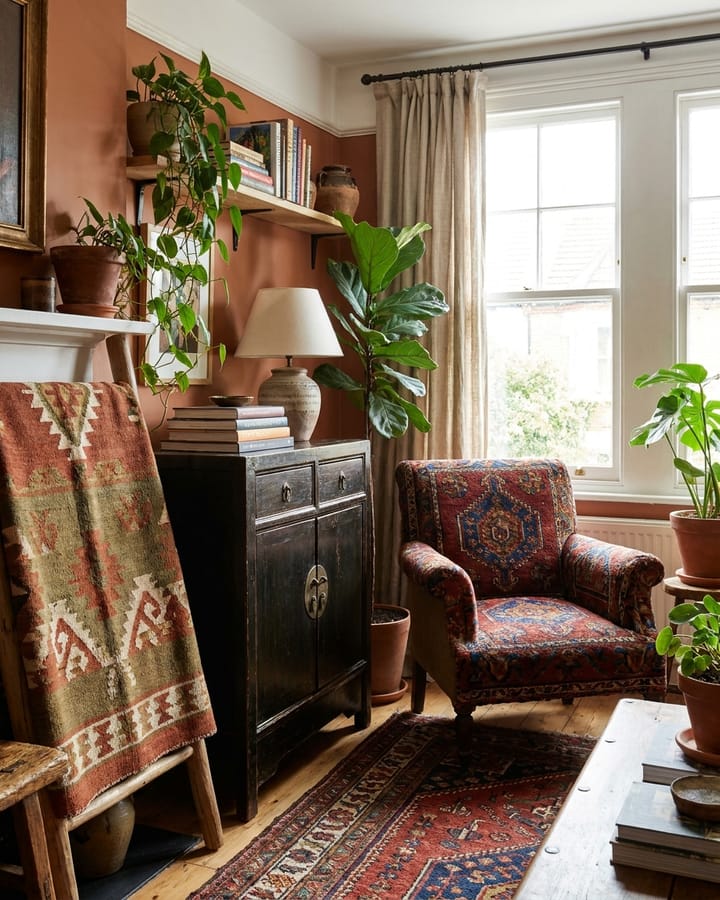
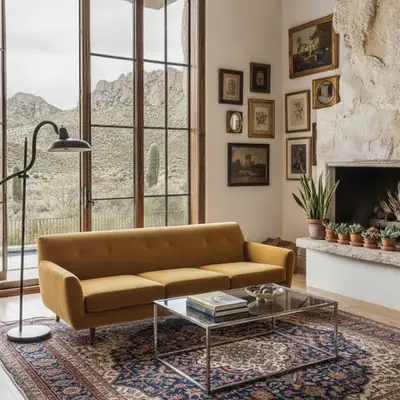
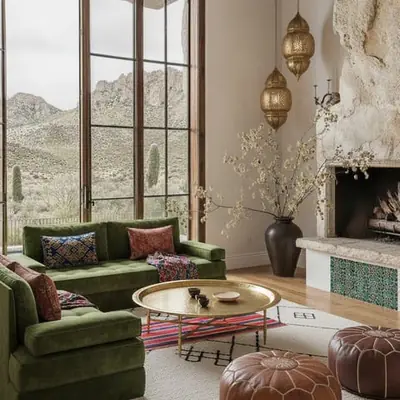
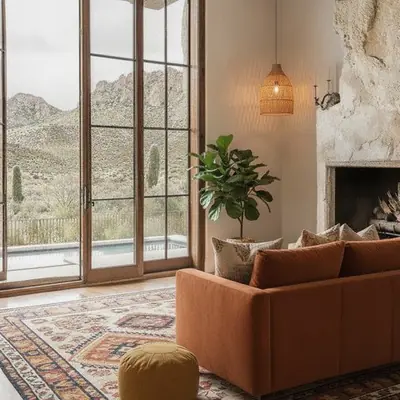
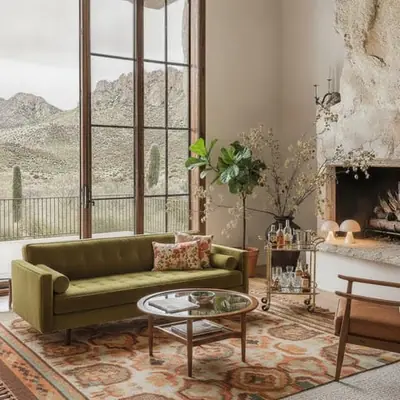
Pictures made for Find my style, our style quiz, to show the look. They are not photographs of real homes.
Pieces in the Global style
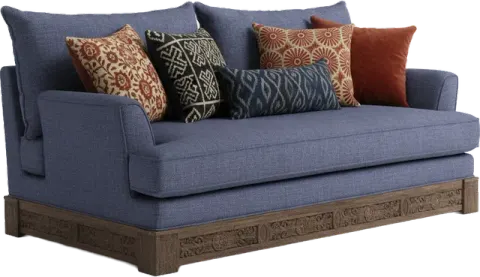 Sofa
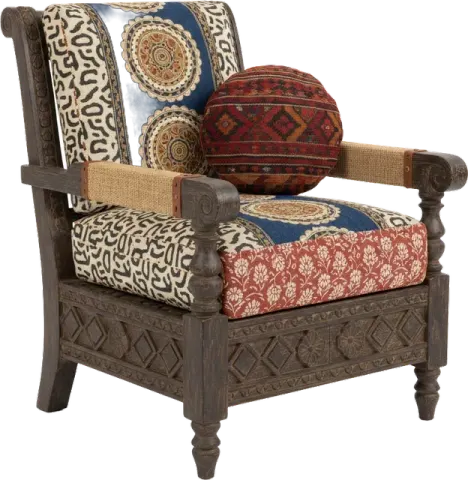 Armchair
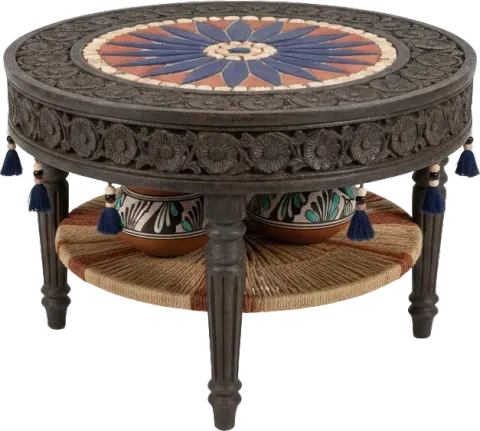 Coffee table
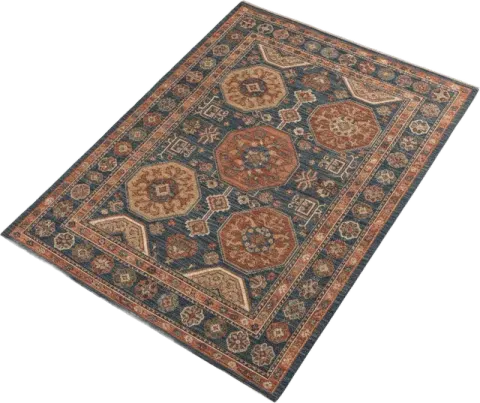 Rug
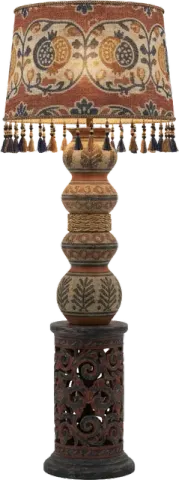 Lamp
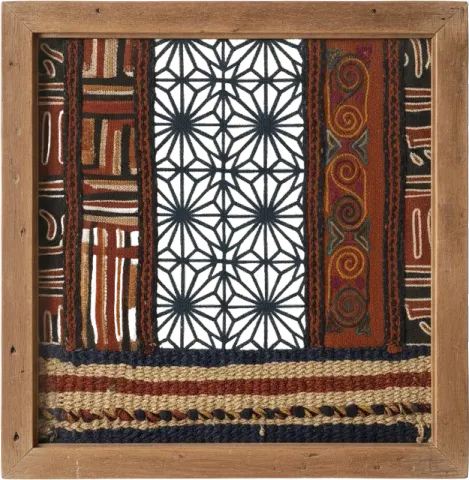 Wall art
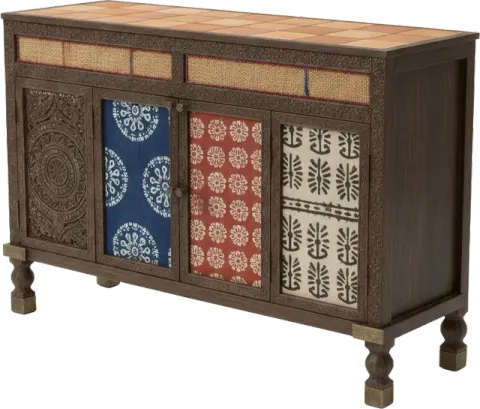 Storage
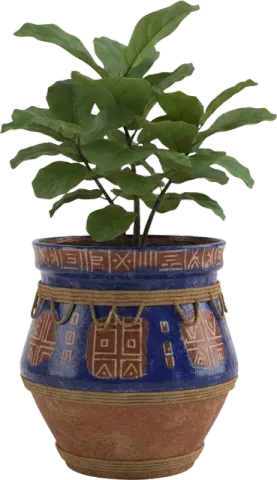 Decor
Drawn for Calm Studio’s moodboards to show the look: they are not products from a shop.
A home in the global style reads like a travel diary: a textile from one journey, a bowl from another, a basket from a market far away. It suits curious people who love knowing who made the things around them. The result is warm, rich in texture and full of conversation.
What is global style?
Sometimes called "worldly" or "well-travelled" style, it brings together crafts from many cultures in one room: a Turkish kilim, an Indian carved table, a West African mudcloth, Japanese prints, baskets from Ghana, pottery from Mexico. It differs from a single cultural style, such as Moroccan, because it draws on many traditions at once.
Respect is part of the style. The best global rooms are built slowly, with pieces whose origin is known, bought from makers or trusted sellers, and used in ways that honour their meaning.
The key elements
- Textiles from many places: suzani, mudcloth, ikat, kantha, block prints
- Kilims and hand-knotted rugs
- Carved and painted wooden furniture
- Handwoven baskets
- Handmade pottery and ceramics
- Indigo, rust and earth tones
- Plants and natural materials
Colours
Earth and dye colours: an undyed natural cream for walls and linen, camel and ochre in wood and brass, a rust close to terracotta, deep indigo, a natural blue dye found in textile traditions all over the world, and the dark brown of carved wood. Indigo and rust together are a classic pairing across many cultures; let them appear in rugs and cushions against calm walls.
Materials and textures
Cotton and linen, wool, silk, raffia, rattan, seagrass and palm fibre; carved hardwoods; hammered brass and copper; terracotta and stoneware; and the textiles themselves: suzani, embroidered in Central Asia; mudcloth (bògòlanfini), dyed with fermented mud in Mali; ikat, whose threads are dyed before weaving; kantha, Bengali quilts stitched from layers of old saris; Kuba cloth, the raffia textile of the Kuba people of the Democratic Republic of the Congo.
Furniture and shapes
A simple, neutral sofa as the calm base; a carved wooden coffee table, perhaps Indian; a low bench; a painted chest; leather or woven poufs, a favourite of boho rooms too; a rattan or wooden chair. Furniture is usually solid and handmade, with the textiles doing most of the talking.
Lighting
Lamps made from local crafts: a brass or pierced metal lantern, a woven pendant, a ceramic or carved wooden lamp base with a linen shade, and paper lanterns. Warm, soft light brings out the depth of indigo and the glow of brass.
Decor and accessories
Baskets on walls and floors, pottery, textiles framed or hung as art, woodblock prints, a stack of books about the places the pieces come from, and plants. Group them in small clusters with space around each, as in styling shelves and coffee tables, so every piece is seen.
How to bring global style into your home
- Bring out what you already have from travels or family, and choose the pieces you love most.
- Start with a neutral base (walls, sofa) so the textiles can shine.
- Add one good textile: a kilim rug, a suzani throw or mudcloth cushions.
- Hang baskets or a textile on the wall as art.
- Swap a coffee table for a carved or vintage wooden one.
- Buy from makers, fair-trade sellers or trusted dealers, and ask where each piece comes from.
- Learn the name and story of each piece; it changes how you display it.
Mistakes to avoid
- Sacred or ceremonial objects used as decoration, such as religious statues as ornaments.
- Mass-produced copies labelled "tribal" or "ethnic" with no maker behind them.
- Too many cultures in one small room; let two or three lead.
- Every surface covered: give special pieces space.
- Treating a culture as a theme; one carefully chosen piece is better than a room of clichés.
Global vs Eclectic
| Aspect | Global | Eclectic |
|---|---|---|
| What is mixed | Places and cultures | Eras and styles |
| Typical pieces | Handmade textiles, baskets, carved wood | Vintage sofas, antiques, modern lamps |
| Colours | Indigo, rust, earth tones | Any palette, repeated with discipline |
| Feeling | Well-travelled and crafted | Curated and personal |
Ask whether you collect places or periods: crafts from around the world make a global room, while a mix of antique, vintage and modern makes an eclectic one.
Frequently asked questions
What is a suzani?
A large embroidered textile from Central Asia, especially Uzbekistan, usually with bold flowers, vines and circles, used as a throw, bedspread or wall hanging.
How do I decorate with global pieces respectfully?
Know where each piece comes from and what it means, buy from makers or trusted sellers, and avoid using sacred or ceremonial objects as decoration.
Do global pieces work in a modern home?
Yes. A few strong textiles and handmade pieces against simple modern furniture and white walls can look especially striking.