Vintage interior design: colours, materials and how to get the look
Quick answer
Vintage interior design fills a home with real second-hand finds, mostly from the 1950s to the 1970s: a teak sideboard with a record player, a velvet or floral sofa, mushroom lamps, a bar cart, fringed or patterned rugs and old posters, in orange, olive, mint, cream and brown. Pieces carry the patina of use, so rooms feel warm, personal and full of stories.

By Eduardo, founder of Calm Decoration
The colours of Vintage
#f2e6cc#a8d5c2#d9873a#7d7a3a#6b4528
What gives it away
- Teak and chrome
- Record players and bar carts
- Mushroom lamps
- Orange, olive and mint
- Old posters
Vintage rooms
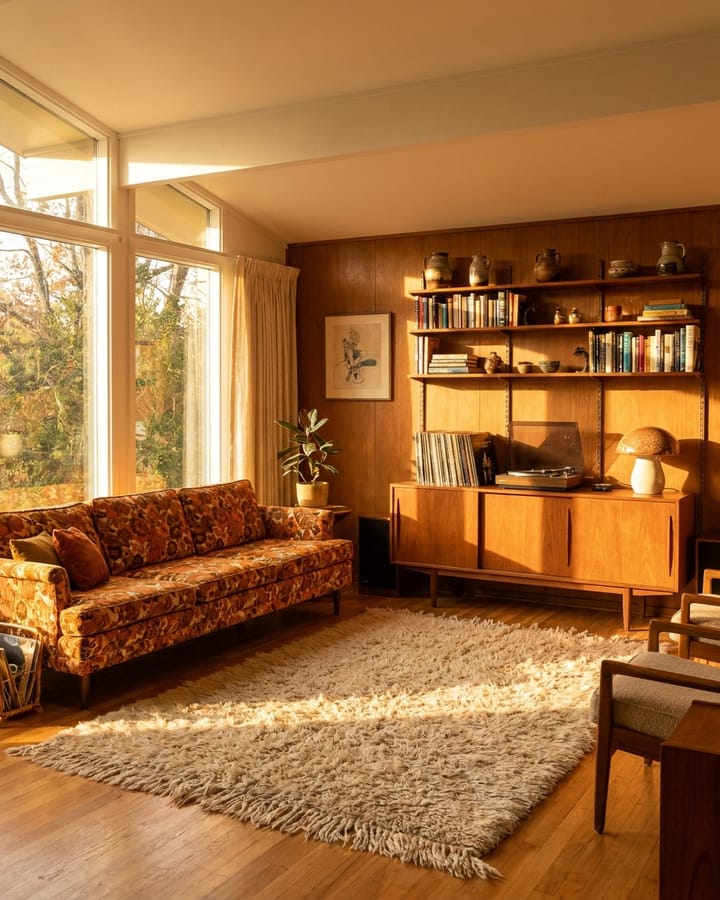
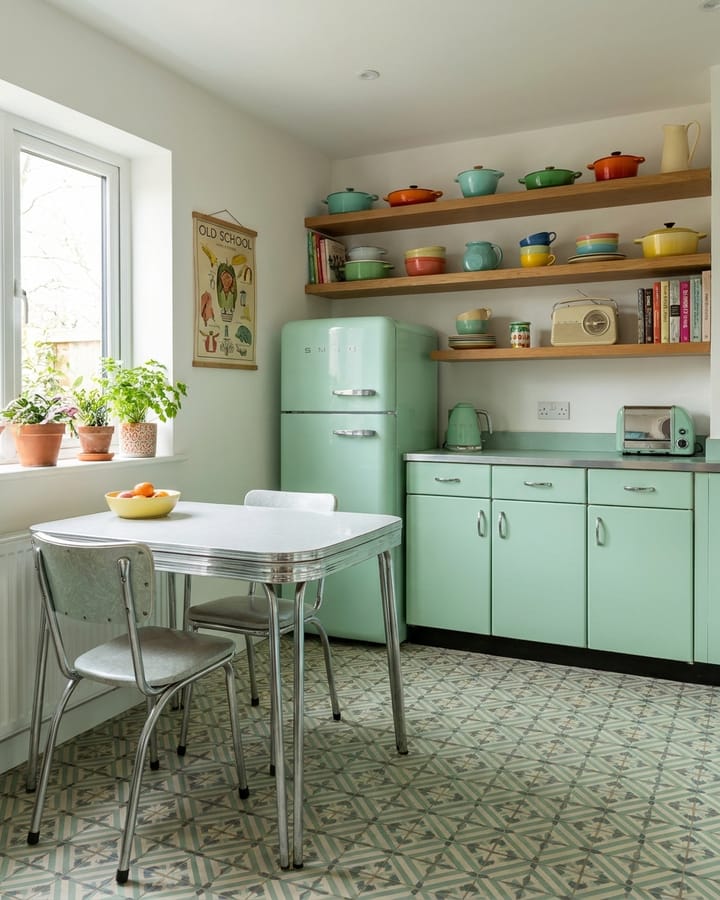
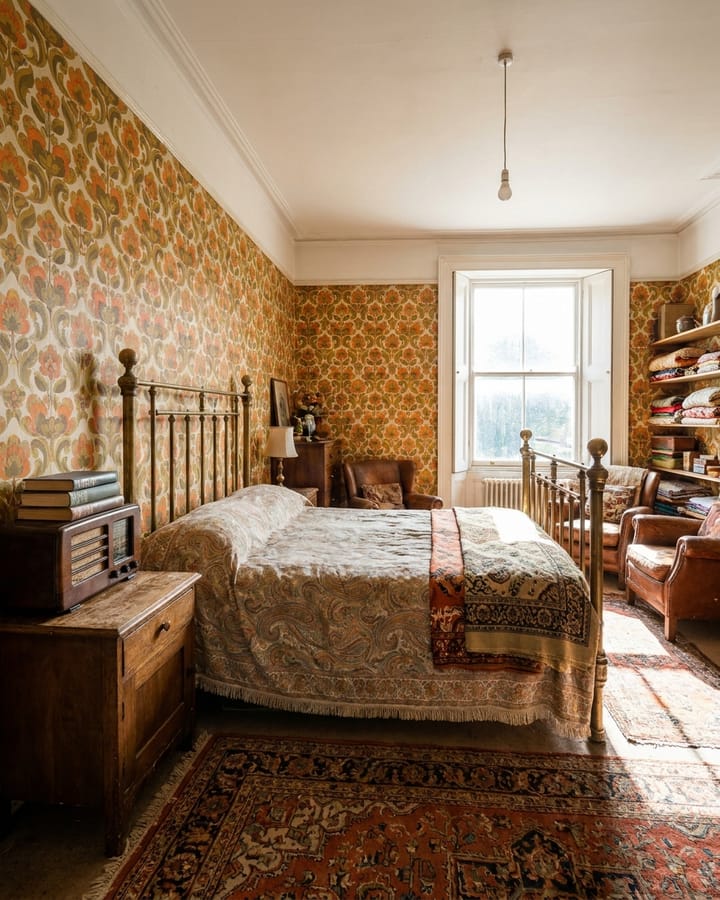
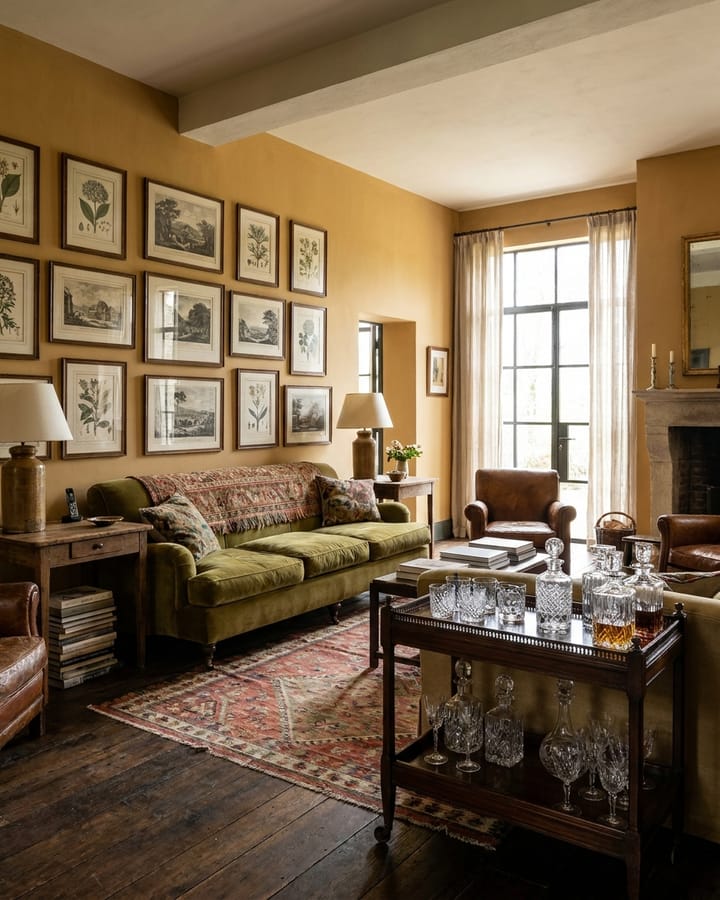
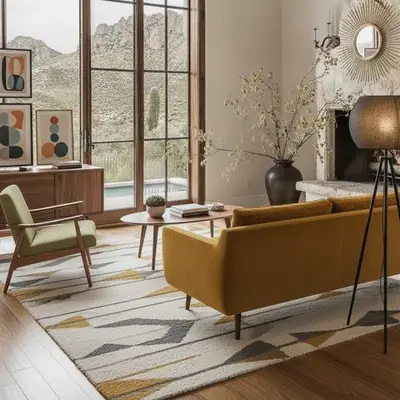
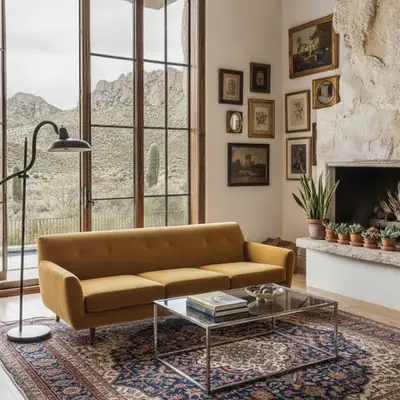
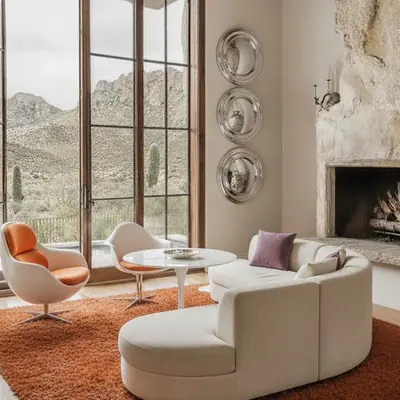
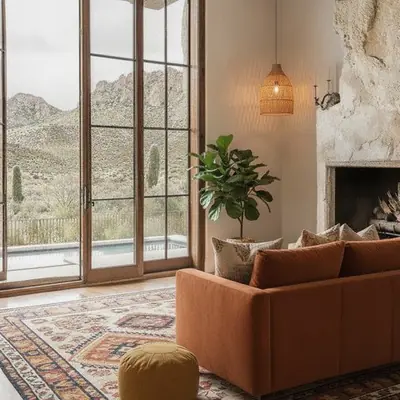
Pictures made for Find my style, our style quiz, to show the look. They are not photographs of real homes.
Pieces in the Vintage style
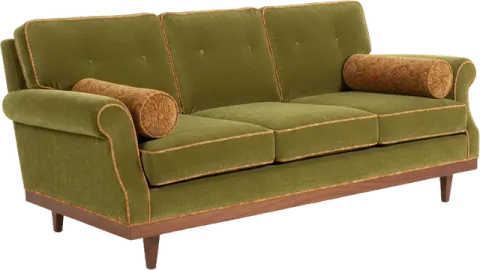 Sofa
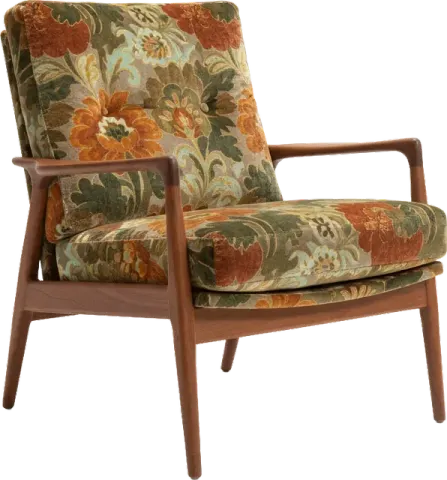 Armchair
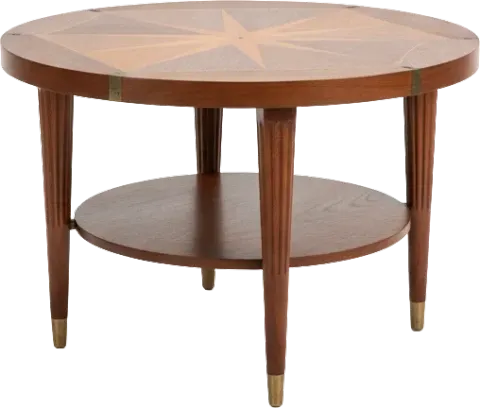 Coffee table
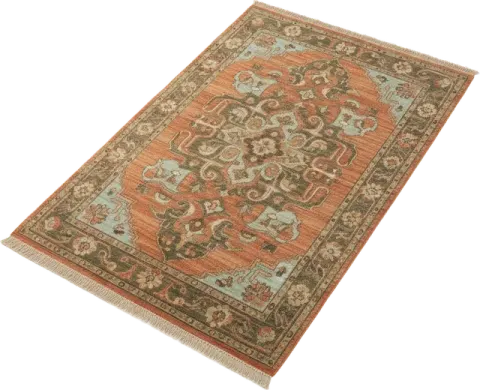 Rug
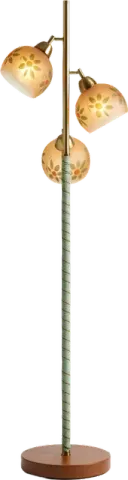 Lamp
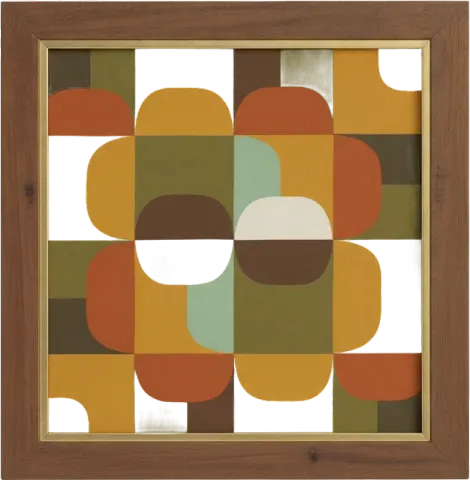 Wall art
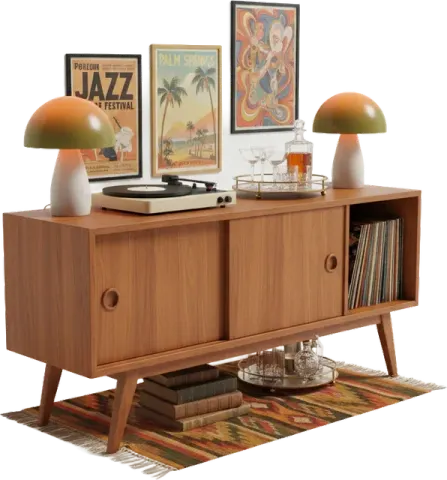 Storage
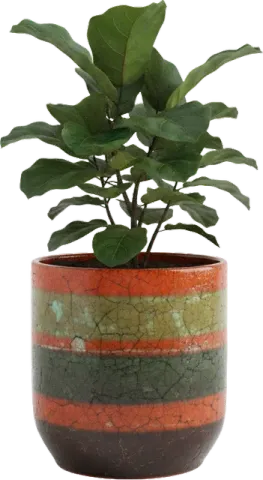 Decor
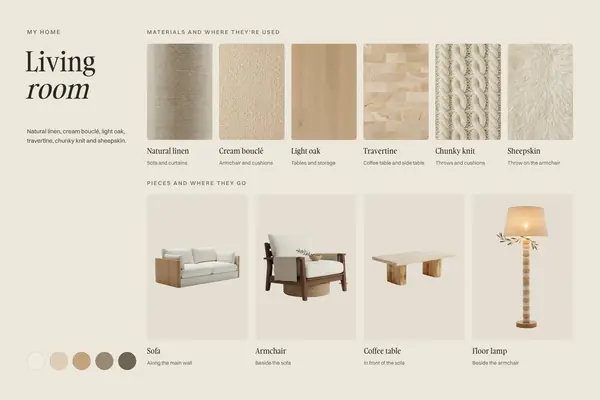
Drawn for Calm Studio’s moodboards to show the look: they are not products from a shop.
Every vintage room is the result of a hunt. Its owners know the thrill of finding a teak sideboard at an auction, play records on Sunday mornings and feel that a piece with a past has more soul than a new one. The result is warm, characterful and slightly nostalgic.
What is vintage style?
Vintage means old, but not yet antique. By a common rule of thumb, "vintage" describes pieces at least 20 years old and "antique" those at least 100. On this site, vintage style means rooms built around finds from roughly the 1950s to the 1970s, with a little from the decades either side.
The pieces must be real, or look as if they are. Unlike mid-century design, which is a specific style of furniture, vintage is a way of furnishing: second-hand pieces with patina, mixed across decades, chosen for character as much as for design. Push the mix across more eras and styles and it becomes eclectic.
The key elements
- Real second-hand furniture from the 1950s to the 70s
- A teak or walnut sideboard
- A record player and records
- Mushroom and globe lamps
- A bar cart with glassware
- Velvet, floral or tweed upholstery
- Patterned or fringed rugs
- Old posters and prints
Colours
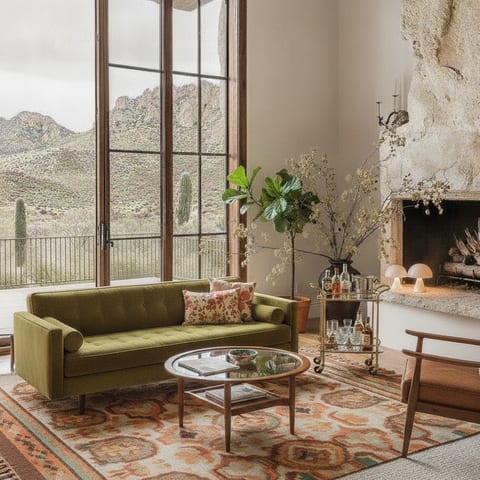
The palette is warm and slightly faded, like an old photograph: cream walls, a burnt orange or tangerine in cushions, rugs and lamps, olive green on a velvet sofa or a chair, a soft mint in ceramics, glass or a painted piece, and teak brown in the furniture. Orange and olive together instantly read as the 1970s; mint and cream feel more like the 1950s.
Materials and textures
Teak, walnut and rosewood veneers; chrome and brass; smoked and amber glass; velvet, corduroy, tweed and bouclé; leather; ceramic; rattan and cane; and shag or patterned wool rugs. A little wear (a scuffed leg, a faded seat) is part of the charm.
Furniture and shapes
A low sideboard or credenza, a velvet sofa with buttoned back cushions, a leather lounge chair, a round glass coffee table with a wooden frame, nesting tables, a rattan or chrome chair, a bar cart, and a teak dining set. Legs are often slim and tapered; shapes are rounded and friendly.
Lighting
Mushroom lamps in glass or plastic, globe pendants, a brass floor lamp with a fabric shade, ceramic table lamps and an arc lamp over the sofa. Old lamps need care: have them checked and rewired by an electrician before use.
Decor and accessories
A record player and a stack of vinyl, cocktail glasses and a decanter on the bar cart, old travel posters or film prints, ceramic vases, house plants such as a rubber plant or a monstera, a rotary telephone if you like the joke, and books with faded spines.
How to bring vintage style into your home
- Look at what family or friends are passing on: old sideboards, lamps and glassware often wait in lofts.
- Visit charity shops, flea markets, auctions and online second-hand sites regularly; patience finds the best pieces.
- Start with one key piece, such as a teak sideboard, and build around it.
- Add a bar cart or a record player as a focal point.
- Bring in colour with cushions and a rug in orange, olive or mint.
- Frame vintage posters or prints.
- Mix in a modern sofa or bed for comfort; vintage does not have to mean every piece is old.
Making old and new look deliberate together is easier with the rules in mixing old and new furniture.
Mistakes to avoid
- A room that looks like a period film set: mix decades and add some modern comfort.
- Buying damaged pieces that cost more to restore than they are worth.
- Old wiring left unchecked.
- Too many small collectables on every surface.
- Reproductions in shiny new finishes, which lack the patina that makes vintage special.
Vintage vs Mid-century
| Aspect | Vintage | Mid-century |
|---|---|---|
| What it is | A way of furnishing with old finds | A design style of the 1950s and 60s |
| Era | Mostly the 1950s to 70s, mixed | Mainly the 1950s and 60s |
| Pieces | Real second-hand, with patina | Original or new pieces in the style |
| Colours | Orange, olive, mint, cream, brown | Mustard, olive, orange, teal |
| Feeling | Nostalgic and personal | Clean, optimistic and designed |
If the hunt and the patina are what you love, go vintage; if you want the clean lines of that era, whether old or new, go mid-century.
Frequently asked questions
What is the difference between vintage and antique?
As a common rule of thumb, vintage means at least 20 years old and antique at least 100 years old.
What is the difference between vintage and retro?
Vintage usually means genuinely old pieces; retro usually means new pieces made to look like an earlier era.
Where can I find vintage furniture?
Charity shops, flea markets, auctions, house clearances and online second-hand marketplaces, and often the lofts and garages of family and friends.