New traditional interior design: colours, materials and how to get the look
Quick answer
New traditional is classic design made lighter for today: the panelled walls, antiques, symmetry and good proportions of a traditional room, but in soft sage, powder blue and warm white, with linen sofas, sisal rugs, blue-and-white porcelain and modern art mixed in. It keeps the elegance of the past without the heaviness, so rooms feel fresh, relaxed and easy to live in.

By Eduardo, founder of Calm Decoration
The colours of New traditional
#f6f2ea#cfd8c4#a9bccd#2f4f7f#8a6e4f
What gives it away
- Panelling in soft colour
- Antiques with modern art
- Linen and stripes
- Blue-and-white porcelain
- Sisal rugs
New traditional rooms
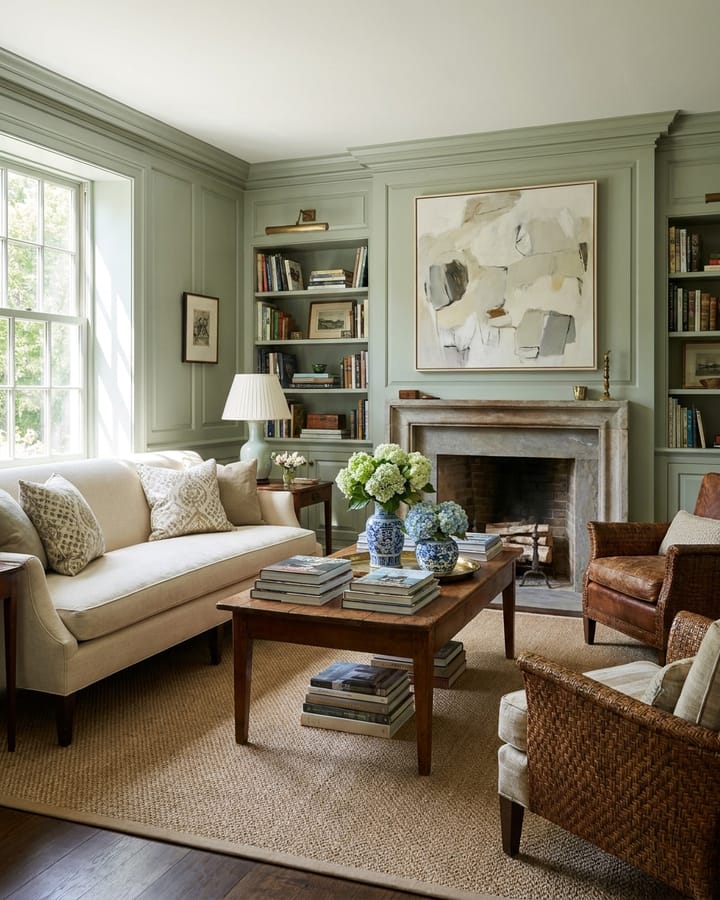
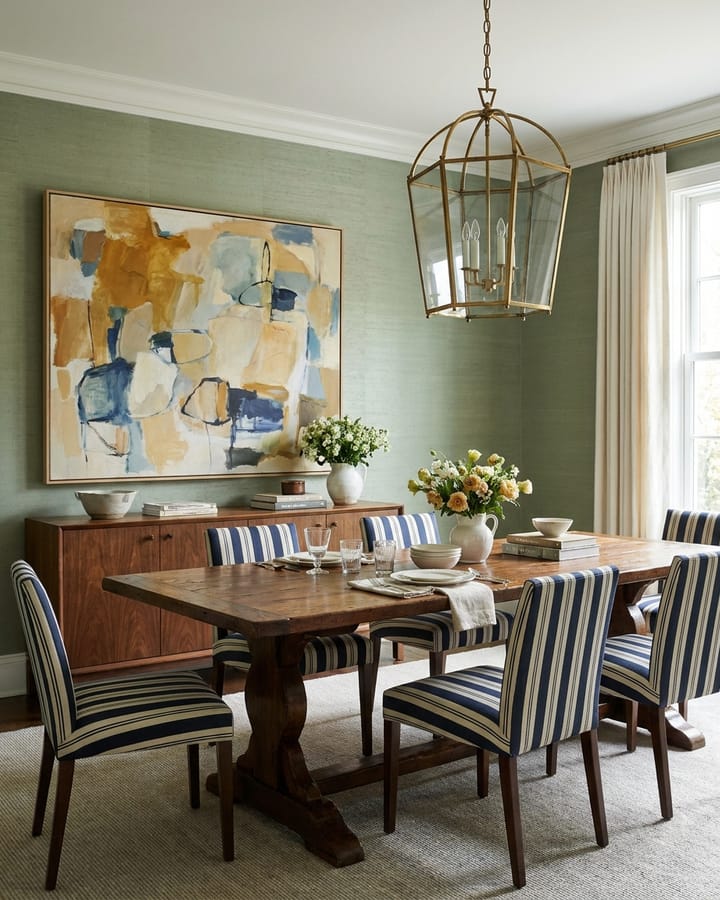
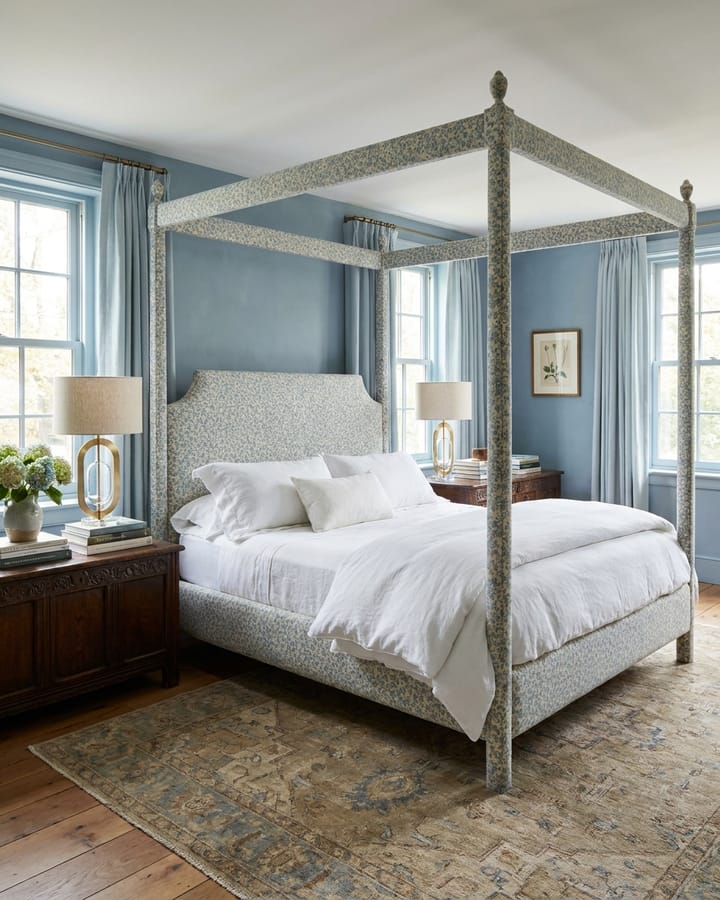
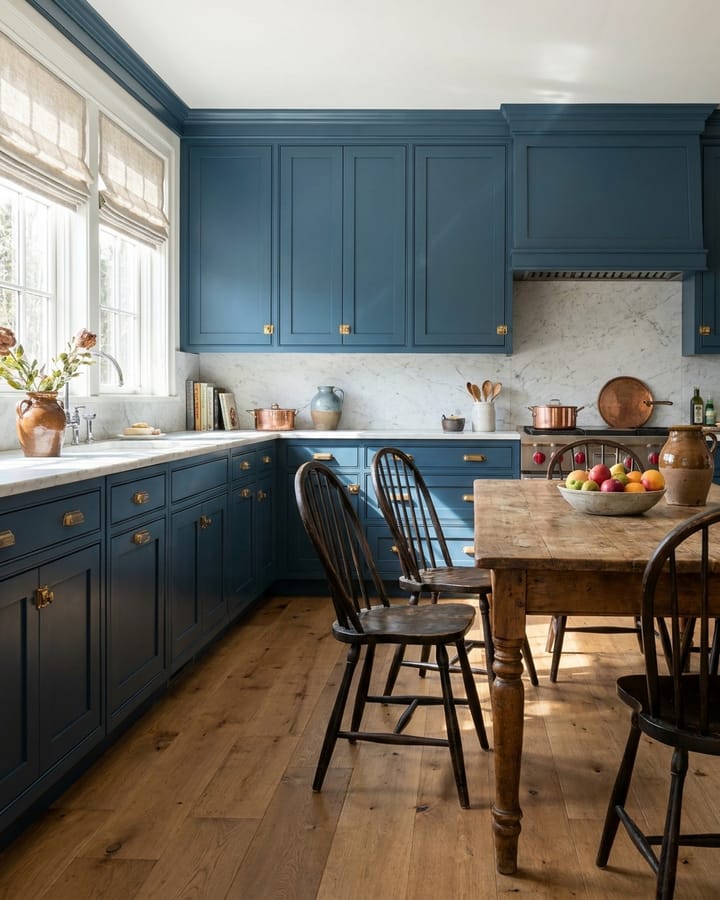
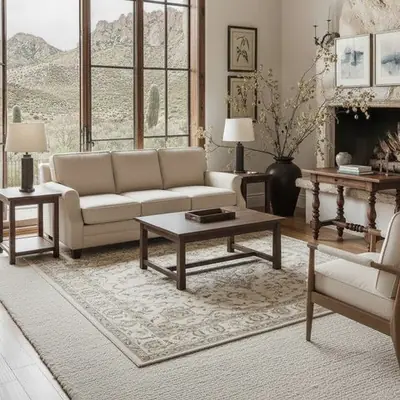
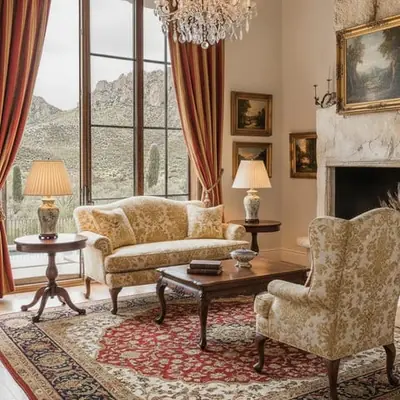
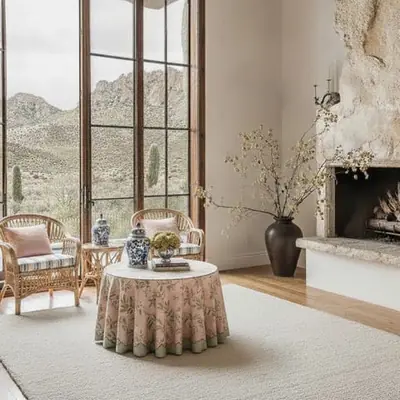
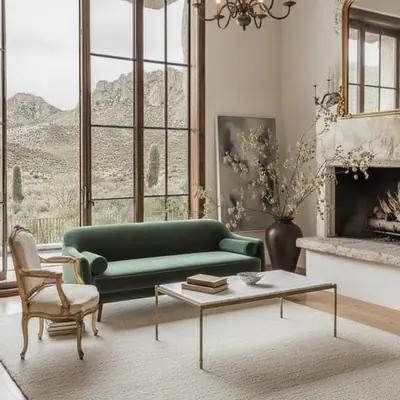
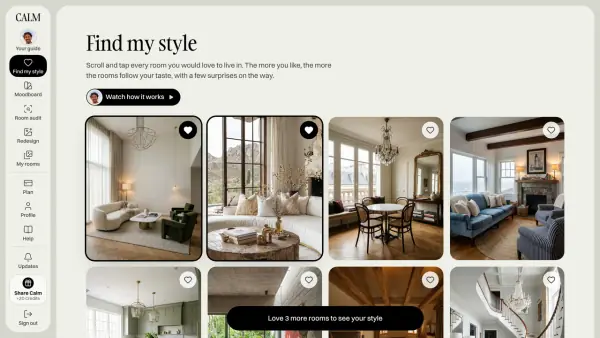
Pictures made for Find my style, our style quiz, to show the look. They are not photographs of real homes.
Pieces in the New traditional style
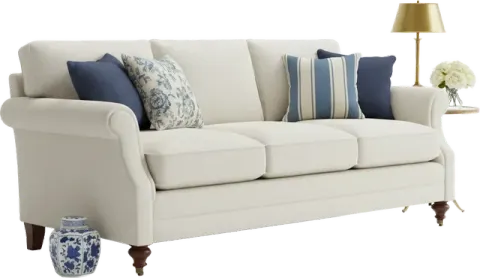 Sofa
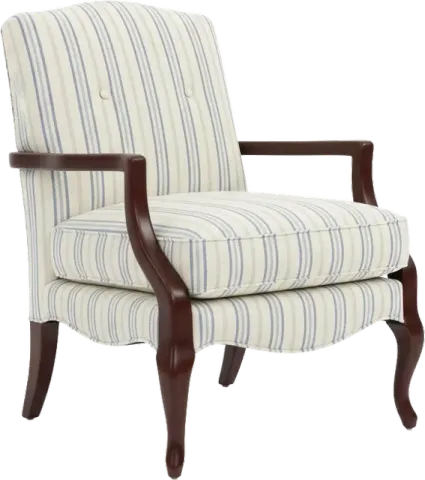 Armchair
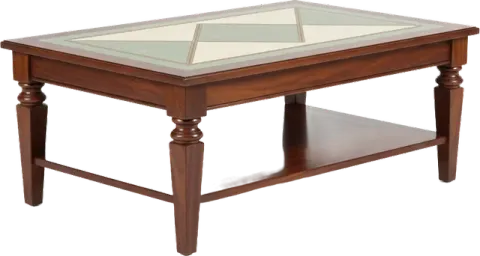 Coffee table
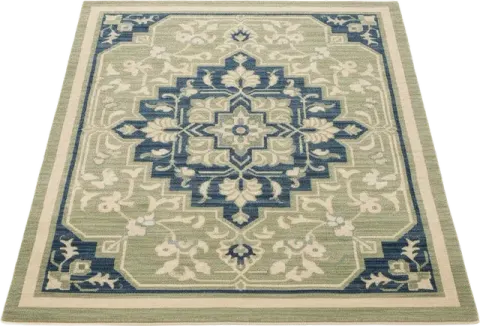 Rug
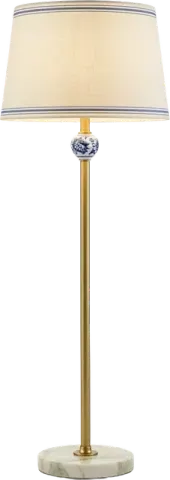 Lamp
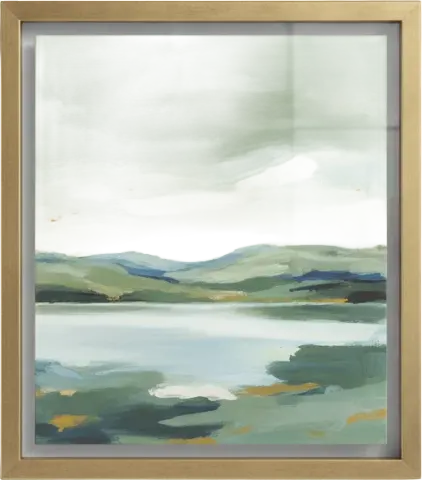 Wall art
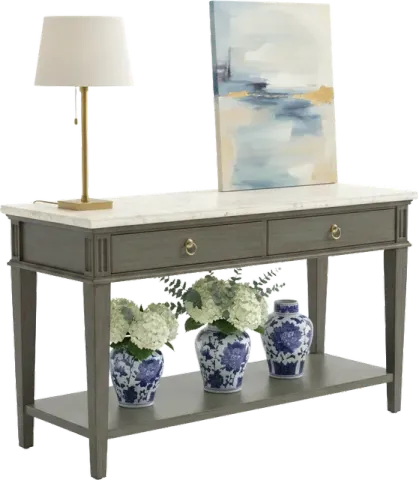 Storage
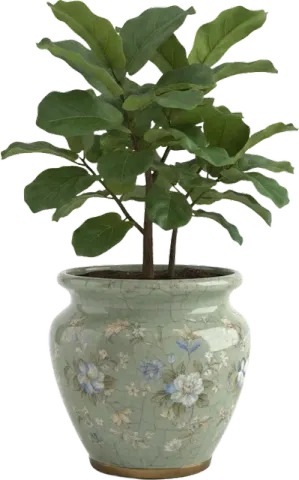 Decor
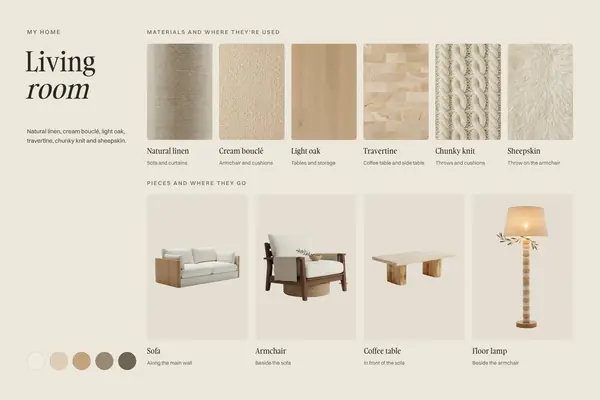
Drawn for Calm Studio’s moodboards to show the look: they are not products from a shop.
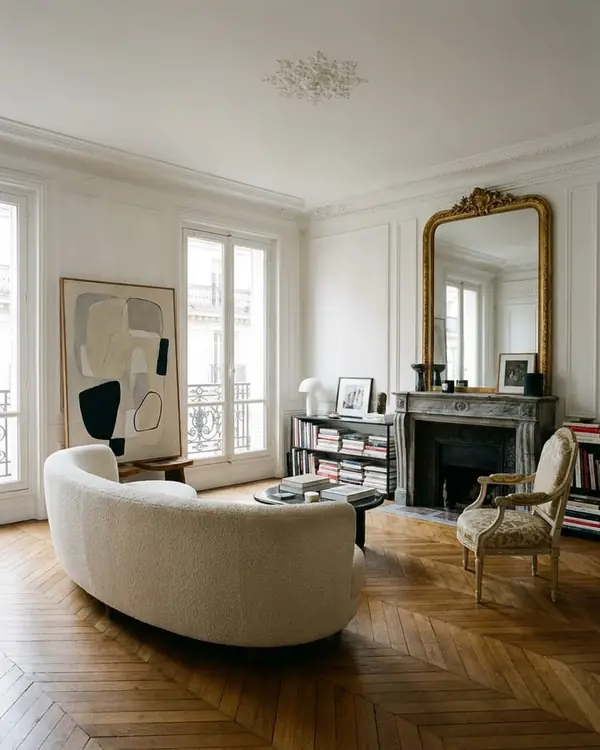
New traditional keeps the grace of an old house and loses its formality. Inherit a Georgian chest of drawers, hang an abstract painting above it, and you are already halfway there. The rooms feel elegant and calm, yet nobody minds if you put your feet up.
What is new traditional style?
New traditional (also called modern traditional) starts from the bones of traditional design: panelling, mouldings, symmetry, antiques and classic upholstered shapes. It then lightens everything around them. The dark reds and heavy damasks give way to pale, chalky colours, linen replaces brocade, and natural fibre rugs replace some of the Persian carpets.
The mix is the point. An antique and a contemporary piece sit side by side, so the room reads as collected and current rather than as a period recreation.
The key elements
- Panelled or moulded walls painted in a soft colour
- Tailored sofas and armchairs in linen or cotton
- Antiques mixed with modern art and lighting
- Blue-and-white porcelain
- Sisal, jute and seagrass rugs
- Stripes, checks and a few restrained florals
- Fresh flowers and greenery
Colours
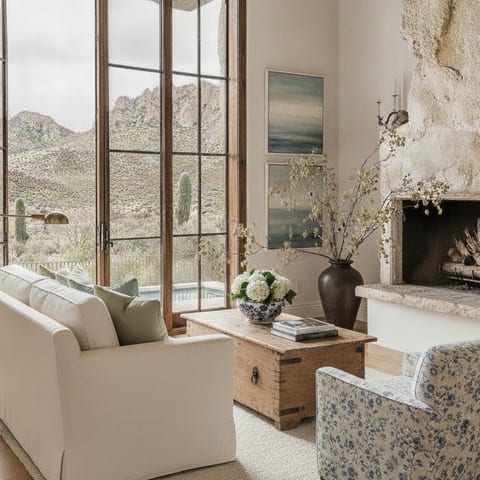
Warm white or a pale stone for the walls and ceiling; soft sage or powder blue on panelling, a kitchen island or a bedroom; navy as the deep accent in cushions, lampshades and porcelain; and walnut or caramel wood to warm it all. Blue and green together is a classic pairing here, and the palette is gentle enough that a whole house can follow it, which gives a sense of flow from room to room.
Materials and textures
Washed linen and cotton on sofas and curtains, needlepoint and crewelwork cushions, sisal or jute underfoot, painted wood panelling, polished antique wood, rattan or wicker for a lighter chair, brass hardware, and glazed ceramics. A little patina is welcome: a worn trunk or a faded rug keeps the room from looking brand new.
Furniture and shapes
Classic but simplified: a tailored sofa with a straight back and rolled or square arms, a slipcovered armchair, a skirted or upholstered stool, a pair of bergère-style chairs. Then add one or two real antiques with character, such as a chest of drawers, a pine trunk or a gateleg table, and one modern piece, such as a glass side table or a sculptural lamp. Why the pairing works, and how to get it right, is covered in mixing old and new furniture.
Lighting
Table lamps do most of the work: ginger-jar or column bases with pleated or plain linen shades, in pairs where the room is symmetrical. Add a simple lantern or a modern pendant overhead, brass swing-arm wall lights beside a bed or bookcase, and picture lights over the best piece of art.
Decor and accessories
Blue-and-white porcelain (first made in China, then copied across Europe, famously in Delft), a stack of hardback books, botanical or abstract prints, a large mirror, hydrangeas or garden roses in a bowl, and a few baskets for practical storage. Keep surfaces lightly styled: three objects on a table rather than ten.
How to bring new traditional style into your home
- Edit first: take out heavy, dark or matching sets and keep the pieces with good shapes.
- Paint walls in warm white and woodwork or panelling in a soft sage or blue.
- Swap heavy curtains for full-length linen, hung high.
- Lay a sisal or jute rug, and layer a small vintage rug on top if the room needs colour.
- Change lampshades to pleated or linen shades in a stripe or soft colour.
- Add blue-and-white porcelain and fresh flowers.
- Hang one large modern artwork above a traditional piece.
Mistakes to avoid
- Keeping every traditional piece and simply painting the walls: edit first.
- Modern pieces that share nothing with the room; link them by colour or material.
- Grey that feels cold; choose whites and greens with some warmth.
- Too many florals, which tip the look into grandmillennial.
- Over-styled shelves, which bring back the stuffiness you were removing.
New traditional vs Classic
| Aspect | New traditional | Classic (transitional) |
|---|---|---|
| Starting point | Traditional rooms, lightened | Classic shapes, simplified |
| Antiques | Real antiques mixed with modern art | Few antiques; clean classic shapes |
| Colour | Soft sage, blue and white | Cream, taupe and blue-grey |
| Pattern | Stripes, checks, some florals | Very little pattern |
| Feeling | Collected and fresh | Quiet and tailored |
The deciding question is pattern and antiques: if you love them, new traditional is yours, and if you would rather have the same calm with cleaner lines, Classic is.
Frequently asked questions
What is the difference between traditional and new traditional?
Traditional uses rich colours, formal fabrics and dark wood throughout; new traditional keeps the shapes and some antiques but lightens the colours and fabrics and mixes in modern pieces.
Is new traditional the same as grandmillennial?
They are cousins. Grandmillennial leans harder into florals, ruffles, skirted tables and pleated shades, while new traditional is quieter and more tailored.
What rugs suit a new traditional room?
Natural fibres such as sisal, jute and seagrass are the classic choice, sometimes layered with a faded vintage or oriental rug.