Gothic interior design: colours, materials and how to get the look
Quick answer
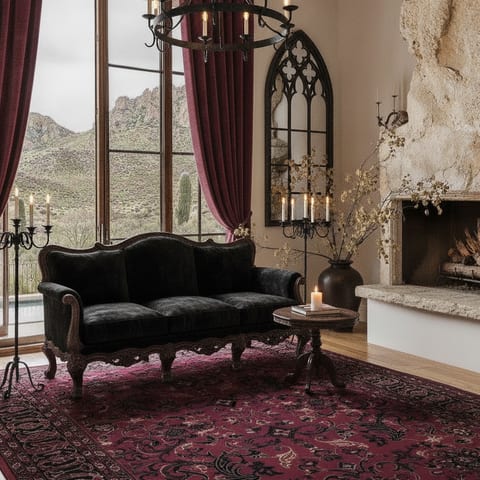
Gothic interior design borrows from medieval cathedrals and old manor houses: pointed arches and tracery, carved black or dark oak furniture, stone, wrought-iron chandeliers and candelabras, stained glass, and velvet or damask in burgundy, plum and black. It is dark, romantic and dramatic, and at home it looks best as an elegant, grown-up room rather than a Halloween set.

By Eduardo, founder of Calm Decoration
The colours of Gothic
#b8b2a8#6a1f2b#3a2b3f#2b2b2b#0f0f0f
What gives it away
- Pointed arches
- Carved black wood
- Burgundy and black velvet
- Wrought iron and candles
- Stone and stained glass
Gothic rooms
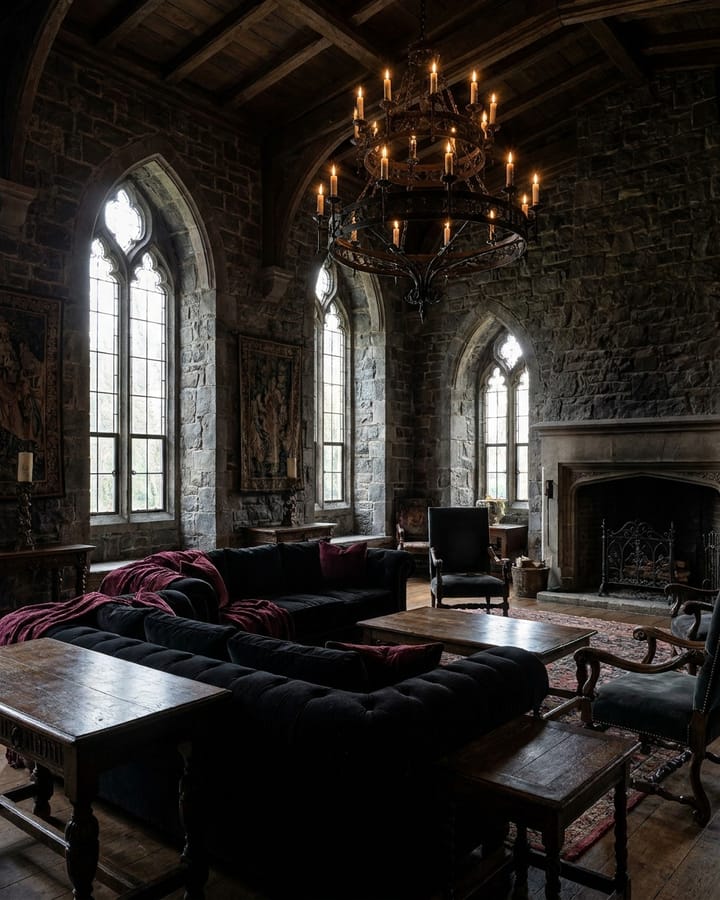
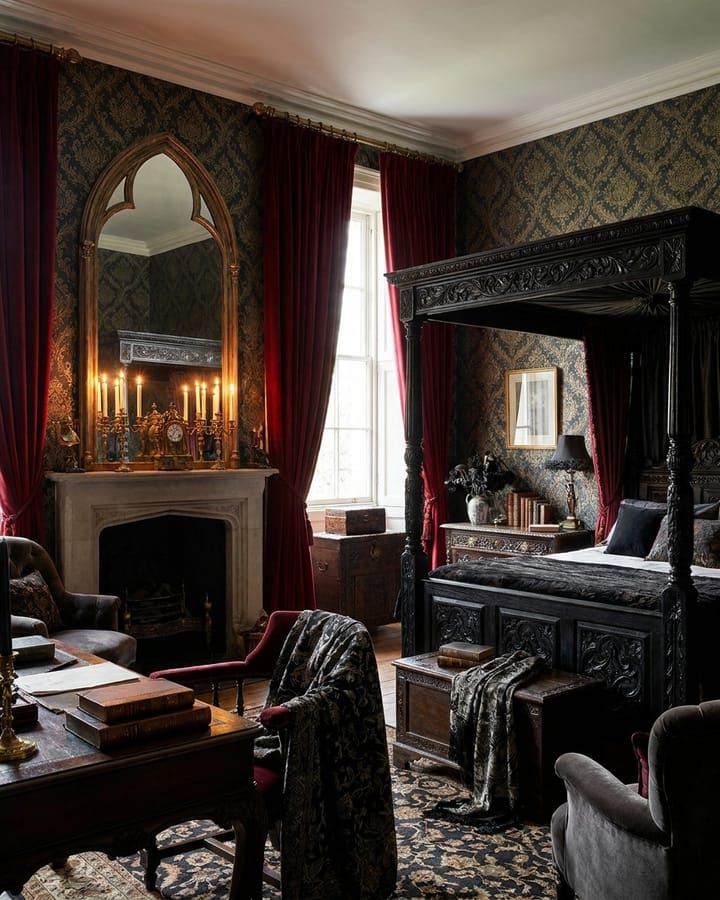
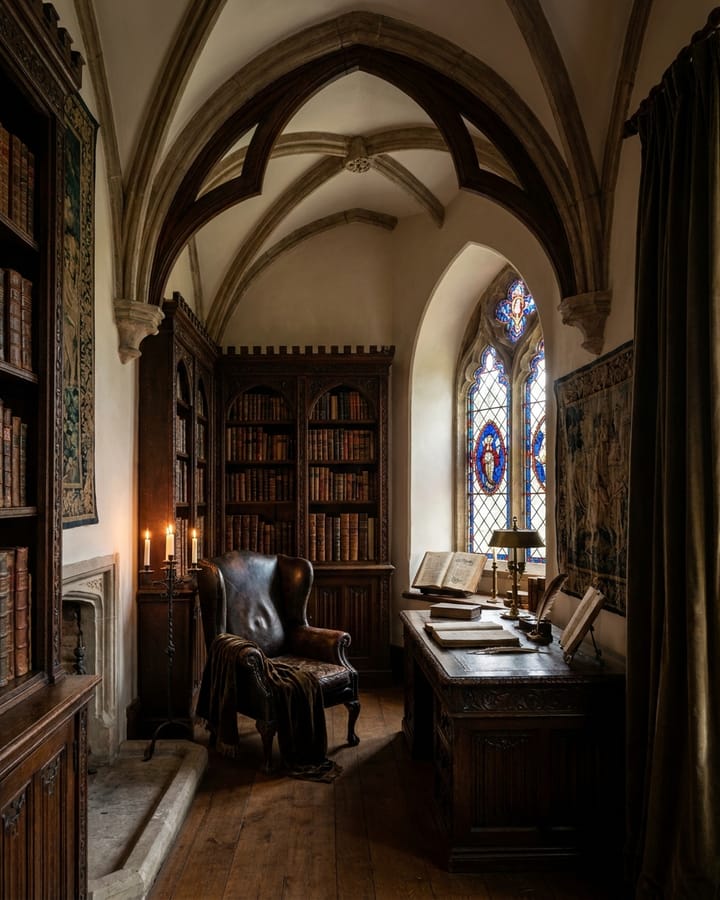
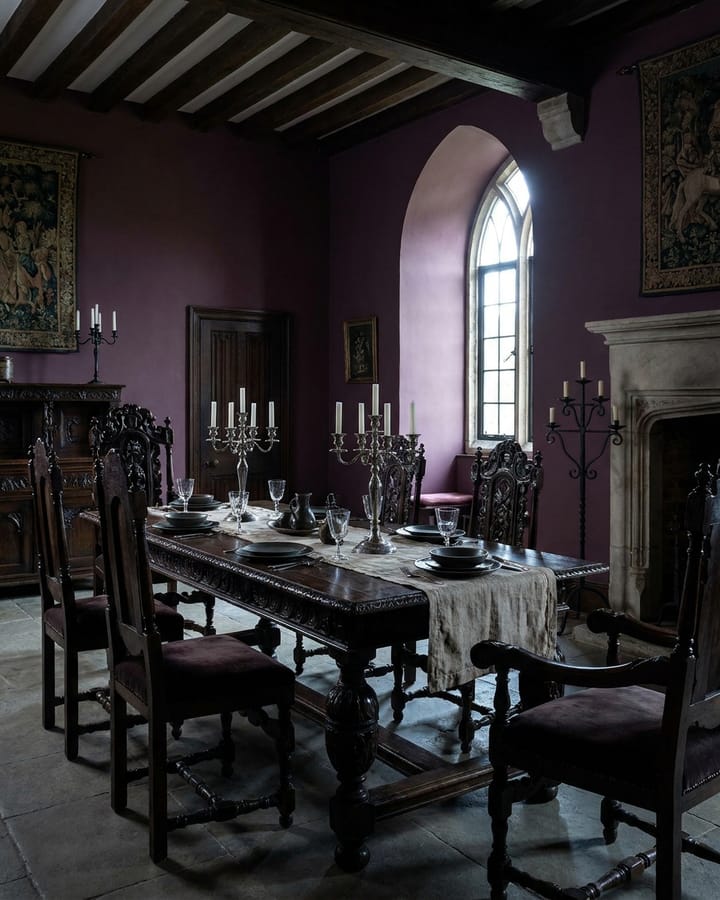
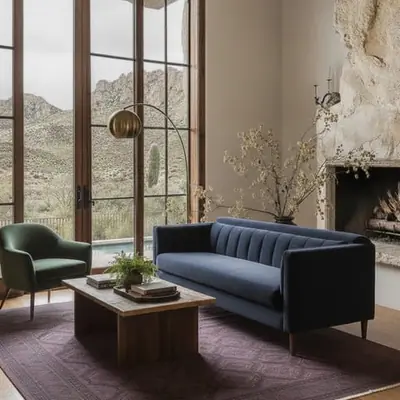
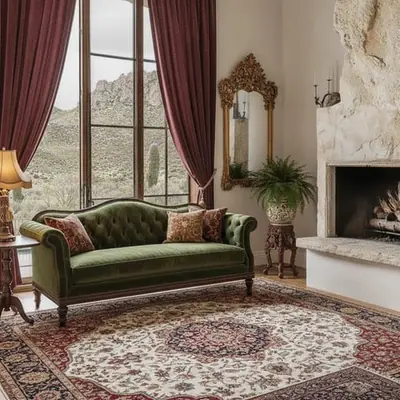
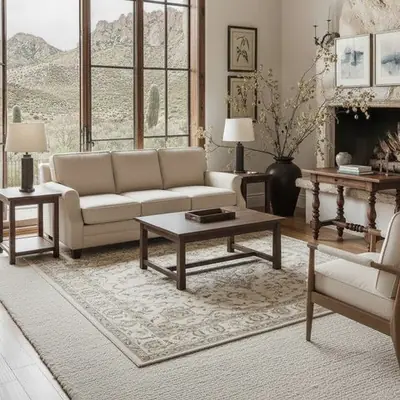
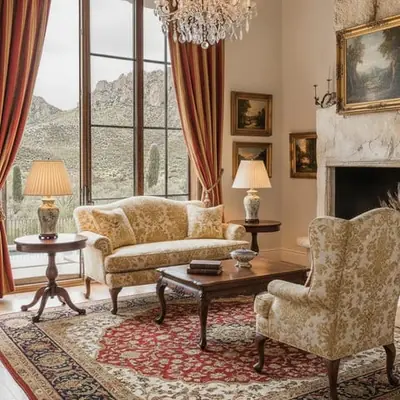
Pictures made for Find my style, our style quiz, to show the look. They are not photographs of real homes.
Pieces in the Gothic style
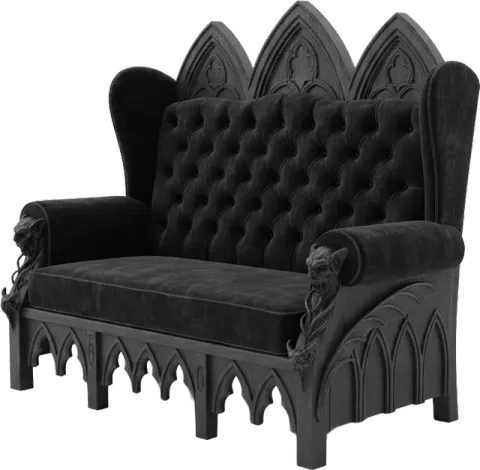 Sofa
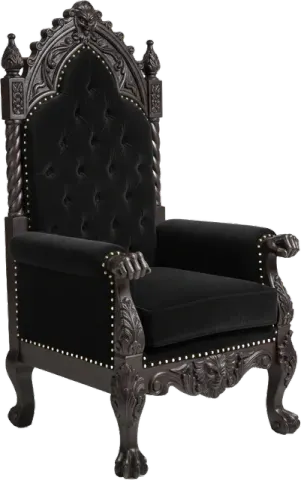 Armchair
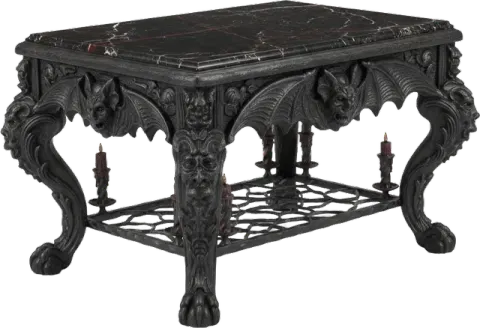 Coffee table
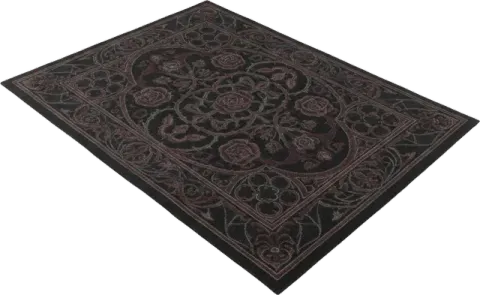 Rug
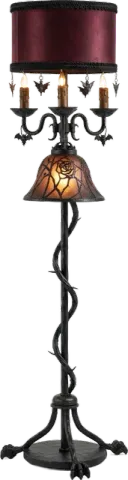 Lamp
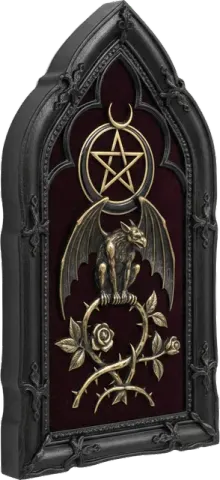 Wall art
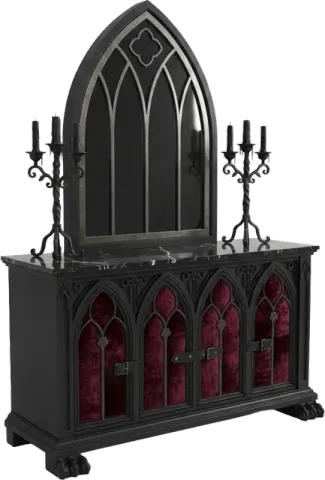 Storage
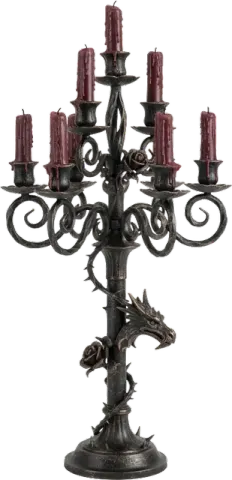 Decor
Drawn for Calm Studio’s moodboards to show the look: they are not products from a shop.
Gothic style is for romantics with a taste for drama: people who get goosebumps in old churches, light candles every evening and would choose black velvet over beige linen without a second thought. A gothic room is mysterious and grand. Once the candles are lit, it is also surprisingly peaceful.
What is gothic style?
Gothic architecture grew up in medieval Europe from the 12th century, beginning in France, and gave the world its great cathedrals: pointed arches, ribbed vaults, tall stained-glass windows and stone carved as finely as lace. In Britain it was revived in the 18th and especially the 19th century, and the Houses of Parliament in London are a famous example of that Gothic Revival.
At home, gothic style takes the shapes of that architecture (the pointed arch, the trefoil, the tracery) and the mood of a candlelit manor, and brings them into furniture, mirrors, lighting and colour.
The key elements
- Pointed arches on mirrors, cabinets, headboards and doorways
- Carved dark wood: black-stained oak, ebonised finishes
- Velvet, brocade and damask in deep jewel colours
- Wrought-iron chandeliers and candelabras
- Stone, real or suggested by colour and texture
- Stained or leaded glass
- Heavy curtains and a deep red or black rug
Colours
Black and charcoal are the base: on a feature wall, a carved frame or a sofa. Burgundy and deep plum bring warmth and richness in velvet, curtains and rugs. Stone grey keeps the room from closing in, on walls, a fireplace or floor, and gold appears in small touches such as a frame or a candlestick. A room painted plum or charcoal with burgundy curtains already feels gothic before any furniture arrives; the same deep walls without the arches make a dark and moody room.
Materials and textures
Carved and stained oak, wrought iron, aged brass, stone and slate. Fabrics are heavy and luxurious: velvet, brocade, damask, tapestry and leather. Look for linenfold panelling, carving that imitates folded cloth, on chests and cabinets, and leaded or coloured glass in doors and lamps.
Furniture and shapes
Tall, upright and carved: a high-backed chair with a pointed crest, a four-poster bed with heavy hangings, a long refectory table with benches, a carved chest at the foot of the bed, a velvet sofa with an ornate dark frame. Look for pointed-arch shapes in mirrors, bookcases and cabinet doors.
Lighting
Candlelight defines the mood. Use an iron ring chandelier with candle-style bulbs, tall floor candelabras, wall sconces in black iron and real candles grouped on the mantel. Keep the light low and warm and avoid bright overhead light altogether. Our guide to lighting a room explains how to layer lamps so a dark room still works for reading.
Decor and accessories
A pointed-arch or tracery mirror, oil portraits in heavy frames, old books with leather spines, iron candlesticks, dried roses or dark branches in a stone vase, a tapestry on the wall, and pieces of coloured glass. Choose a few strong objects rather than many small ones, and leave out the plastic skulls.
How to bring gothic style into your home
- Start with the light: switch to candles, candle-style bulbs and lamps with dark shades.
- Paint one wall, or a whole small room, in charcoal, plum or deep burgundy.
- Change the curtains to floor-length velvet in burgundy or black.
- Hang an arched or tracery mirror; it is the single most recognisable gothic shape.
- Add iron: candelabras, a chandelier, curtain poles with finials.
- Look for carved dark-wood furniture in antique shops and auctions; heavy Victorian Gothic Revival pieces often turn up.
- Finish with velvet cushions and a deep red rug.
Mistakes to avoid
- Halloween props and costume pieces, which make the room look temporary.
- Black everywhere with no texture or warm colour to soften it.
- Real candles near curtains or under shelves.
- Too many small carved pieces: one large carved piece is more impressive.
- Forgetting comfort. Even a gothic sofa needs to be good to sit on.
Gothic vs Victorian
| Aspect | Gothic | Victorian |
|---|---|---|
| Inspiration | Medieval cathedrals and manors | 19th-century homes |
| Shapes | Pointed arches, tracery, tall carved backs | Curves, buttons, balloon backs |
| Colours | Black, burgundy, plum, stone | Claret, bottle green, gold, brown |
| Light | Candles and iron | Fringed lamps and glass shades |
| Mood | Dark and dramatic | Rich and romantic |
Go gothic if arches, iron and candlelight thrill you, and Victorian if you prefer pattern, plush and a softer kind of richness.
Frequently asked questions
What colours are used in gothic interiors?
Black, charcoal, burgundy, deep plum and stone grey, with small touches of gold or brass.
How do I make a gothic room not too dark?
Light it with several warm sources, use stone grey or a lighter wall colour with dark furniture, and add mirrors to reflect the candlelight.
Is gothic interior design the same as goth decor?
They overlap. Gothic interior design draws on medieval and Gothic Revival architecture, while goth decor follows the goth subculture; both love black, velvet and candles.