French country interior design: colours, materials and how to get the look
Quick answer
French country, or Provençal style, is the look of farmhouses in the south of France: limestone and limewashed walls, terracotta floors, exposed beams, painted armoires in faded blue and grey, toile de Jouy, rush-seat chairs, copper pans and lavender. It is rustic but graceful, mixing simple country pieces with a few curvy, elegant ones, in a sunny palette of cream, yellow, lavender and blue.

By Eduardo, founder of Calm Decoration
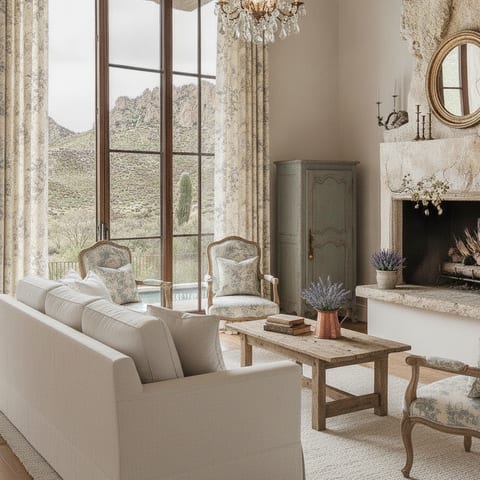
The colours of French country
#f4eedf#e9cf7b#8fa8c4#a99cc7#b5653f
What gives it away
- Limestone and terracotta
- Painted furniture
- Toile de Jouy
- Rush-seat chairs
- Lavender, blue and yellow
French country rooms
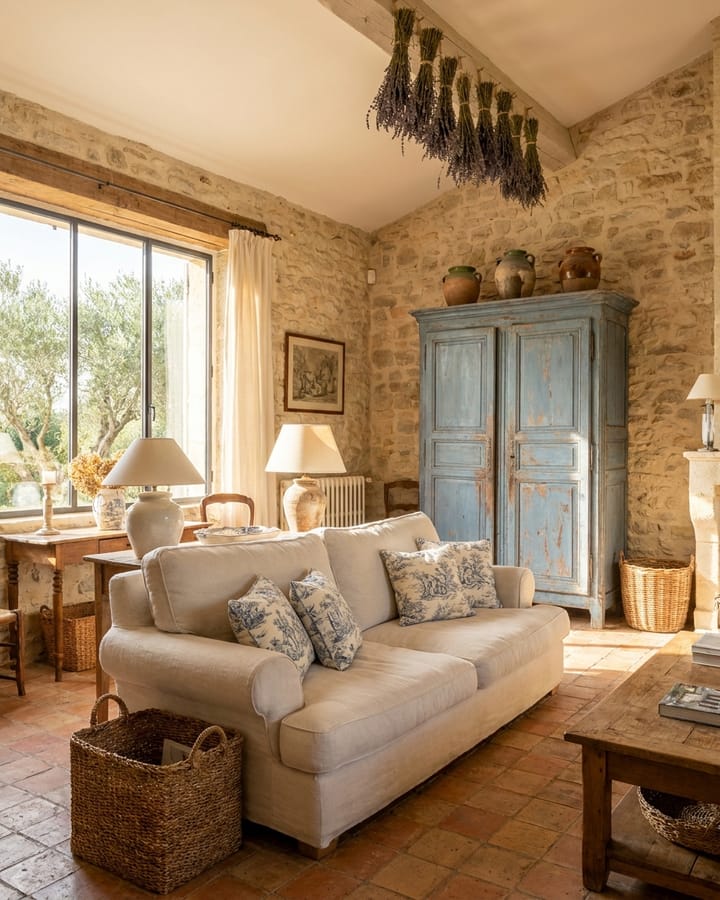
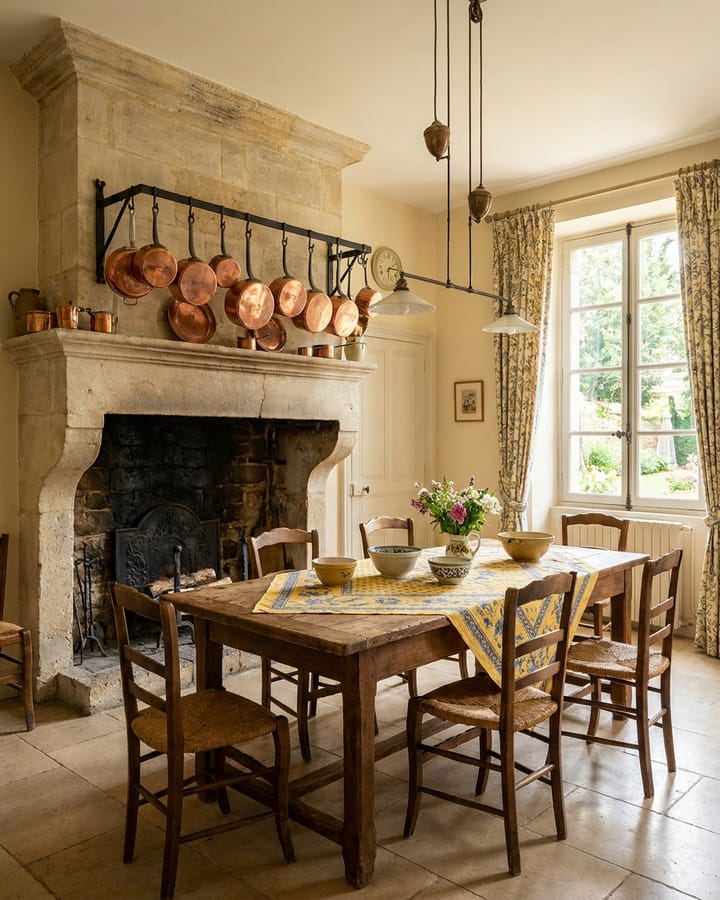
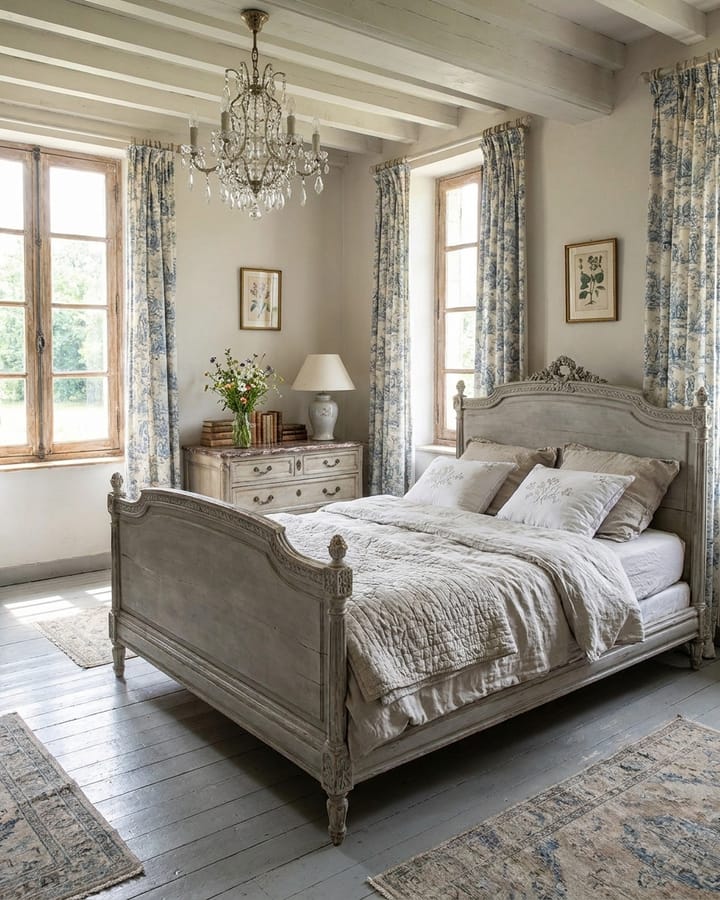
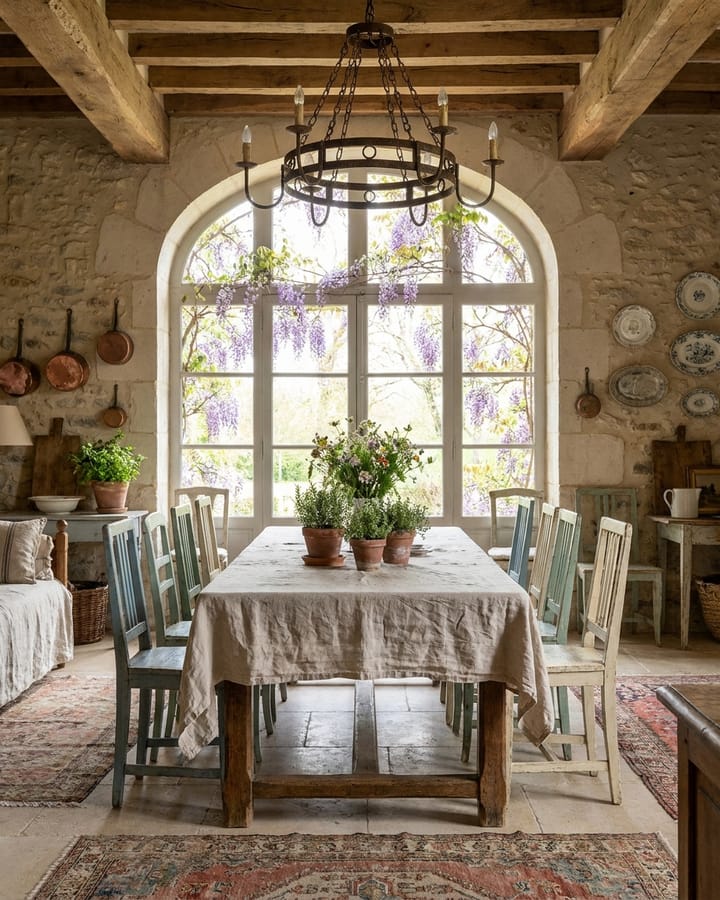
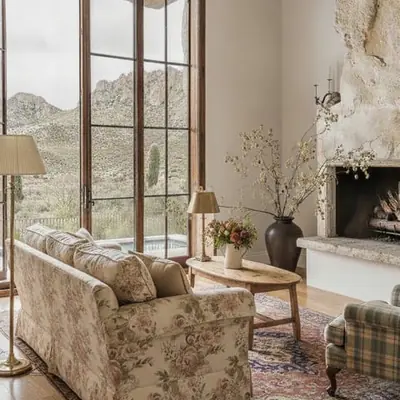
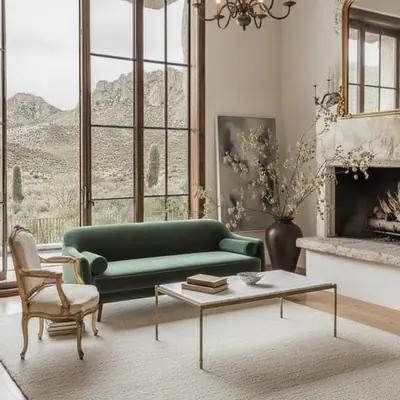
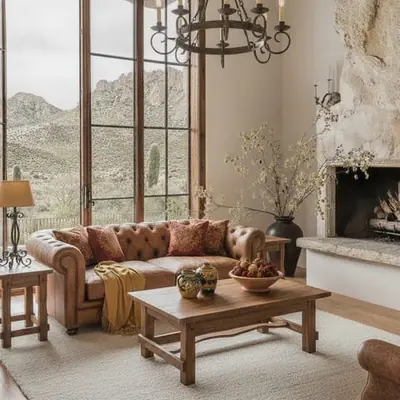
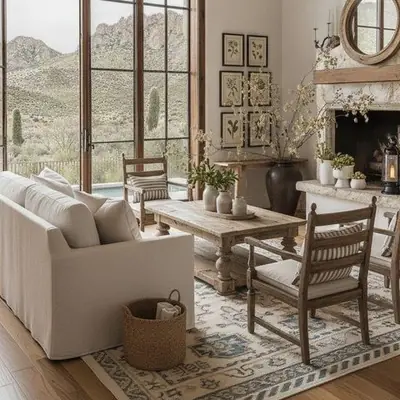
Pictures made for Find my style, our style quiz, to show the look. They are not photographs of real homes.
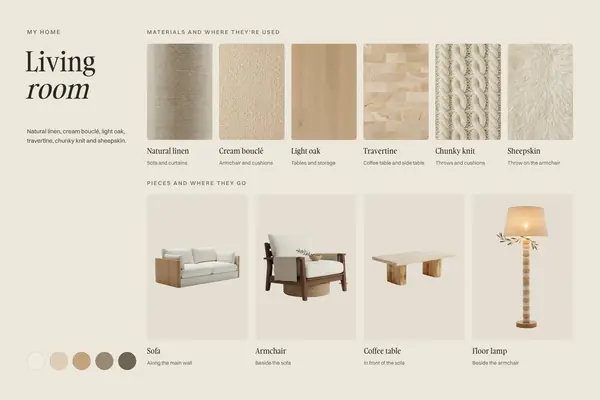
Pieces in the French country style
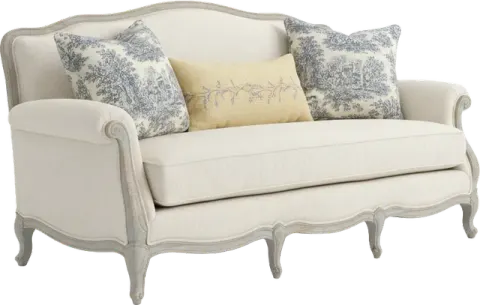 Sofa
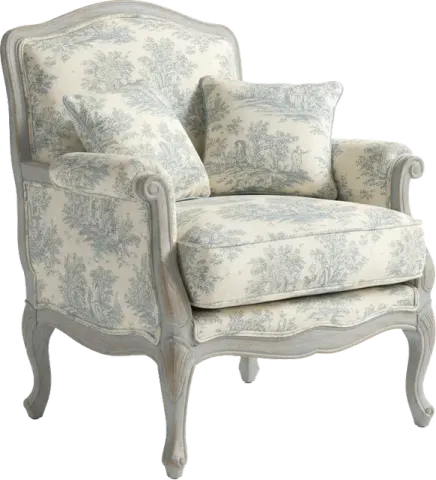 Armchair
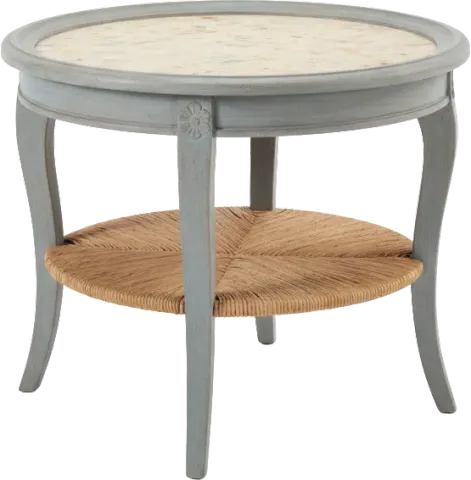 Coffee table
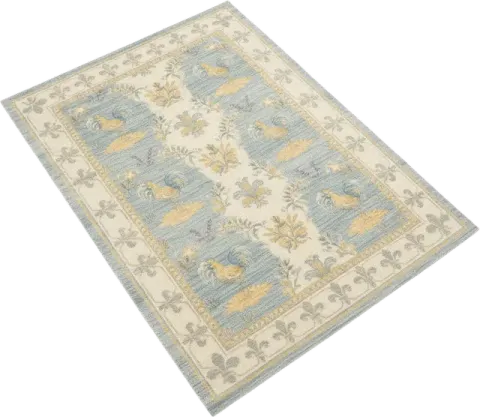 Rug
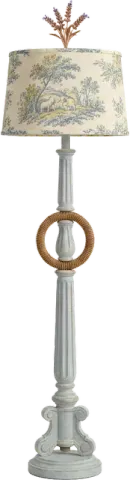 Lamp
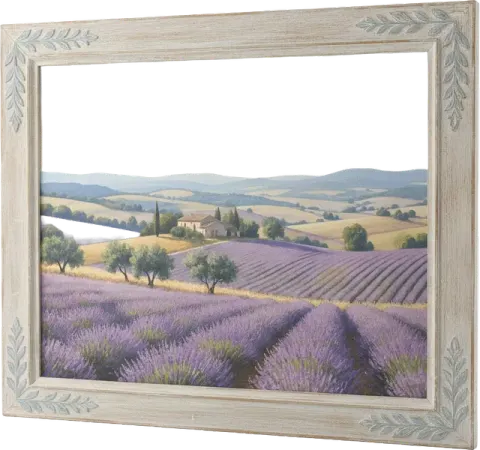 Wall art
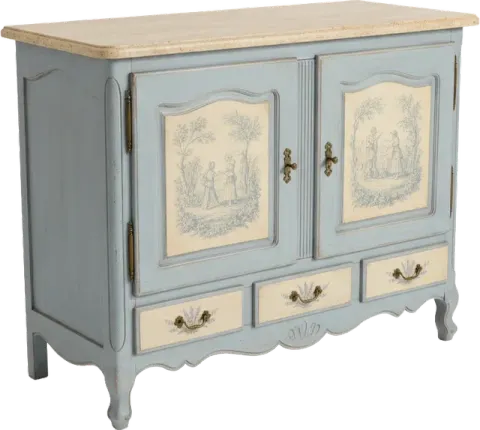 Storage
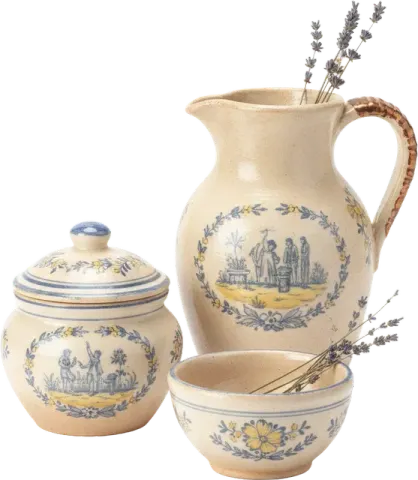 Decor
Drawn for Calm Studio’s moodboards to show the look: they are not products from a shop.
French country brings Provence indoors: shutters thrown open onto a lavender field, painted furniture with soft, worn edges, linen that is better for being crumpled and a long table that seats everyone. It is rustic and elegant at once, with the slow, sunny pace of a southern afternoon. Of all the country styles, I find it one of the gentlest to live with.
What is French country style?
It takes its look from the farmhouses (mas) and village houses of Provence, in the south-east of France, where thick stone walls keep rooms cool, floors are laid with terracotta tiles, and furniture was made locally and painted or waxed. Over time, pieces with the curves of 18th-century French furniture found their way into these homes, which is why a carved armchair can sit next to a scrubbed table. The city's version of French style is Parisian.
Its fabrics have their own story. Toile de Jouy, the printed cotton showing pastoral scenes in one colour on cream, was made at Jouy-en-Josas near Versailles from the 1760s. Provençal prints, small bright patterns of flowers and paisley, descend from the Indian cottons that came into France through Marseille.
The key elements
- Limestone, plaster and limewashed walls
- Terracotta floor tiles, including hexagonal tomettes
- Exposed wooden beams
- Painted furniture in faded blue, grey and cream
- Toile de Jouy, Provençal prints, ticking and grain-sack stripes
- Rush-seat chairs and curvy upholstered armchairs
- Copper pans, faïence and stoneware
- Lavender, sunflowers and olive branches
Colours
Cream and warm white on walls and linen; soft straw or sunflower yellow in prints, pottery and painted chairs; faded French blue on an armoire, shutters or toile; lavender in fabrics and in real bunches; terracotta underfoot and in pots. These colours sit well together because they are all slightly sun-faded. To decide which one leads, use the steps for choosing a colour palette.
Materials and textures
Limestone, terracotta, rough plaster, oak and walnut, chestnut, wrought iron, copper, washed linen, cotton toile, ticking, rush and straw. Painted wood with a chalky, slightly worn finish is typical, and old monogrammed linen sheets make lovely curtains and tablecloths.
Furniture and shapes
A large painted armoire, a long farmhouse table with a mix of rush-seat chairs, a bergère (an upholstered armchair with closed sides), a cream linen sofa, a buffet for dishes, and the Provençal panetière, a small spindled cabinet once used for keeping bread. Legs are often gently curved, and carved details are simple.
Lighting
A wrought-iron chandelier over the table, or a crystal one for a touch of château; lamps with toile or pleated linen shades; iron wall sconces; and candles in old bottles or lanterns. Use warm light that echoes evening sun on stone.
Decor and accessories
Copper pans on hooks, faïence and stoneware jugs, baskets for bread and market shopping, lavender drying in bunches, a round gilt or painted mirror, olive branches in a terracotta pot, and old wooden chopping boards. Things look useful because most of them are.
How to bring French country style into your home
- Paint an old wardrobe, dresser or chairs in a soft blue-grey or cream, then rub back the edges lightly.
- Change cushions and curtains to toile, ticking or a Provençal print.
- Swap a plain tablecloth for washed linen and add a jug of lavender or sunflowers.
- Hang copper pans or a rack of utensils in the kitchen.
- Look for rush-seat chairs and a curvy armchair at markets and second-hand shops.
- Choose terracotta tiles if you are replacing a floor, or a terracotta-toned rug if you are not.
- Add an iron chandelier or lanterns.
Mistakes to avoid
- Matching "French" furniture from a single collection with fake distressing.
- Too much toile in one room: one or two pieces are enough.
- Bright, saturated colours that lose the sun-faded softness.
- Ornate gilt everywhere, which turns country into palace.
- Rooster ornaments and slogan signs.
French country vs Tuscan
| Aspect | French country | Tuscan |
|---|---|---|
| Region | Provence, southern France | Tuscany, central Italy |
| Walls | Limestone, limewash, cream | Ochre and sienna plaster |
| Furniture | Painted, curvy, with rush seats | Dark chestnut and wrought iron |
| Colours | Lavender, yellow, faded blue | Ochre, terracotta, olive, wine red |
| Fabrics | Toile and Provençal prints | Leather, linen and velvet |
Choose French country for a lighter, painted and pretty look, and Tuscan for deeper, earthier warmth.
Frequently asked questions
What colours are French country?
Cream, soft yellow, faded French blue, lavender and terracotta, with grey-blue and sage on painted furniture.
What is the difference between French country and shabby chic?
French country is rooted in Provençal farmhouses, with terracotta, stone and colour; shabby chic is whiter and more romantic, built around distressed white paint and faded roses.
What is toile de Jouy?
A cotton fabric printed in one colour on cream with pastoral or historical scenes, first made at Jouy-en-Josas, near Versailles, in the 18th century.