Art Nouveau interior design: colours, materials and how to get the look
Quick answer
Art Nouveau is the decorative style of roughly 1890 to 1910, found in Brussels, Paris, Barcelona, Glasgow and Vienna: flowing, whiplash curves inspired by plants, carved and bent wood, wrought iron, stained glass, mosaics and lamps shaped like flowers. Its colours are olive, peacock blue, plum and gold on cream. At home it brings nature, craft and graceful movement into a room.

By Eduardo, founder of Calm Decoration
The colours of Art Nouveau
#efe2c4#c9a24a#7d8a4e#1f6f78#5c2a4a
What gives it away
- Flowing, organic curves
- Stained glass
- Glass flower lamps
- Mosaics
- Olive, peacock blue and gold
Art Nouveau rooms
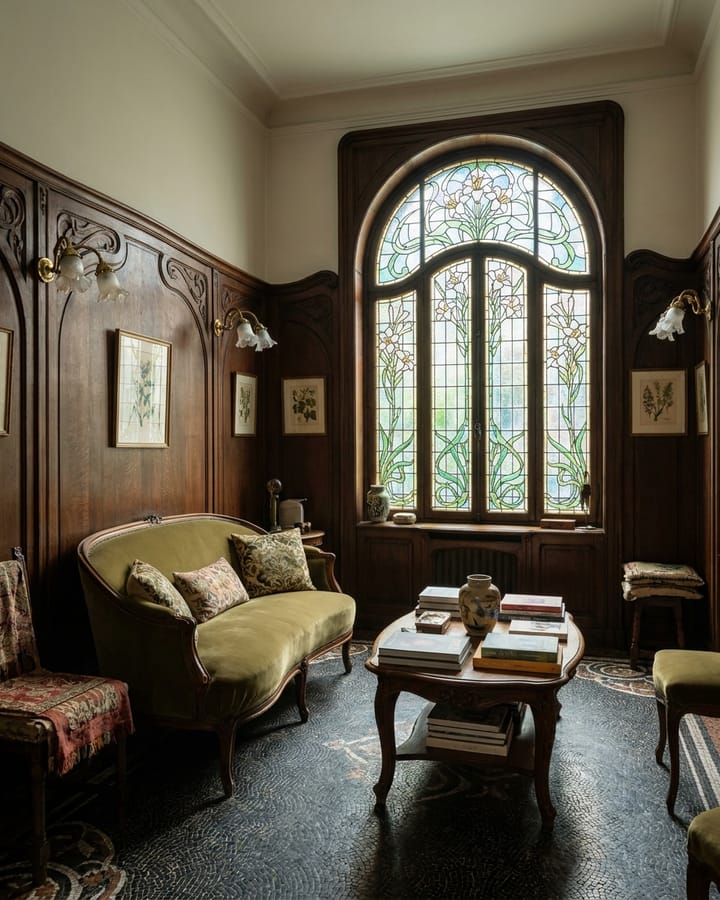
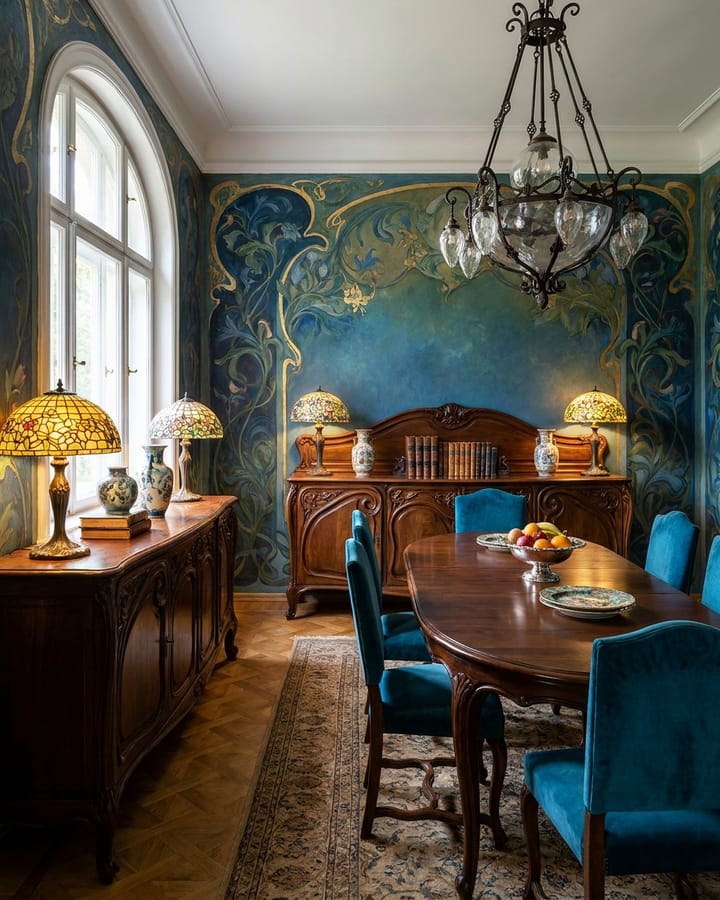
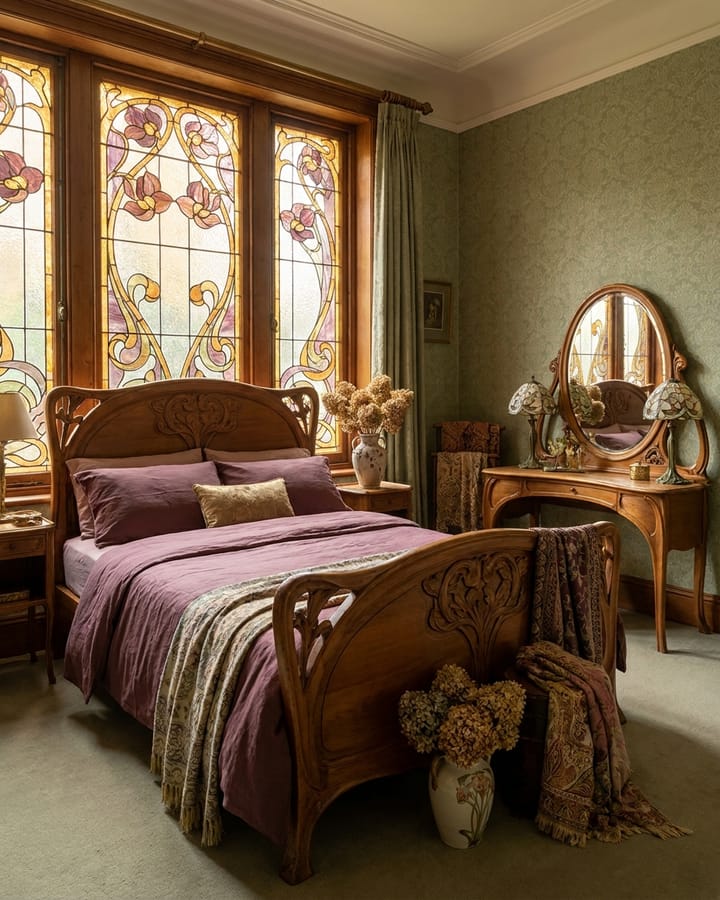
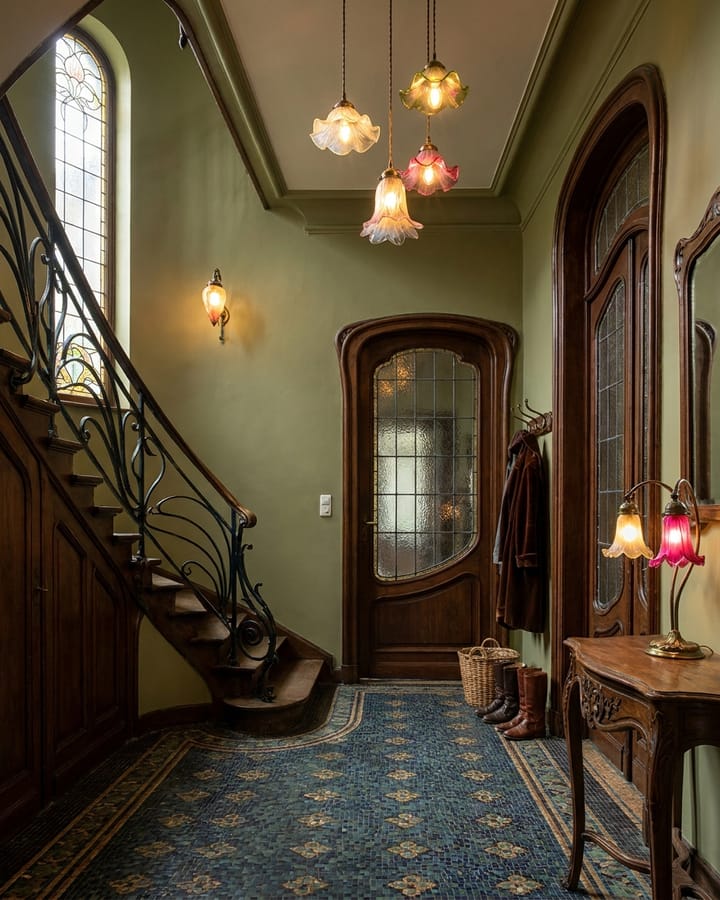
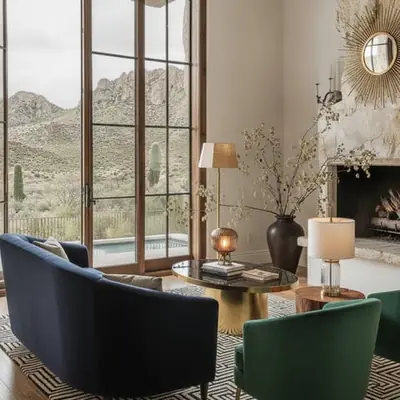
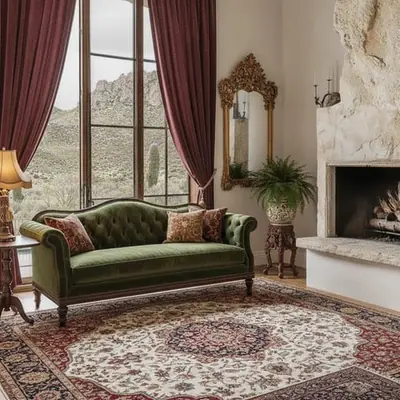
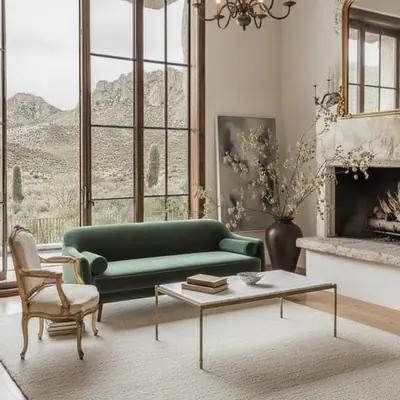
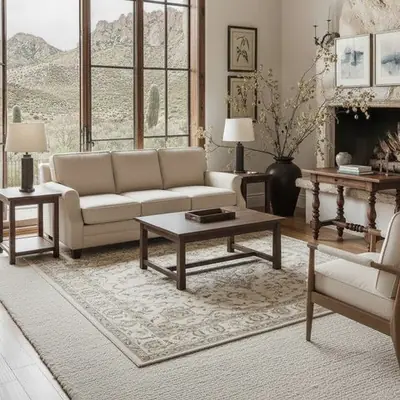
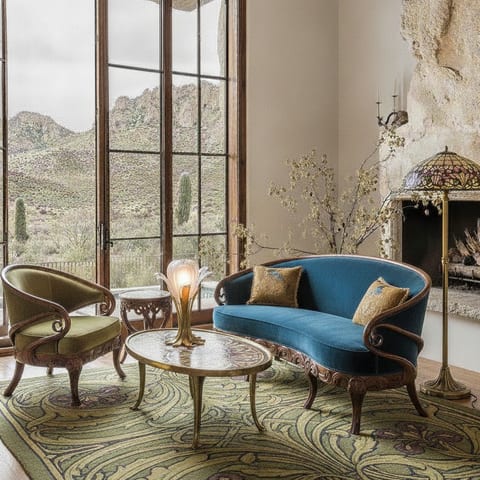
Pictures made for Find my style, our style quiz, to show the look. They are not photographs of real homes.
Pieces in the Art Nouveau style
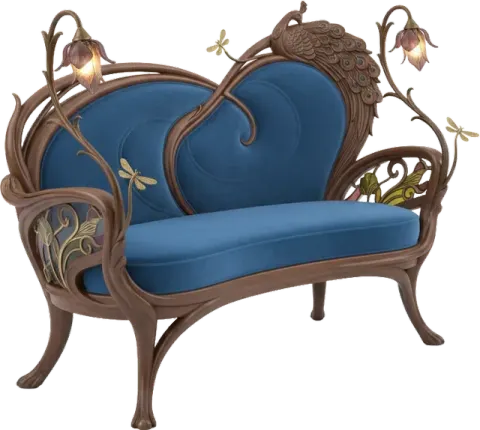 Sofa
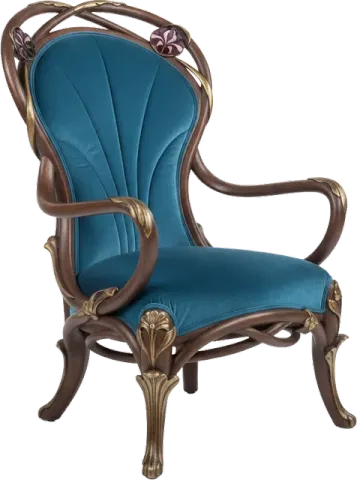 Armchair
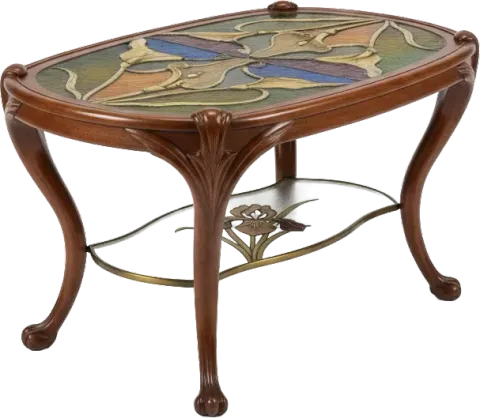 Coffee table
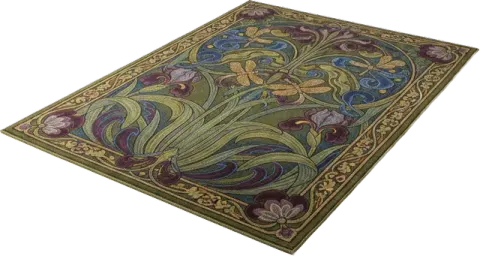 Rug
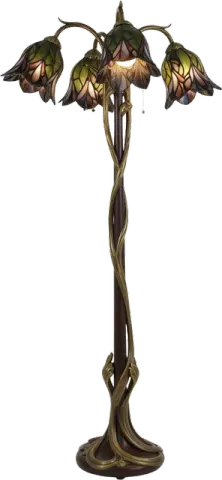 Lamp
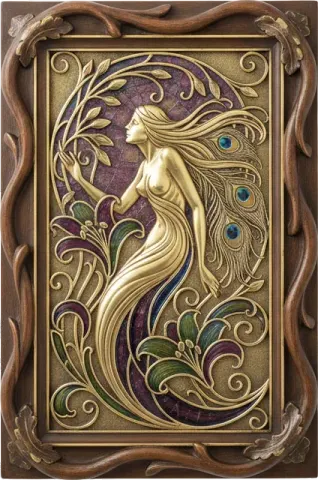 Wall art
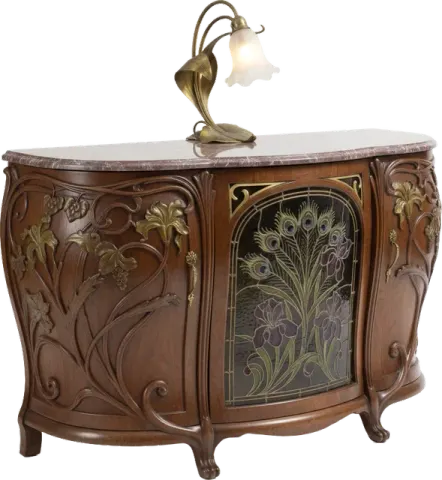 Storage
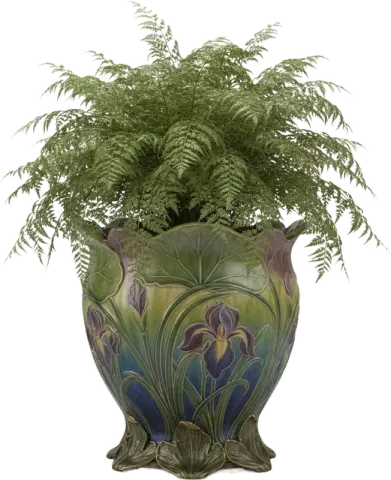 Decor
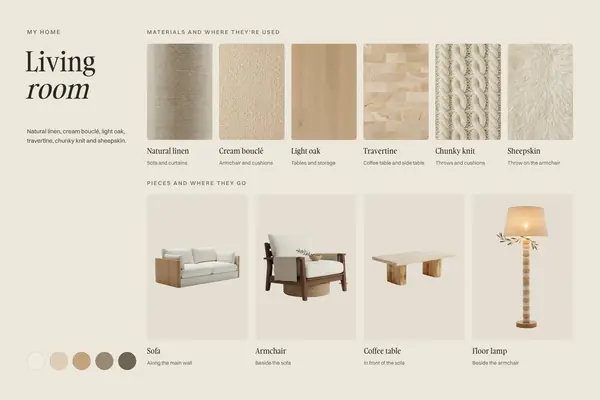
Drawn for Calm Studio’s moodboards to show the look: they are not products from a shop.
Some people see a lily or a dragonfly and think "that should be a lamp". Art Nouveau was made by people like that, and it still delights anyone who loves curves, handcraft and the way an old Paris Métro entrance seems to grow out of the pavement. In an Art Nouveau room every line seems to move, romantic without being sugary.
What is Art Nouveau style?
Art Nouveau ("new art") flourished from about 1890 to 1910. Its name comes from Siegfried Bing's Paris gallery, La Maison de l'Art Nouveau, which opened in 1895. It had other names elsewhere: Jugendstil in Germany, Secession in Vienna, Modernisme in Catalonia, and Stile Liberty in Italy, after the London shop.
Its makers wanted to break with copying the past and to unite art and craft. Victor Horta's houses in Brussels, Hector Guimard's Paris Métro entrances, Antoni Gaudí's buildings in Barcelona, Charles Rennie Mackintosh's work in Glasgow and Louis Comfort Tiffany's glass in New York all belong to it. The defining mark is the curve taken from nature: stems, tendrils, petals and the "whiplash" line that snaps and flows.
The key elements
- Flowing, asymmetric curves in wood, iron and plaster
- Motifs from nature: lilies, irises, poppies, peacocks, dragonflies
- Stained and leaded glass
- Lamps with glass shades shaped like flowers or domes
- Mosaics and decorative tiles
- Carved, curving furniture with organic legs and arms
- A muted, natural palette with gold
Colours
The palette is drawn from gardens and feathers: cream as the ground, olive green for walls, rugs and upholstery, peacock blue for a velvet sofa or tiles, plum for depth in curtains or glass, and gold in frames, mosaics and metalwork. These are soft, slightly muted shades rather than bright ones. Balancing a deep accent like peacock blue against calmer colours is easier once you know how to choose a colour palette.
Materials and textures
Carved and bent wood (walnut, mahogany and oak), wrought iron and bronze, coloured and opalescent glass, ceramic tiles, mosaic, enamel, and fabrics with stylised plant patterns. Velvet and silk upholstery, embroidered cushions and patterned rugs carry the flowing lines down to the floor.
Furniture and shapes
Nothing is quite straight. Look for a kidney-shaped or curved-back sofa with a carved frame, armchairs with sweeping arms that curl like a stem, round tables on curving legs, cabinets with tall, tapering sides, and screens or mirrors with organic frames. Tall, slender ladder-back chairs show the more geometric Glasgow side of the style. These pieces look especially at home in the tall rooms of a Parisian apartment.
Lighting
This is where Art Nouveau shines, literally. A leaded stained-glass lamp in the Tiffany style, a table lamp with a tulip or lily-shaped glass shade, bronze lamps with figures or stems, and wall lights with glass flowers. Use them as the room's main light in the evening; their coloured glow is the point.
Decor and accessories
Prints and posters in the style of Alphonse Mucha, cameo or iridescent glass vases, peacock feathers, a curved mirror, embroidered cushions, tiles with irises or lilies, and real flowers with long stems: irises, tulips, calla lilies. Frame a single print beautifully rather than covering the walls.
How to bring Art Nouveau style into your home
- Start with one lamp: a stained-glass or flower-shaped glass lamp changes the mood of a room at once.
- Hang Art Nouveau prints or posters in simple gold or dark wood frames.
- Paint a wall in olive, sage or a muted peacock blue.
- Add a rug or cushions with flowing, stylised plant patterns.
- Look for one curving antique chair or side table at auctions and second-hand shops.
- Add decorative tiles to a fireplace, splashback or tabletop.
- Keep flowers with long, curving stems in tall glass vases.
Mistakes to avoid
- Too many reproduction pieces with crude, heavy curves: the originals are delicate.
- Bright, saturated colours instead of the softer, muted ones.
- Mixing in too many straight, boxy modern pieces, which break the flow.
- Covering every surface with motifs; let a few strong curves lead.
- Cool white bulbs, which drain the colour from stained glass.
Art Nouveau vs Art Deco
| Aspect | Art Nouveau | Art Deco |
|---|---|---|
| Period | About 1890 to 1910 | 1920s and 1930s |
| Lines | Flowing curves from nature | Geometry: zigzags, fans, sunbursts |
| Materials | Carved wood, iron, stained glass | Lacquer, chrome, brass, burl wood |
| Colours | Olive, peacock blue, plum, gold | Black, emerald, navy, gold |
| Mood | Romantic and organic | Glamorous and modern |
Petals and tendrils mean Art Nouveau; bold geometry and jazz-age glamour mean Art Deco, the style that followed it.
Frequently asked questions
When was Art Nouveau popular?
From about 1890 to 1910, with its peak around the 1900 Paris Exposition. It faded around the First World War and was followed by Art Deco.
What colours are typical of Art Nouveau?
Muted, natural colours: olive and sage green, peacock blue, plum, mustard and cream, with gold.
Can I mix Art Nouveau with modern furniture?
Yes. A simple modern sofa beside one curving Art Nouveau chair and a stained-glass lamp lets each piece stand out.