Maximalist interior design: colours, materials and how to get the look
Quick answer
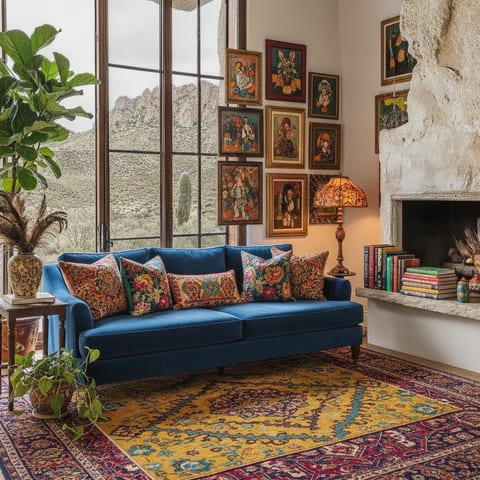
Maximalist style is "more is more" decorating: rooms layered with saturated colour, pattern on pattern, art, books and collections, every piece chosen on purpose. Jewel tones such as emerald, sapphire and raspberry, wallpaper that may climb onto the ceiling, layered rugs and gallery walls from edge to edge define it. It feels abundant and personal, and works when a few repeated colours tie everything together.

By Eduardo, founder of Calm Decoration
The colours of Maximalist
#e8b04b#c2185b#1e4f9c#1b6b4a#5a1f3a
What gives it away
- Pattern on pattern
- Jewel tones
- Gallery walls
- Layered rugs and textiles
- Collections on show
Maximalist rooms
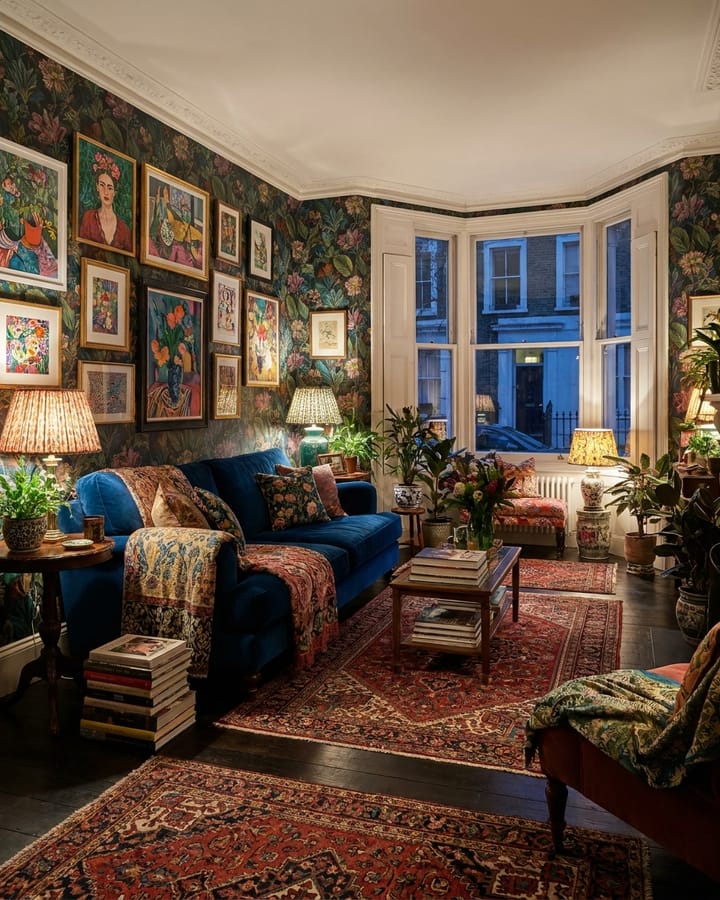
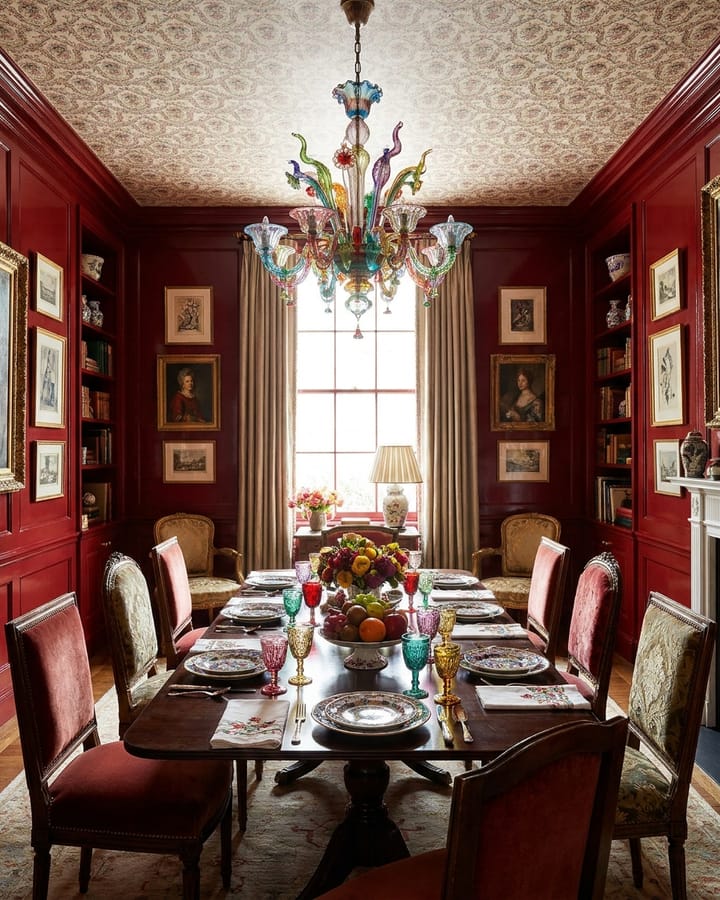
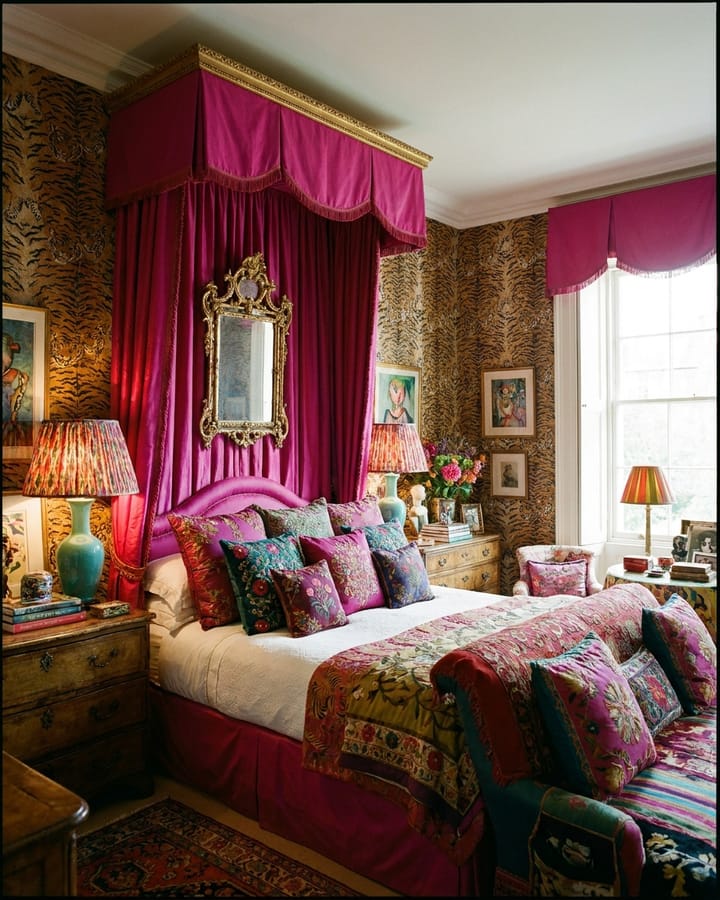
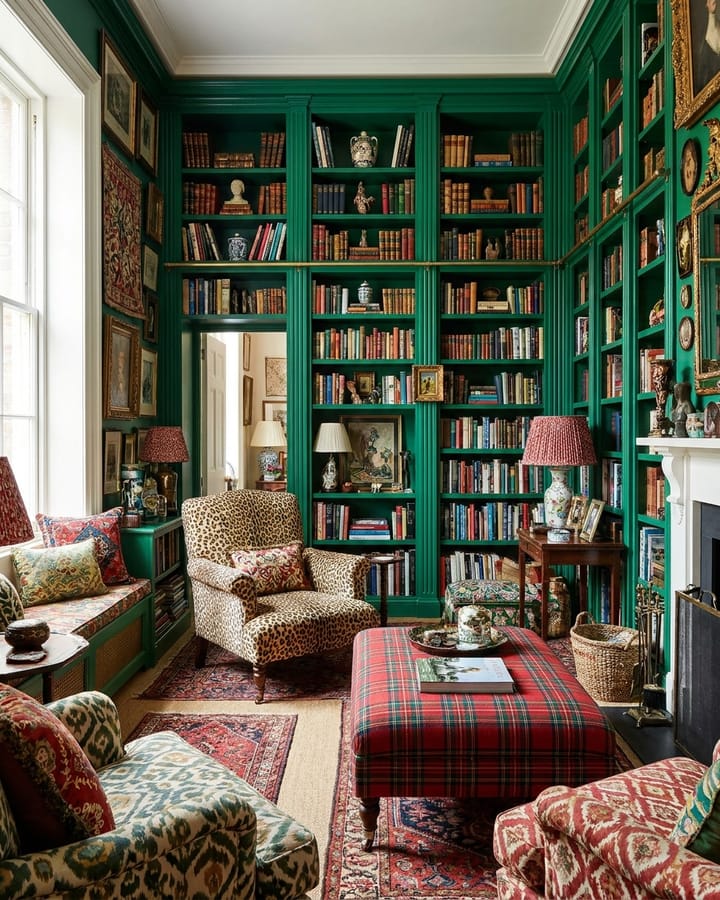
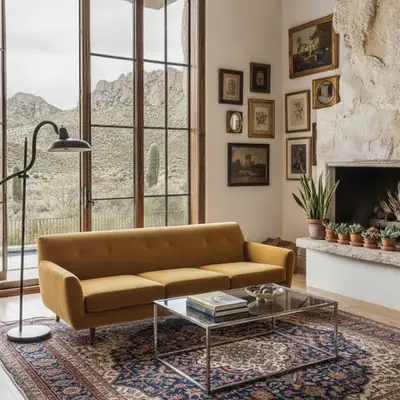
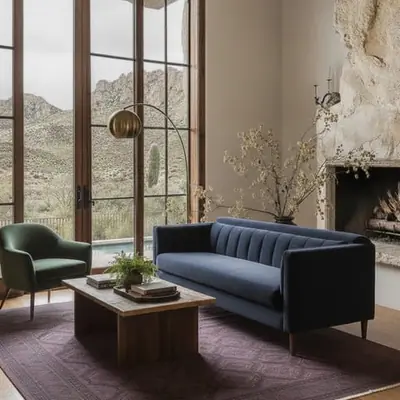
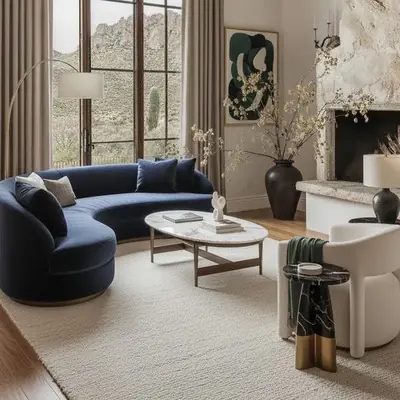
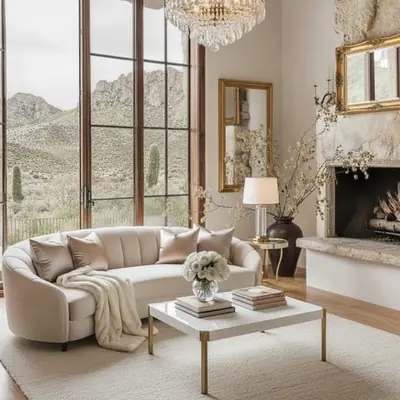
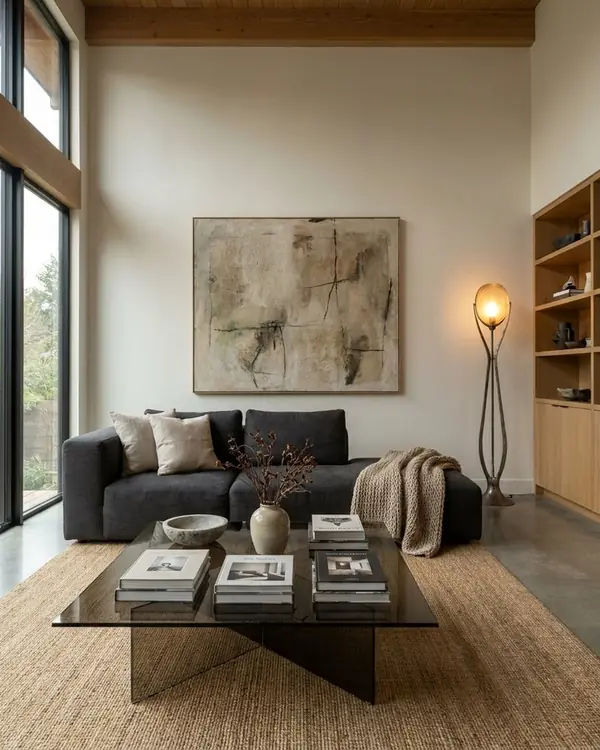
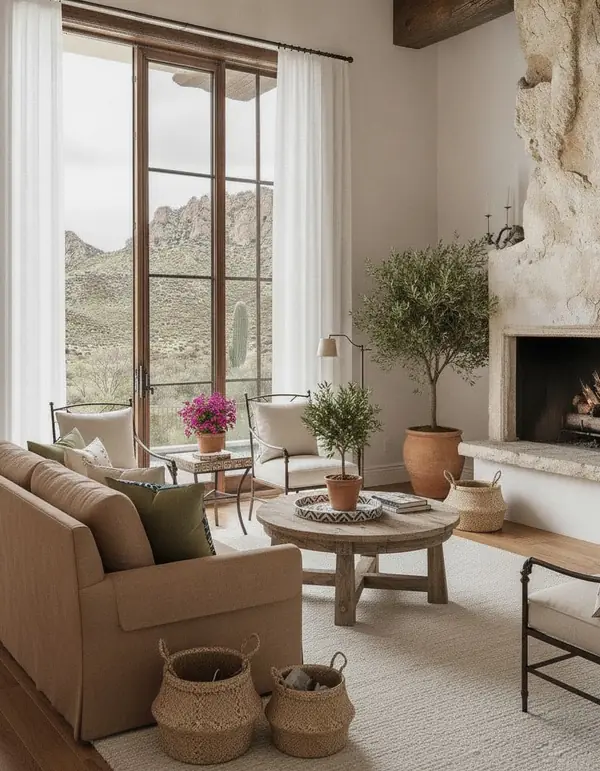
Pictures made for Find my style, our style quiz, to show the look. They are not photographs of real homes.
Pieces in the Maximalist style
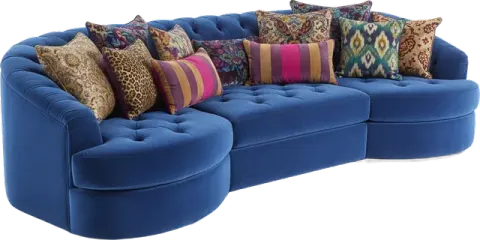 Sofa
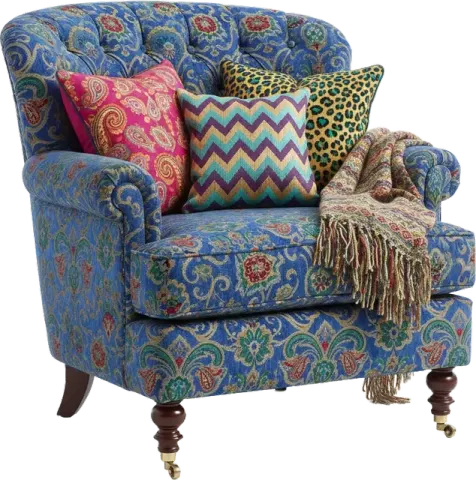 Armchair
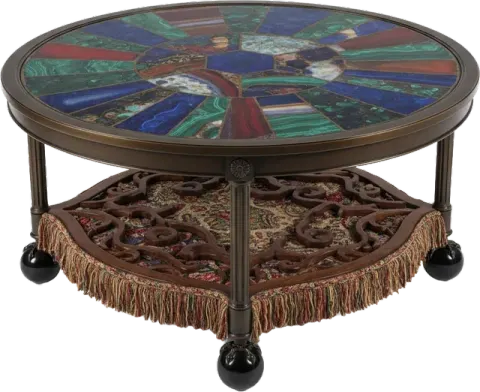 Coffee table
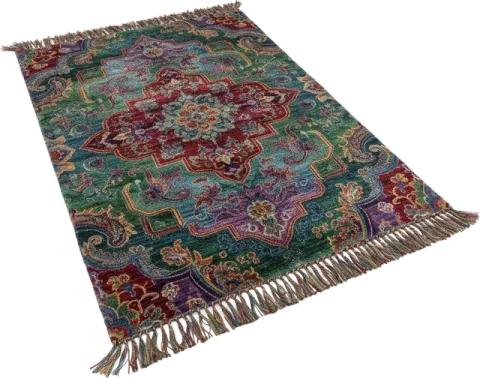 Rug
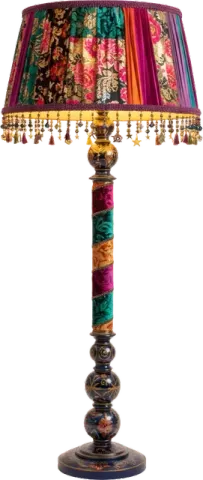 Lamp
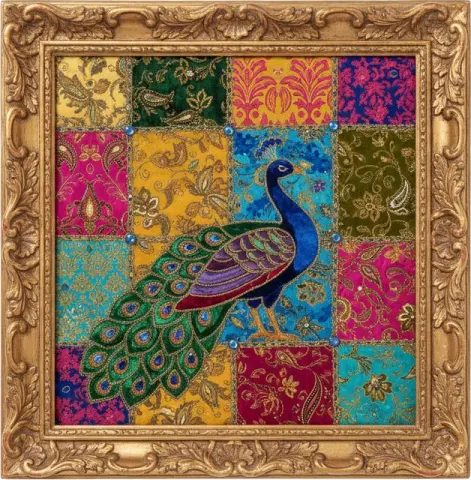 Wall art
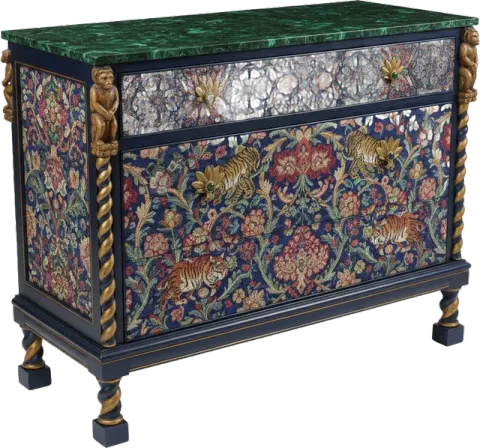 Storage
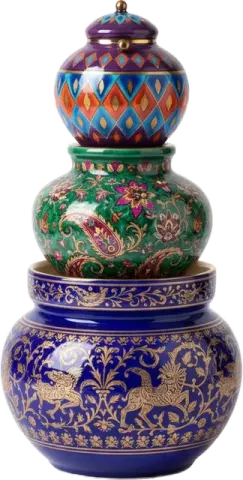 Decor
Drawn for Calm Studio’s moodboards to show the look: they are not products from a shop.
Some people relax in empty, quiet rooms. Others relax among colour, books, paintings and everything they have gathered over the years, and to them a bare wall looks like a missed chance. Maximalism is their style, and a good maximalist room feels like stepping into the mind of the person who lives there.
What is maximalist style?
Maximalism is a playful answer to the modernist motto "less is more". Its roots run through richly layered Victorian parlours, the homes of artists and collectors, and the bold patterns of the 1980s, and it returned strongly in the late 2010s after years of pale, pared-back rooms.
What defines it is not quantity but intention. Every object is there because someone chose it, and colour, pattern and repetition hold the abundance together. Without that editing eye, it is just clutter.
The key elements
- Saturated jewel tones on the walls, the upholstery or both
- Pattern on pattern: florals, stripes, paisley and geometric prints together
- Wallpaper, sometimes carried onto the ceiling
- Rugs layered one over another
- Gallery walls that run from edge to edge
- Collections on show: books, ceramics, glass, prints
- Velvet, fringing and tassels for softness and drama
Colours
The palette is confident: saffron yellow, raspberry pink, sapphire blue, emerald green and a deep plum. I like to make one of them the ground of the room, painting the walls emerald or plum, then use the others in upholstery, cushions and art. Repeat each colour at least three times around the room, a simple rule of thumb that turns a riot into a scheme.
If you love the deep walls but not the pattern, look at dark and moody rooms, which use one rich colour everywhere.
Materials and textures
Velvet is the maximalist fabric: it deepens colour and catches the light. Add silk, needlepoint, block-printed cotton and fringed trims. Hand-knotted wool rugs, lacquered wood, brass, glazed ceramics and gilded frames give contrast, so the room shines in places and feels soft in others.
Furniture and shapes
Choose generous pieces with presence: a deep velvet sofa, a pair of mismatched armchairs, a tufted ottoman that doubles as a table, a carved or painted cabinet to hold a collection. Curves soften all the pattern, so look for rolled arms, round side tables and scalloped edges.
Lighting
Lamps are part of the decoration here: a fringed silk shade, a stained-glass lamp or a beaded chandelier counts as an object in its own right. Use several table and floor lamps at different heights rather than one ceiling light, and add picture lights so the art glows in the evening.
Decor and accessories
Books stacked on the floor as well as on shelves, portraits in mixed frames, plates hung on the wall, cushions in three or four patterns, trailing plants and flowers. Hang the centre of a gallery wall at about 145 to 152 cm (57 to 60 in) from the floor, as you would a single painting; the guide on how high to hang art shows how to plan the whole group.
How to bring maximalist style into your home
- Gather what you already own: books, art, ceramics, textiles. Group them by colour; the colours that come up most often are your palette.
- Hang the art you love together as one gallery wall instead of spreading it thinly.
- Change the cushions and throws: three patterns at different scales, linked by one shared colour.
- Paint one room, or only its ceiling, in a deep jewel tone.
- Layer a smaller patterned rug over a larger plain or traditional one.
- Wallpaper a small space such as a hallway or cloakroom, where a bold print is easiest to live with.
- Bring in one statement piece, such as a velvet sofa, and let the rest gather around it.
If picking the colours is the hard part, the lesson on choosing your colours walks you through it.
Mistakes to avoid
- Adding without editing: if an object shares no colour, story or use with the room, take it away.
- Patterns all at the same scale, which blur into noise.
- Strong colours under cold white bulbs, which turn them garish.
- Nowhere for the eye to rest: keep one plain surface, such as a solid-coloured sofa.
- Buying everything at once: maximalism looks best collected.
Maximalist vs Eclectic
| Aspect | Maximalist | Eclectic |
|---|---|---|
| Main idea | Abundance of colour, pattern and objects | A mix of eras and places held together by a good eye |
| How full | Full and layered | Can be sparse or full |
| Colour | Saturated jewel tones throughout | Often a calmer base with bold accents |
| Pattern | Pattern on pattern, walls included | Used, but not essential |
| Feeling | Rich and enveloping | Personal and curated |
If you want a room that wraps you in colour and pattern, go maximalist; if you mostly want to mix a vintage sofa, an old rug and a modern lamp without filling every wall, eclectic is the better fit.
Frequently asked questions
Is maximalism still in style?
It has stayed popular since its return in the late 2010s, and because it is built from things you love rather than one fashionable colour, it dates less than most trends.
Can a small room be maximalist?
Yes, and small rooms often suit it best. A study, hallway or cloakroom wrapped in wallpaper and art feels like a jewel box, and pattern on every wall blurs the corners so the size matters less.
How do you mix patterns without it looking chaotic?
Vary the scale (one large, one medium, one small pattern), run one colour through all of them, and repeat each pattern at least twice in the room.
What is the difference between maximalism and clutter?
Intention. In a maximalist room everything has been chosen, grouped and given a place; clutter is what gathers when nobody decides.